
issue 34 / juxtaposition / spring 2020
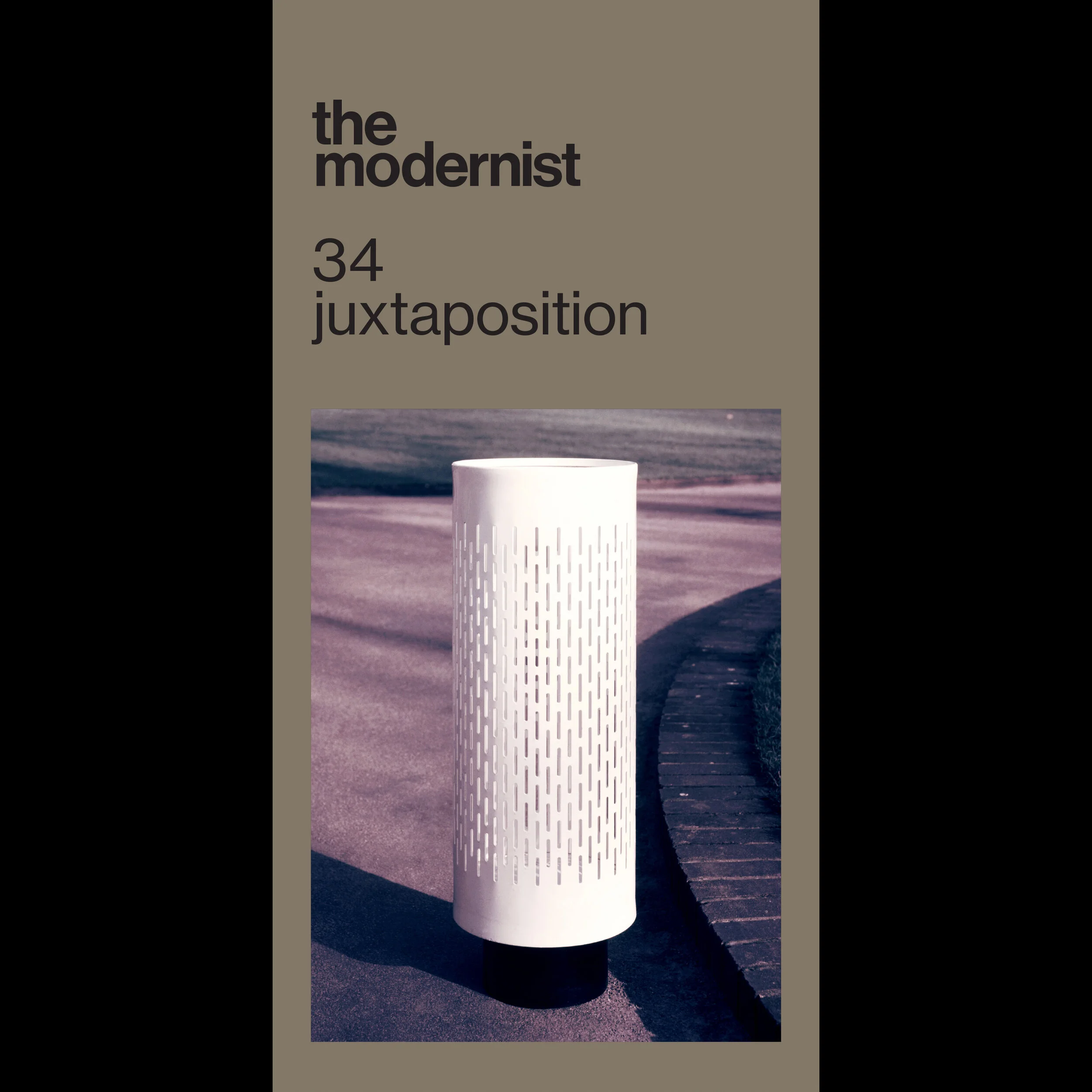
In the enduring search for the peaceful rural ideal it can be easy to forget that the ‘rural’ acts as a conduit for the modern. Through their role in transport, militarisation or energy production, these pastoral, bucolic or rugged areas have evolved their own architectures and infrastructures. A dam halfway up a mountain, for example, is a surprise – a startling juxtaposition – but as with so many edifices it is there for one reason: to help us live.
The rural modern also deals with the consequences of this life, be it a litter bin for our detritus or a concrete bus shelter designed to protect us from the Hebridean elements. Larger structures become part of identity, embodying a community role which transcends their function. As symbols of working and social life, their memory persists long after the structures themselves have gone. The recent demolition of Ironbridge B’s cooling towers – designed to blend with the landscape – will stand as testament to this. Whilst its industrial revolution neighbours are preserved in the nearby gorge, these modern structures are cleared to make way for a new modern: it is up to us to preserve these as best we can – through our words, memories, images and interpretations, something which will become more pressing as an increasing number of post-war examples reach the end of their working lives.
Join our contributors as we explore the diversity of rural modern juxtapositions, covering everything from domestic architecture to concrete ‘listening ears’ in the process.