
12 Views of Kensal House - After Hokusai
In 1984, Peter Wyeth directed and produced the film ‘12 Views of Kensal House’. In our blog post today Peter looks back at the film, and the influence of Japanese artist Katsushika Hokusai. If you wish to pursue the film, it is available on the BFI Player, and you may also like to watch the 1937 film on Kensal House here
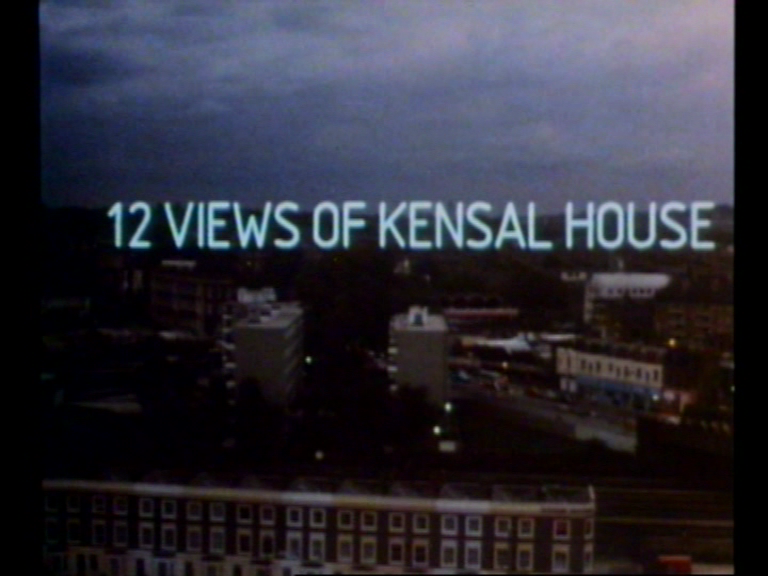
12 Views of Kensal House
Kensal House was the first modernist block of flats built in Britain for workers. Designed by a team led by Maxwell Fry, it was opened in 1936. Modernist blocks appeared in the 1920s elsewhere in Europe, and at a far larger scale, but Britain was often behind the curve with Modernism.
‘12 Views’ was made in 1984 for the Arts Council of Great Britain, a 55’ documentary “biography of a building”. It was runner-up for the Grierson award for documentary of the year and was revived in 2015 in a big Hayward exhibition ‘History is Now’, selected by the artist & film-maker John Akomfrah, who called it “the heart of the exhibition”.
What is the connection between a now down-at-heel block of flats in Ladbroke Grove and Hokusai?
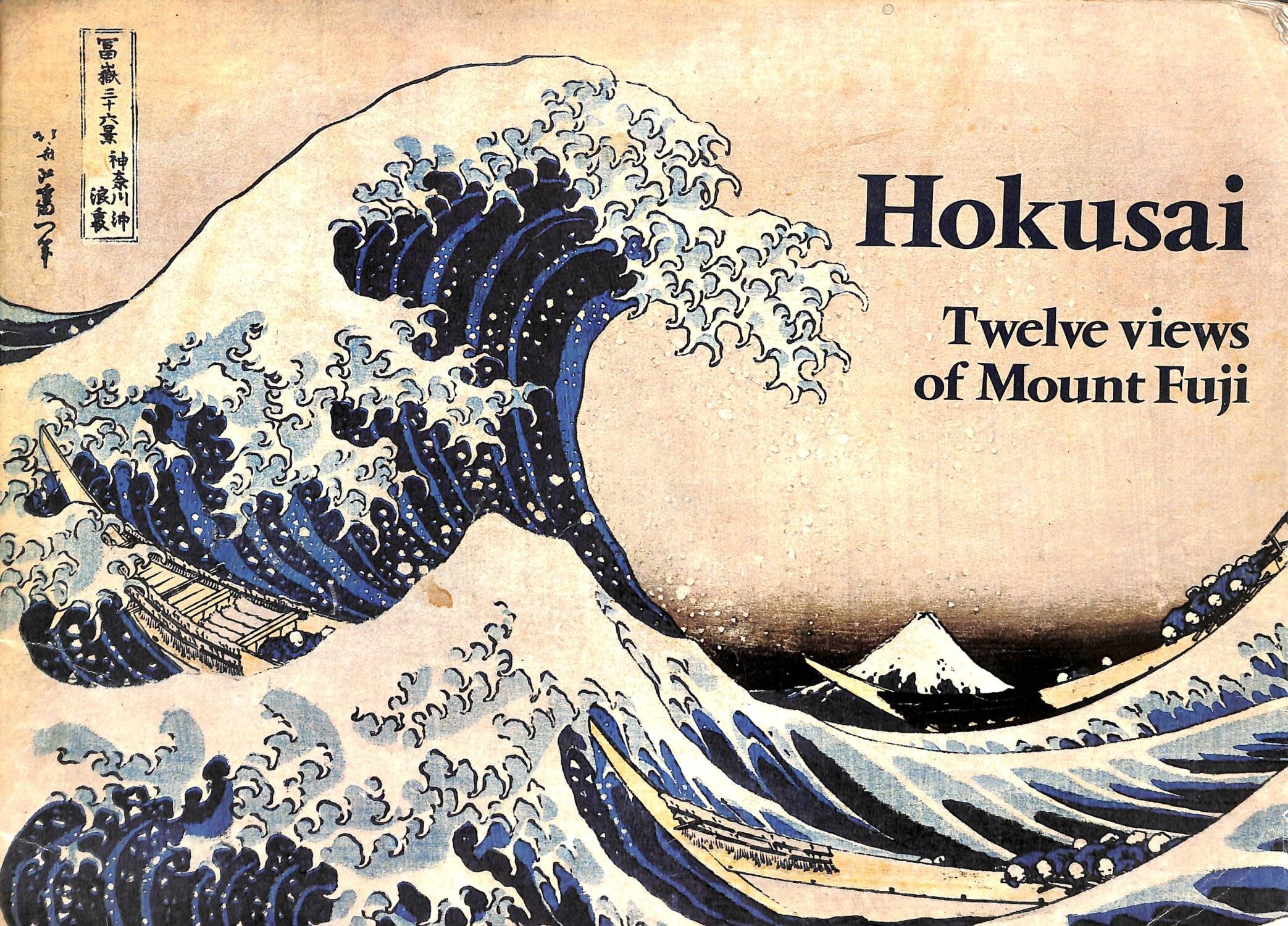
Working on the documentary, I came across ’12 Views of Mount Fuji’ in the bookshop of the British Museum. Hokusai painted over 100 Views of Mount Fuji, but it was the little BM book that alerted me to his extensive exploration of perspective.
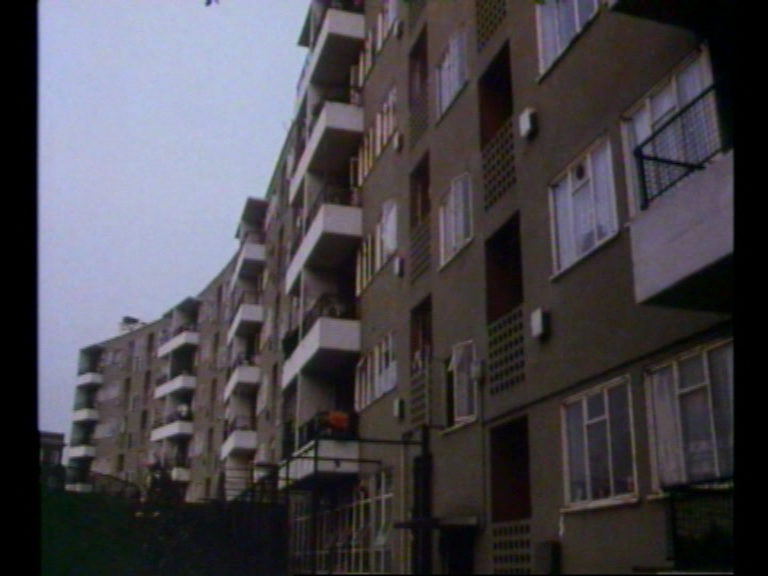
Kensal House Inner Curve
In some of the illustrations Fuji takes up most of the page, in others it is small and in the background. Hokusai must have travelled widely, through 360 degrees around the sacred mountain, to find a this vast variety of views. In some, peasants are the foreground focus, the mountain almost a dot in the background, and in the best known picture, the balance is reversed, Fuji the only feature, looming large.
While Hokusai’s method allows him to illustrate a range of stories involving the varied characters he shows, from peasants to samurai, by the same token it becomes a survey of Japanese society of the period. He etches a 360 degree portrait of Japan with Mount Fuji as the pivotal point around which that society rotates.
It is a literal exercise in perspective in shifting physical viewpoints, but it is also symbolic in portraying a sample of Japanese society whose activities have them travel within sight of Mount Fuji.
Hokusai’s perspective is not the traditional Western one. A flattened, two-dimensional aspect attracted the earliest modernists, for example Van Gogh who collected Japanese prints, and through him the influence passed to Picasso.
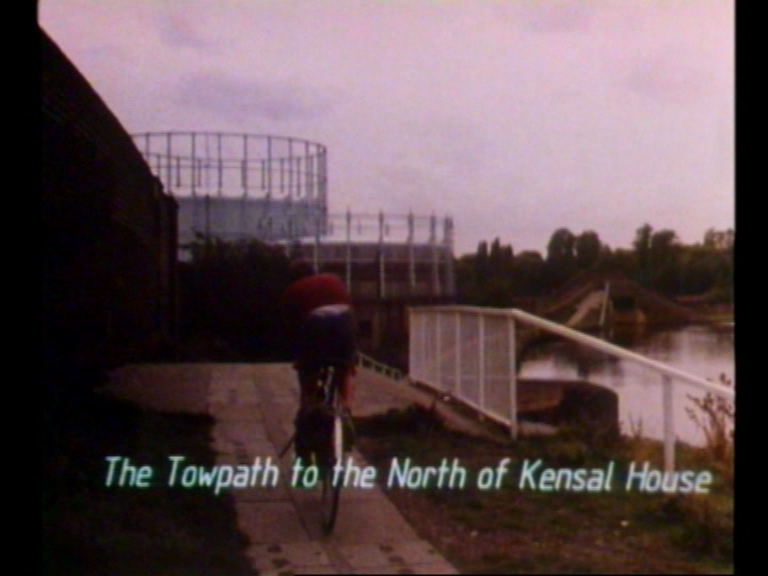
The Towpath to the North of Kensal House
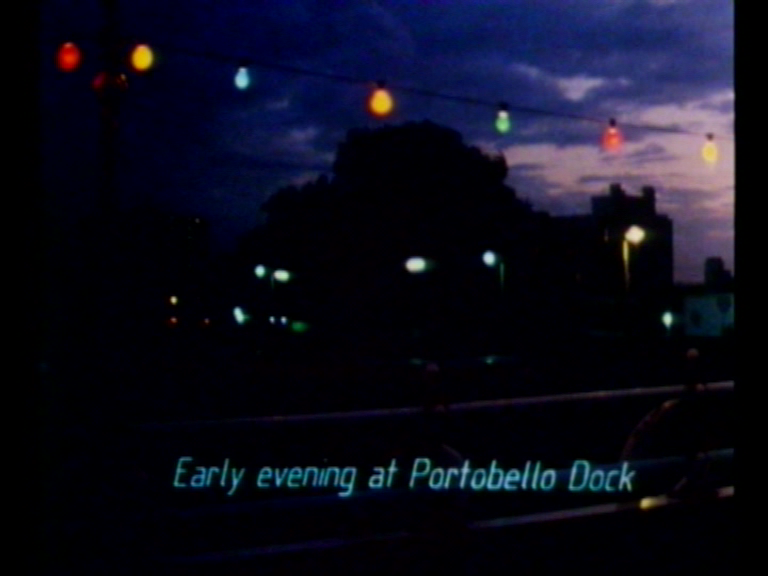
Early evening at Portobello Dock
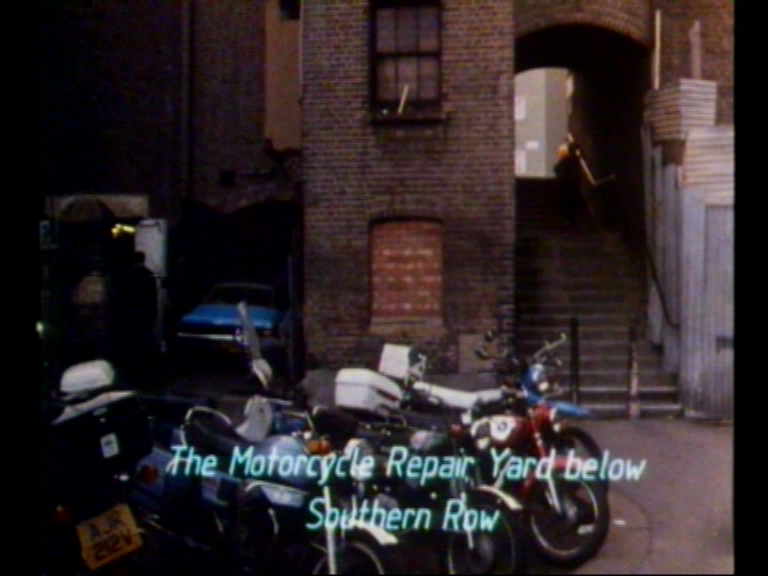
The Motorcycle Repair Yard below Southern Row
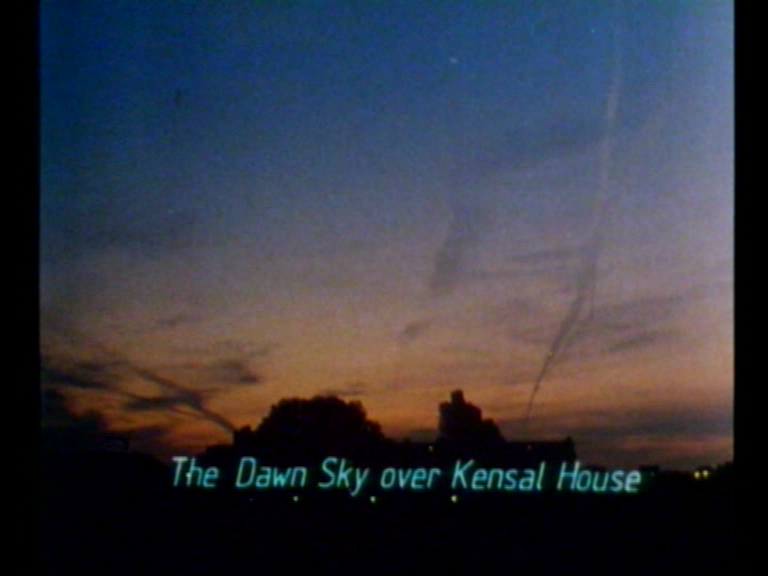
The Dawn Sky over Kensal House
Needless to say, Kensal House is neither sacred nor a focal point of our own society, but the idea was to take the idea of perspective and apply it to the building.
What Mount Fuji and Kensal House have in common is in being a fixed object around which lives with different points of view, both literal and metaphorical, circulate.
While Hokusai’s illustrations suggest stories involving the characters he portrays, with a documentary film there is the luxury of sound, not least interviews with people involved with Kensal House in a variety of ways.
The building is both a receptacle and generator of the experiences of those who have lived there in the past and at the time the film was made, and the outcome of historical strands in architecture, social policy and housing, expressed by the architect and various commentators, both live and from the archives. As well as bringing such elements out later in interviews, those ‘points of view’ had a literal visual origin.
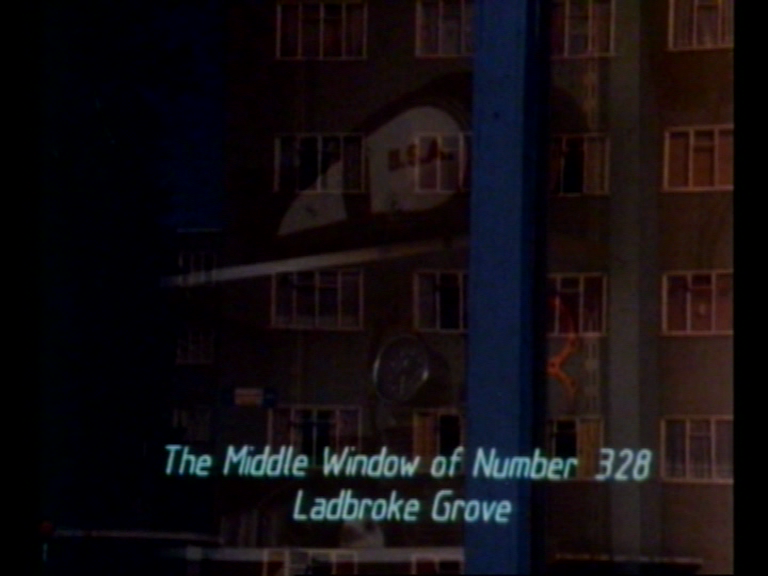
The Middle Window of Number 328 Ladbroke Grove
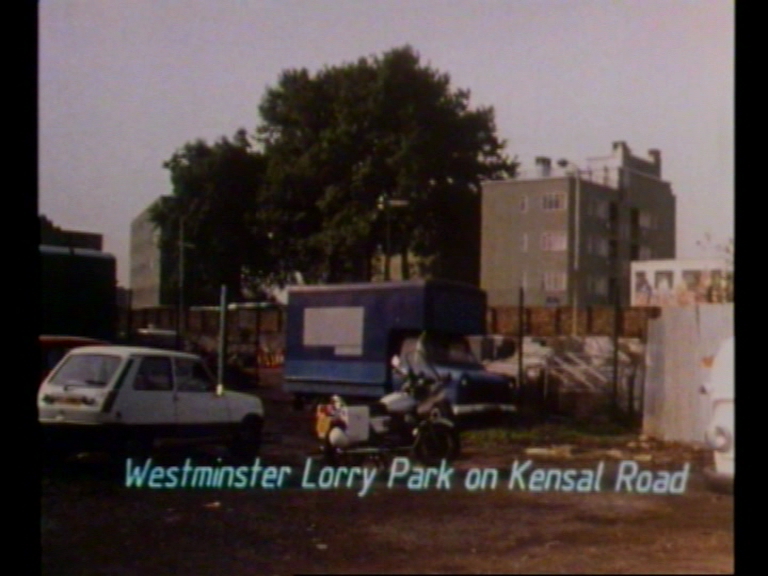
Westminster Lorry Park on Kensal Road
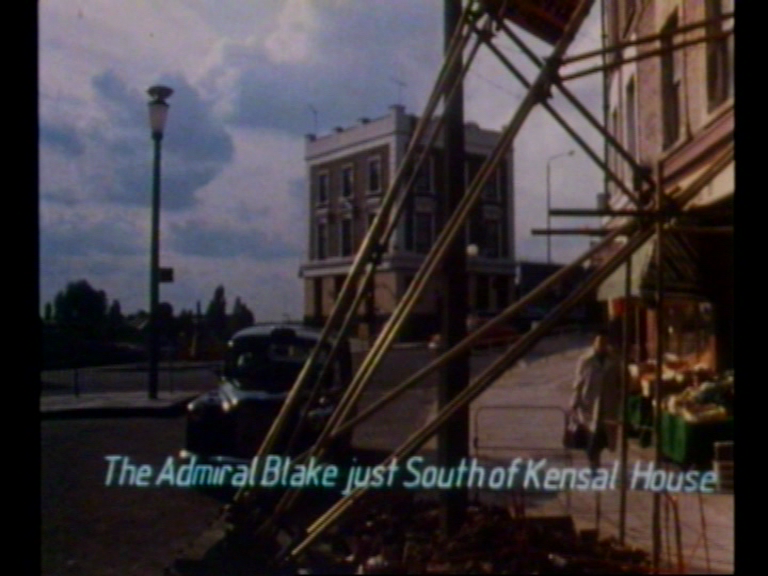
The Admiral Blake just South of Kensal House
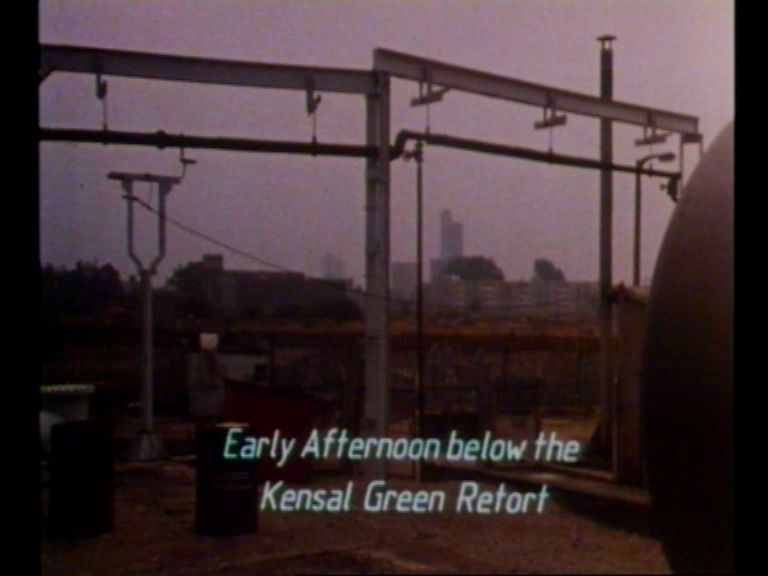
Early Afternoon below the Kensal Green Retort
In the first instance it was a visual image that came to mind, a bird’s-eye view rotating around the site of the building, with residents coming and going not just in the present, but in a kind of stop-motion, back through its history to the day of its opening, then back further to the methods and ideas of its construction and its choice as a site by the gas company that built it as a PR exercise (promoting ‘mod cons’ like gas irons, gas fridges and modern gas lighting, today curious anachronisms).
The theme of seeing an object from different places had both a literal and a metaphorical resonance for a film about a block of flats.
The literal element would be represented by shots selected around the building and its environs, with titles echoing Hokusai’s formal titles for his ‘views’, but enjoying the decidedly non-sacred context, for example: ‘The Motorcycle Repair Yard below Southern Row’ which has a fragment of the flats in the background, and ‘Early Afternoon below the Kensal Green Retort’ which has nothing of the flats; a kind of modernist refusal of being entirely literal with this set of ‘views’ (and a small echo of another Japanese favourite, Ozu, in film-titles like ‘Early Spring’ and ‘Autumn Afternoon’).
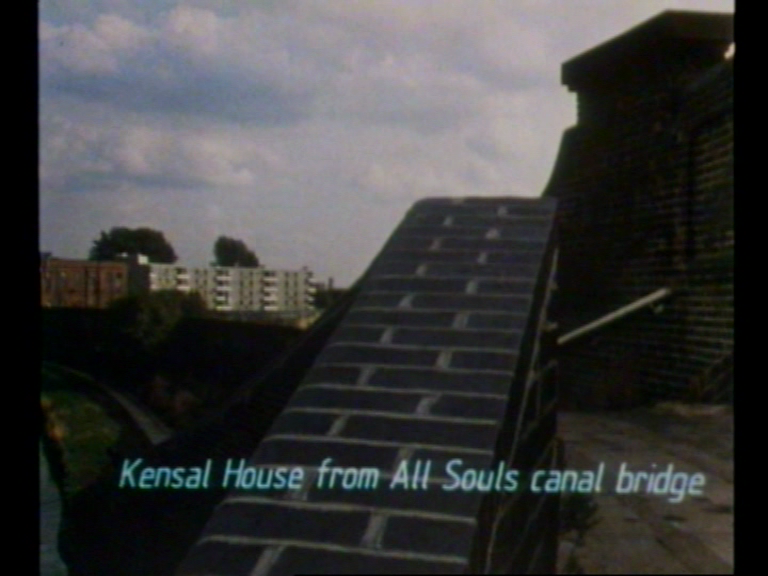
Kensal House from All Souls canal Bridge
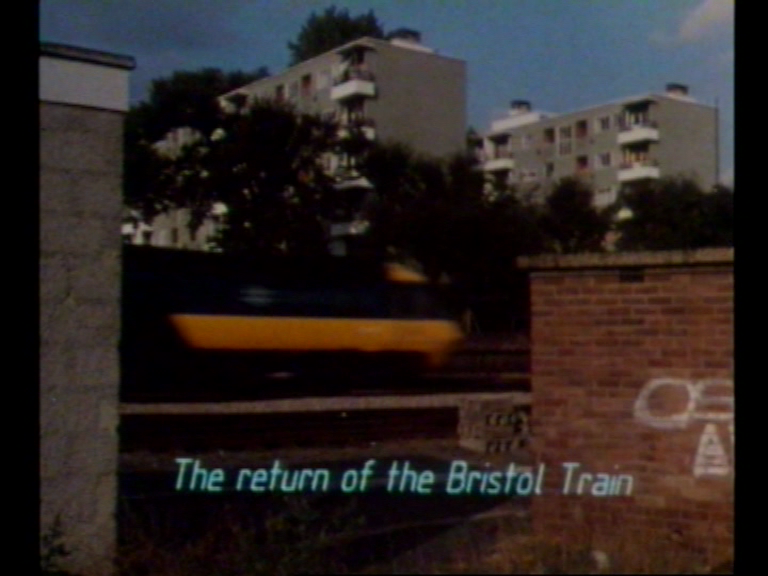
The return of the Bristol Train
The metaphorical belongs to the splendid people who agree to be interviewed: from the architect who designed it (with Elizabeth Denby, the housing campaigner), to the trio of women who had lived there from day one, one of whom was still there almost fifty years on, a bunch of students for whom it was not the “dream” of the earliest residents, but now virtually a slum block (just what the first residents had left behind), a commentator on the ideas it both inherited and represented (Stephen Bayley), and two shopkeeping sisters from opposite the flats, who still stocked the gas lighting mantles fifty years on - as they put it, the last local stockists.
The staging of the interviews had a modest echo of Hokusai in being where possible flat-on, shot from right in front of the interviewee - seen most clearly with the early women residents who had memories going back to its opening in 1936.
Each of these contributors saw Kensal House from a different perspective: be it heaven or hell, at its most extremely diverse. The most poignant was portrayed through an empty flat: a wife who lost her sight in the war and later died, and her husband who couldn’t get over her absence, came home, washed and dressed in his best, lay on the bed and turned on the gas. The resident’s voice-over adds “I didn’t know him well”.
Indeed a biography of a building, and mostly of the people who knew it - from far or near - an exercise in perspective - after Hokusai.
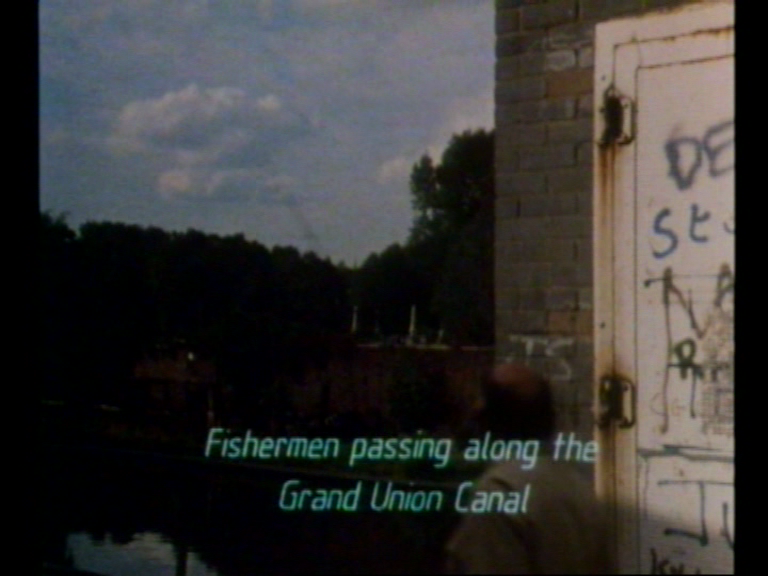
Fishermen passing along the Grand Union Canal
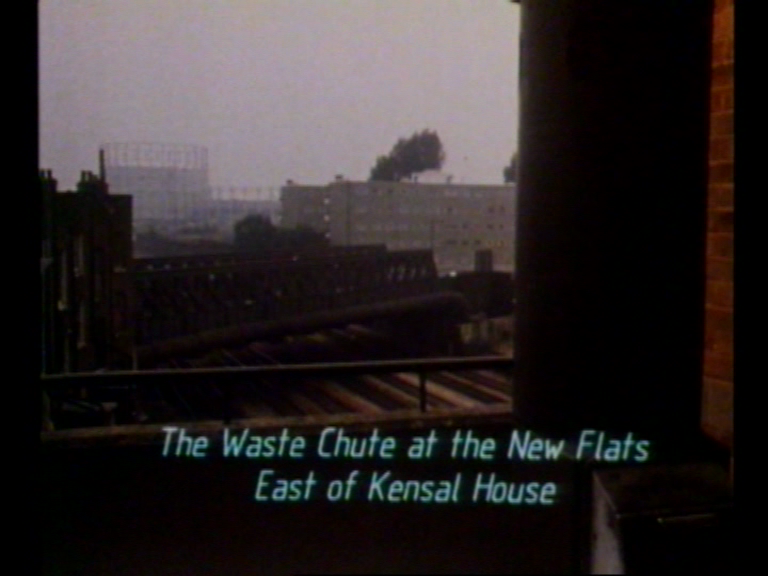
The Waste Chute at the New Flats East of Kensal House