
Norma Merrick Sklarek, ‘the Rosa Parks of Architecture’
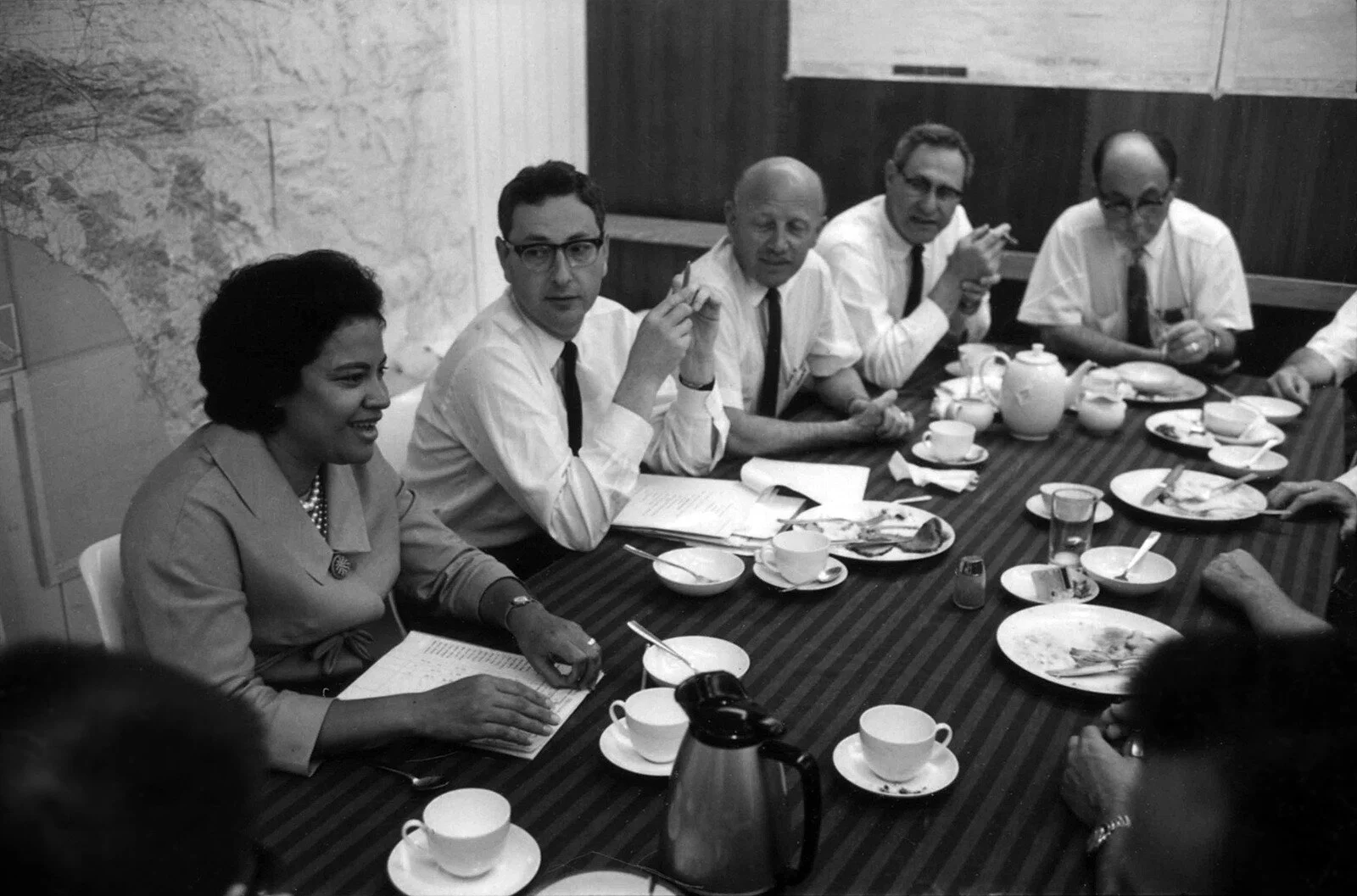
Norma Merrick Sklarek at the Los Angeles office of Gruen Associates: an ‘old-boys network’.
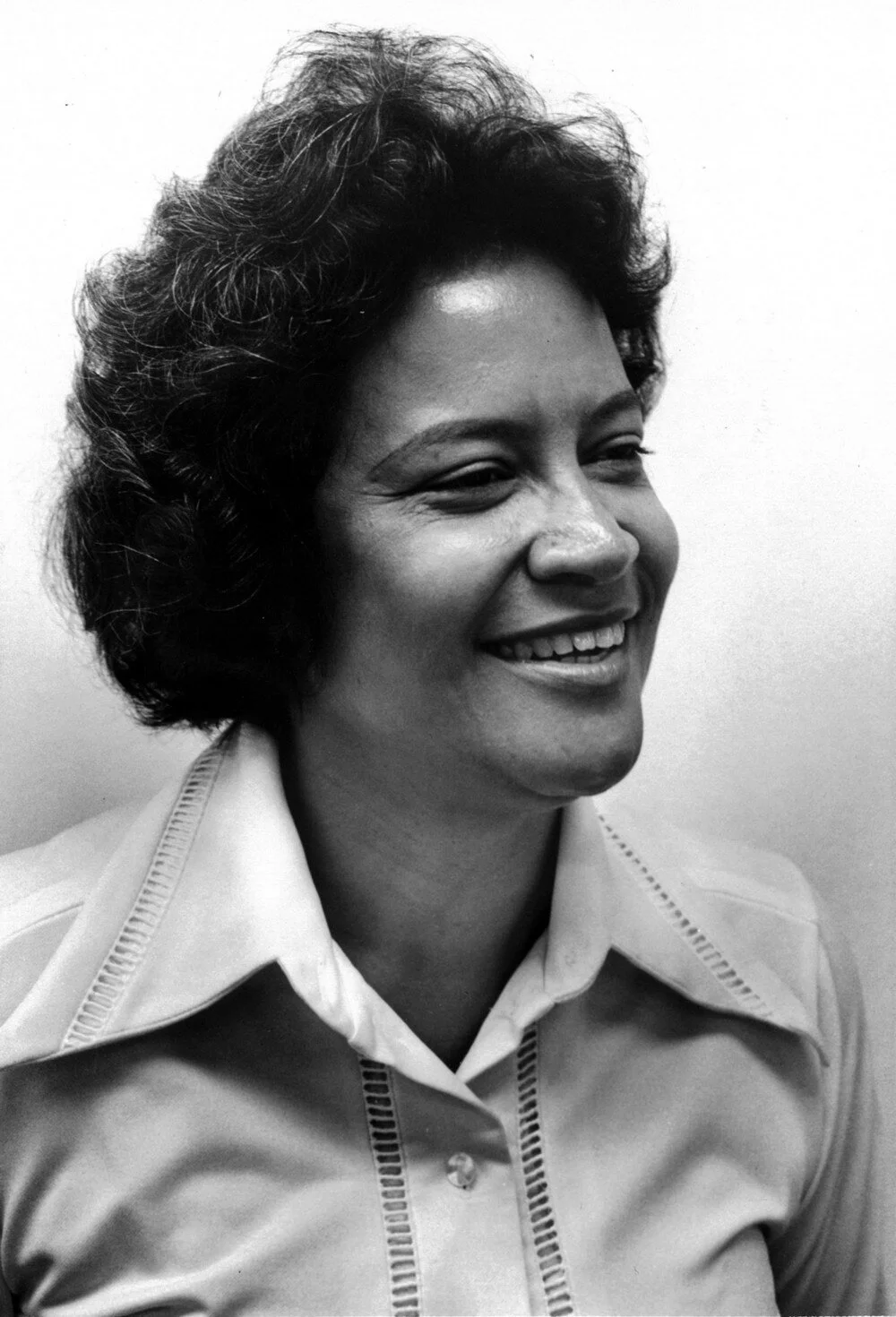
Norma Merrick Sklarek was born on 15 April 1926 in Harlem, New York to parents Dr. Walter Ernest Merrick and Amelia (Amy) Willoughby, a doctor and seamstress, who had moved to Harlem from Trinidad, later relocating to Brooklyn. Sklarek went on to study at Columbia University, graduating with a degree in architecture in 1950; she was the first African American woman to do so, and one of only two women in her graduating class. She then worked as a Junior Draughtsman at New York Department of Public Works from 1950 to 1954, during which time she applied to and was turned down by nineteen architecture firms. In 1954 Sklarek took the architecture examination, becoming the first African-American woman licensed to practice architecture in New York at the behest of her bosses at NYDPW, who she was substantially more qualified than). She was eventually hired by the twentieth architecture firm she applied to - Skidmore, Owings and Merrill - in 1955, where she stayed for five years. At this point Sklarek was also teaching evening architecture courses at New York City Community College and raising her two children as a single parent with help from her mother; no mean feat at the best of times, but especially so as an African-American woman in 1950s America.
It was in 1960, when Sklarek was hired by Gruen Associates in Los Angeles, California, that her career began to truly take hold. In 1962 Sklarek received her license to practice architecture in California (thus holding licenses in both New York and California simultaneously) and by 1966 she had become Gruen's first African-American female director. Sklarek collaborated on projects including the California Mart (1963), San Bernardino City Hall (1969), The Commons Courthouse Center in Columbus, Indiana (1973), the Pacific Design Center in West Hollywood (1975), the Fox Hills Mall (1975, now Westfield Culver City), and the Embassy of the United States in Tokyo (1976) - all credited to Argentinian architect César Pelli. Despite her experience and qualifications, Sklarek was classed as a project manager rather than designer, a situation that was depressingly common in the field of architecture; women would often remain unacknowledged for their work, with the situation being even harder for African American women such as Sklarek.
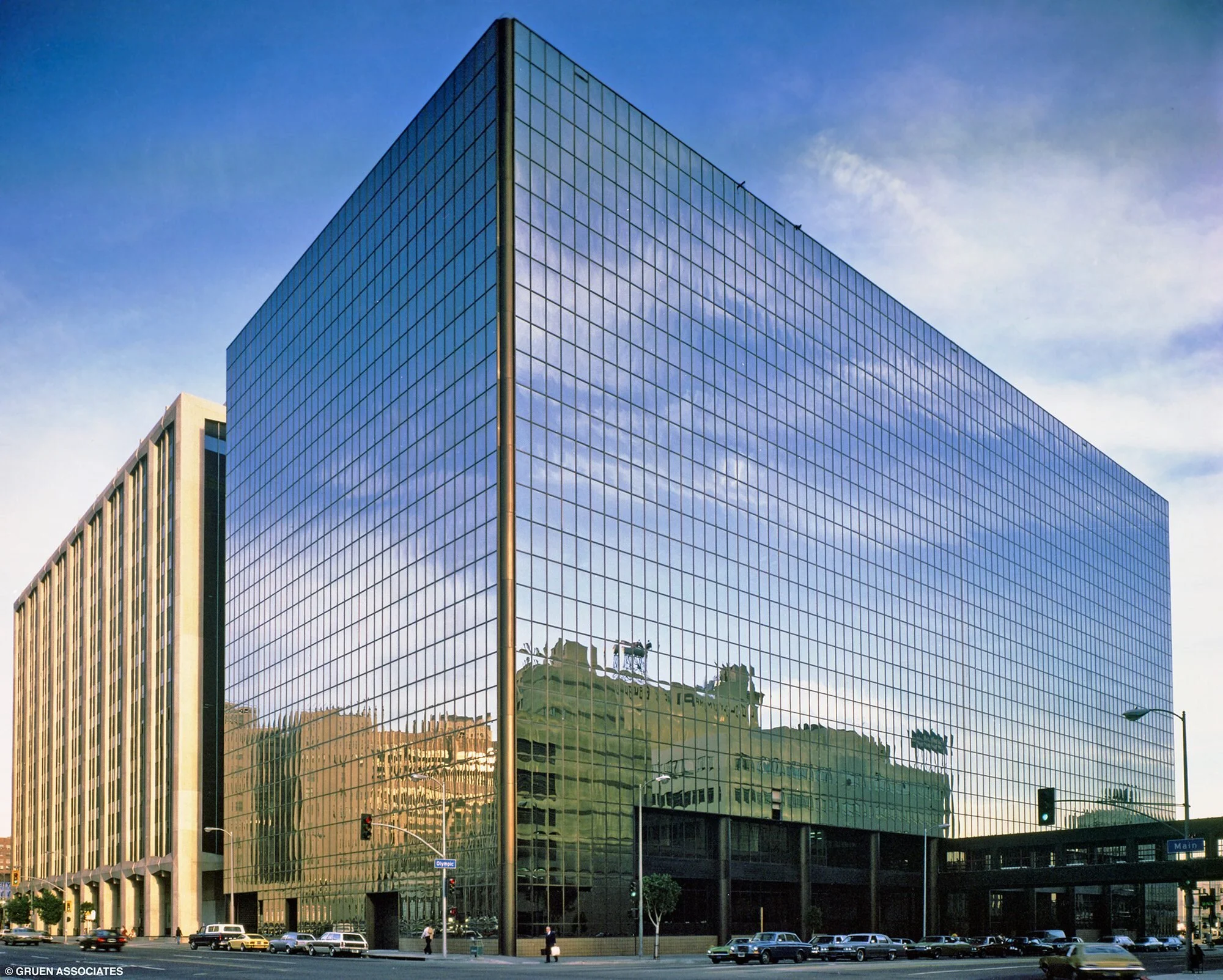
California Mart, 1963
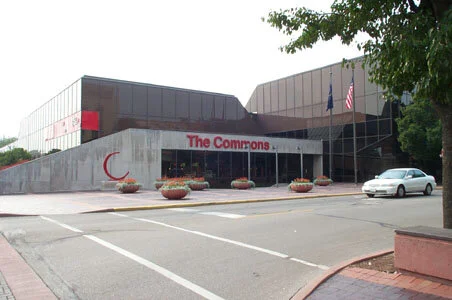
The Commons Courthouse Center in Columbus, Indiana (1973)
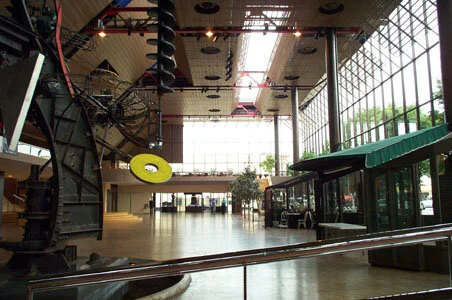
The Commons Courthouse Center in Columbus, Indiana (1973)
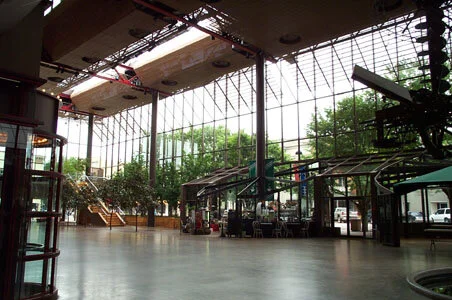
The Commons Courthouse Center in Columbus, Indiana (1973)
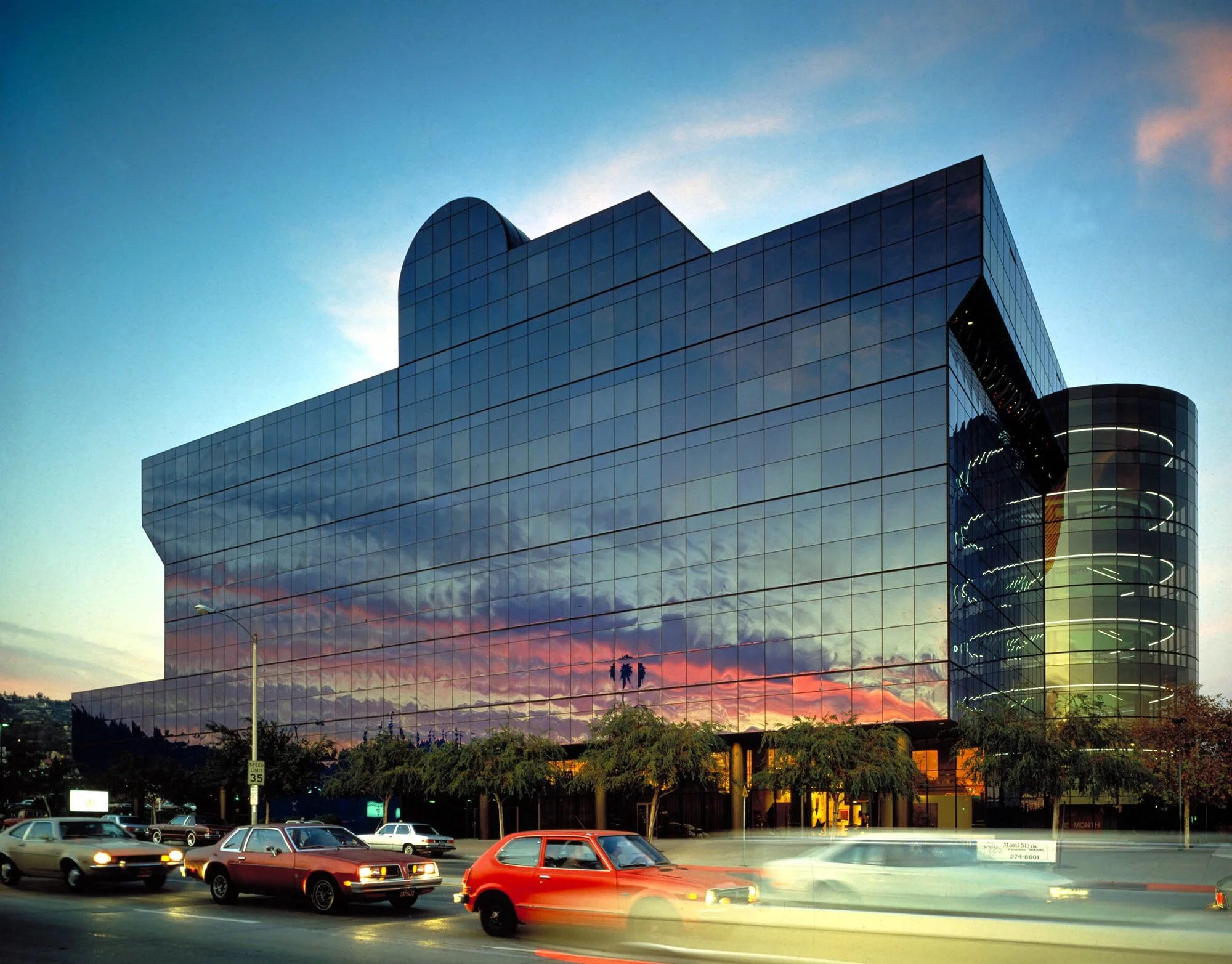
Pacific Design Center, West Hollywood, 1975

Fox Hills Mall, 1975. The first 3-level mall in California. Situated on a 50-acre site, the Mall with contains over 1,000,000 square feet, was originally anchored by three department stores, more than 132 specialty shops and a four-level, 2,450-car parking structure with direct access. Notable elements of its original design were a glass-and-steel "theme" staircase in the center of the mall, as well as the angled bridges which connected the multiple levels. The project received a Los Angeles Chapter AIA Citation for Design Excellence. (Gruen Associates)

Fox Hills Mall, 1975

Fox Hills Mall, 1975

Embassy of the United States, Tokyo
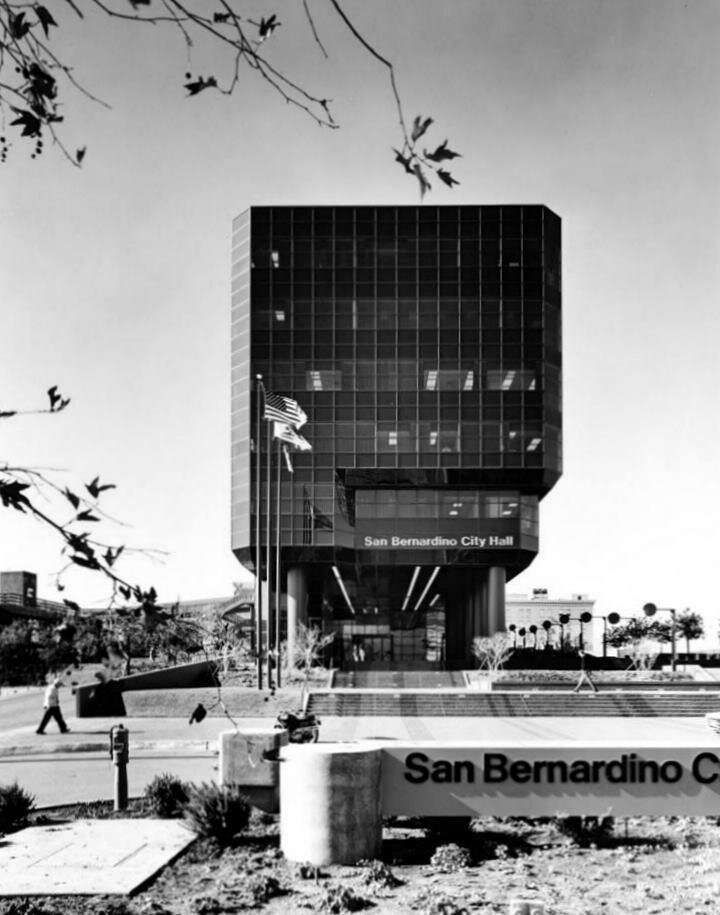
San Bernardino City Hall, 1969

LA Terminal One, 1984
Sklarek left Gruen Associates in 1980, and shortly afterwards became the first black woman to be elected as a fellow of the American Institute of Architects - twenty one years after she had been introduced, in 1959, as their first African American woman member. She took up a position that same year at Welton Becket Associates, where she was the company’s first ever female employee, and served as the project director for the $50-million construction of Los Angeles International Airport’s new Terminal One station, completed in 1984 in time for the summer Olympics that year. Sklarek said of working on the project: ‘At first, the architects working on the airport were skeptical because a female was in charge of the project, but a number of projects were going on there at the time and mine was the only one on schedule.’
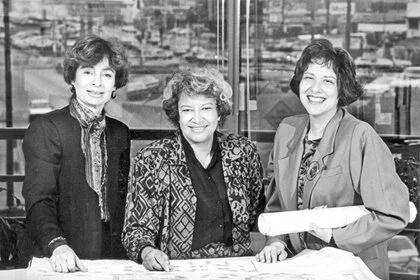
L-R: Margot Siegel, Norma Merrick Sklarek and Katherine Diamond
Sklarek left Welton Becket Associates in 1985 to set up Siegel, Sklarek, and Diamond with Margot Siegel and Katherine Diamond, forming what was thought to be one of the largest women-owned architecture firms in the USA at the time. The Los Angeles Times ran an article on the firm in 1986, stating: ‘When Los Angeles architects Margot Siegel and Norma Sklarek began practicing independently in the 1950s, women architects were about as rare in Los Angeles as buildings taller than the 27-story City Hall. But while the 13-story height limit was lifted in 1958, women architects are still unusual. Only 6.5% of the American Institute of Architects’ 50,000 members are women.’ Diamond, Sklarek’s partner, stated that the field of architecture was ‘definitely an old-boys network’ and that, while they hadn’t eliminated the problems of being a women-owned business, they had eliminated some of those obstacles because they could demonstrate their sheer talent and professionalism through their combined portfolios and work history.
Sklarek went on to join JERDE Partnership in 1989, taught at University of California at Los Angeles and served as director for the University of Southern California Architects Guild, all before retiring in 1992. Following her retirement, Sklarek was appointed by the governor to serve on the California Architects Board and served as chair of the AIA's National Ethics Council for several years. Sklarek was awarded the Whitney Young award in 2008 as an architect exemplifying the profession’s responsibility toward current social issues. AIA’s 2008 President Marshall Purnell (himself also an African-American) said of Sklarek in the Los Angeles Times following her death in February 2012: ‘She was excellent at putting the whole package together. She did not design most of the huge projects she supervised, not because she wasn’t capable, but because when she started out in the 1950s it was unheard of to have an African American female who was registered as an architect. You didn’t trot that person out in front of your clients and say, “This is the person designing your project.” She was not allowed to express herself as a designer. But she was capable of doing anything. She was the complete architect.’ Purnell also stated: ‘She made me possible. She is mentally the strongest person in this profession that I know. Everywhere she went, she was first.’
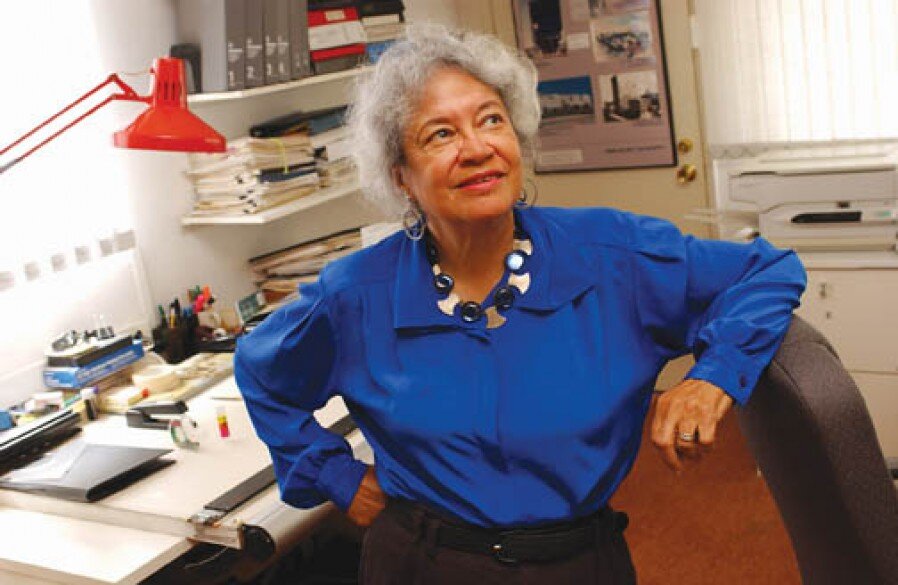
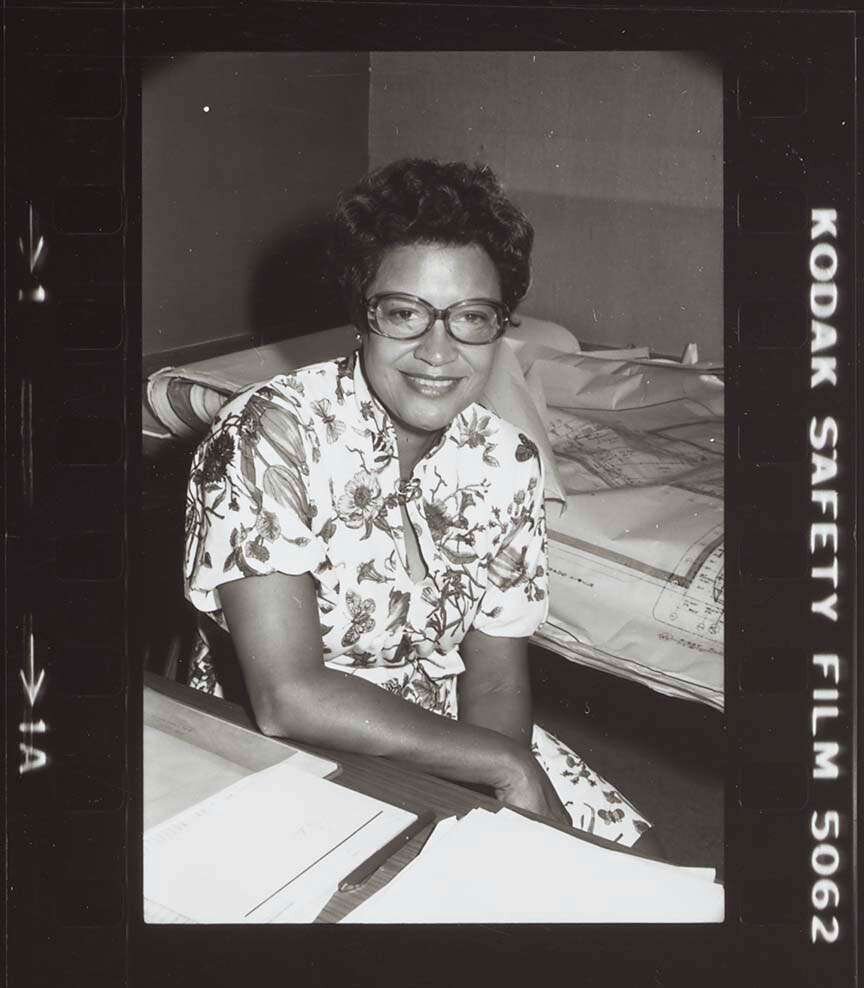
You can hear more of Sklarek’s story - told in her own words - thanks to a video interview conducted and made available by The National Visionary Leadership Project, a US-based organisation whose mission is to ‘record, preserve and share the stories of extraordinary African American elders who have transcended barriers, shaped American history, and influenced the world through the rich African American tradition of social change’. The NVLP have compiled a series of clips from the interview into a YouTube playlist, beginning with the first of ten here. We highly recommend watching all of them.