
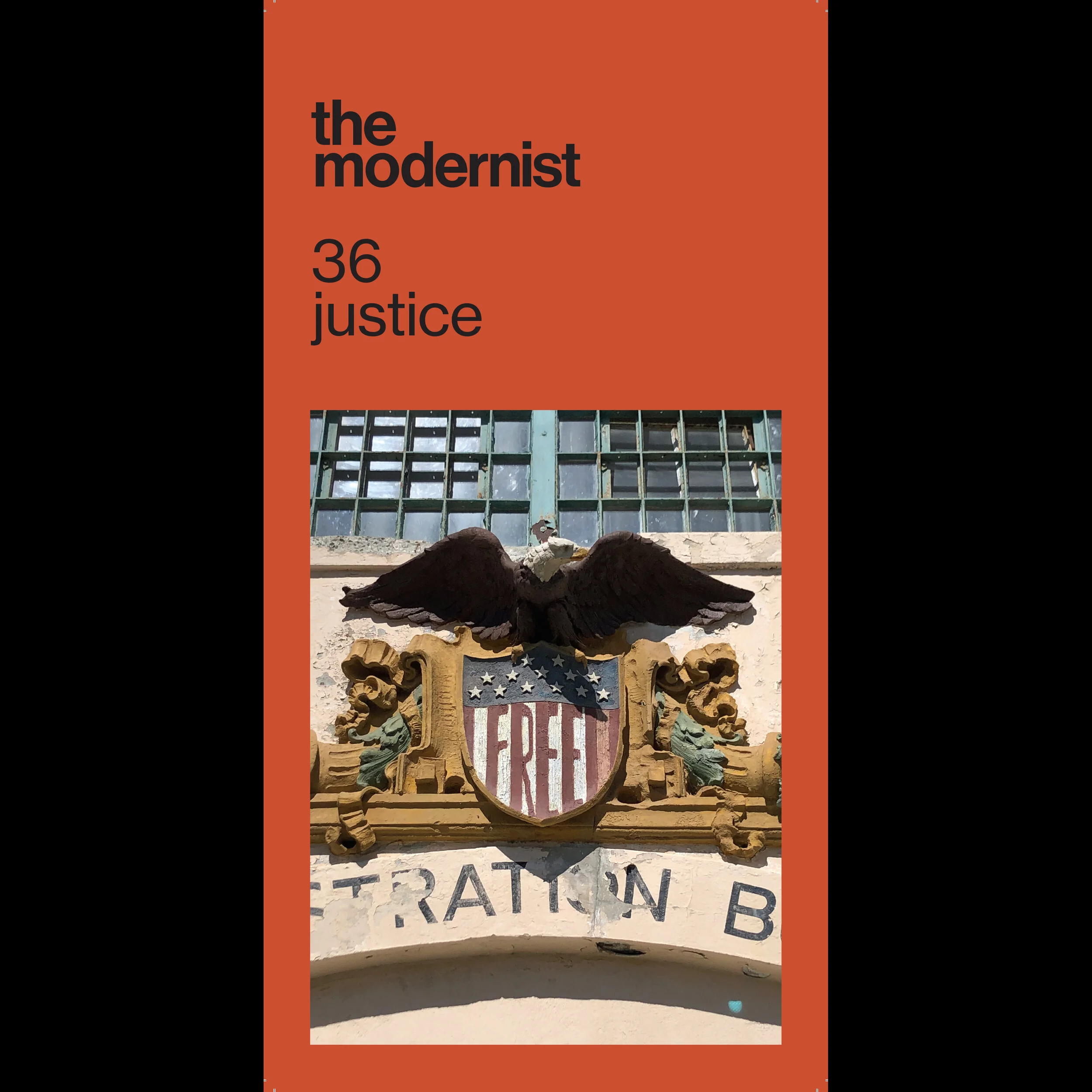
Issue 36 / Justice / Autumn 2020
Though commissioned before the life of George Perry Floyd Jr. was cut murderously short by the knee of a white American police officer, the wave of unrest and injustice released has rocked and rippled throughout this issue. No Justice. No Peace. The words ringing in our ears after events across the globe, heard still in our cities, communities and in our consciences. Black lives matter, and like justice, this isn’t a new nor simply pertinent issue, but an ongoing fight. One the assembled stories herein show affinity with, and attest to.
When bringing these stories together they confirmed a deeply held belief in me, that even though movements and actions can be separated by distance, and even decades, those seeking justice recognise each other as allies and struggle together. A sense of solidarity has the power to converge movements. We can each see ourselves in the oppressions of others.
Therefore this issue may appear to take a somewhat tangential path for a magazine devoted to the design and architecture of the 20th century. Rather than examining the structures of modernism, it instead aligns with the people showing a sense of solidarity with its ideas and its ideals.
For if any movement or idea posits itself for the betterment of humanity, and one of peace, it must first deliver justice for its people.
Craig Oldham - guest editor
CONTENTS:
BRISTOL AFTER COLSTON Theo Watt // JUSTICE & MAINTENANCE Will Jennings // A FOLLY FOR LONDON // #CLAWSOUTFORTRANS Charlie Craggs // CONCRETE CAPITOL Josh Cunningham // UNBUILDING RACISM Designing Justice + Designing Spaces //COUNCIL ESTATE CORNUCOPIA: A LEGACY OF GREEN SPACE Leanne Cloudsdale // WE HOLD THE ROCK Craig Oldham // TYPOGRAPHIC IN/JUSTICES Timothy Donaldson //A BIRD’S EYE OF INJUSTICE Carl Cattermole //ESCAPE FROM NEW YORK Roger Luckhurst // JAIL GUITAR DOORS Billy Bragg
An annual subscription to the Modernist Magazine will save you money and time. Becoming a Modernist Society Member has more benefits still, as well as the option to save £8 a year on your magazine subscription. A combined subscription and membership costs £50 and provides additional benefits as well as supporting our not-for-profit organisation. More information on our membership scheme can be found here.
By subscribing to The Modernist magazine, you will be supporting The Modernist Society, a not for profit organisation.
issue 35 / journey/ summer 2020
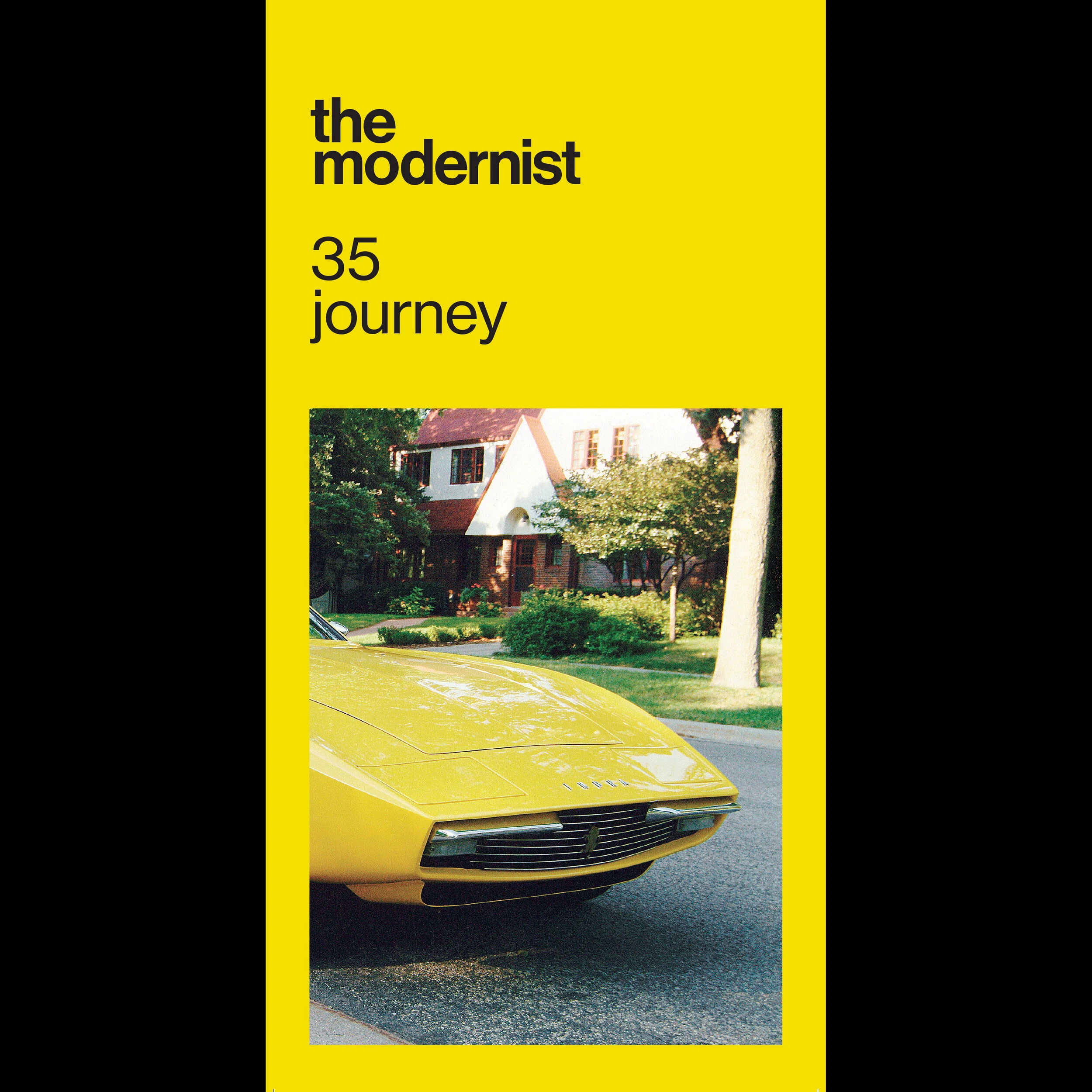
Consider this an idyll to escape into for just a moment. We hope you enjoy it.
When this issue was commissioned, the full extent of Covid-19 hadn’t yet hit the UK so the majority of us were living our lives as normal, blissfully unaware of quite how significantly things were about to change. By the time the March deadline given to contributors had come round, however, the non-key workers amongst us were already staying at home under lockdown, in isolation from one another and cut off from life as we knew it. Suddenly, the only type of journey most of us were making came in the form of one to the local supermarket, or within a couple miles’ radius of our homes under the guise of ‘daily exercise’. In the weeks since, our horizons have shrunk significantly, and the very act of journeying anywhere beyond our borders already feels surreal. One day, we say, but we still don’t know when that day will come.
CONTENTS
INTRODUCTION BY GUEST EDITOR Ashiya Eastwood
SOLACE IN DOLOS Vinca Power // WAITING IN COVENTRY & PRESTON Lauren Velvick // BON VOYAGE Sarah Howard // THE WAY TO SAN JOSE Sarah Feeney // THE CROSSING AT KYLESKU Nicholas Nilsen // BAT OUT OF HELL Peter Wyeth // A PRIVATE ROOM ON WHEELS Kate Schneider // ROADS Helen Angell & Richard Davis // KRAFTWERK: ROAD & RAIL Matt Retallick // ‘A LONG LOOK’: HENRY IDDON’S FORTON STORIES David Cooper // REMEMBER LLANDUDNO James Wise // ON LEE CIRCLE MAGIC Mark Banks
(Published June 2020)
135mm(w) x 280mm(h)
issue 34 / juxtaposition / spring 2020
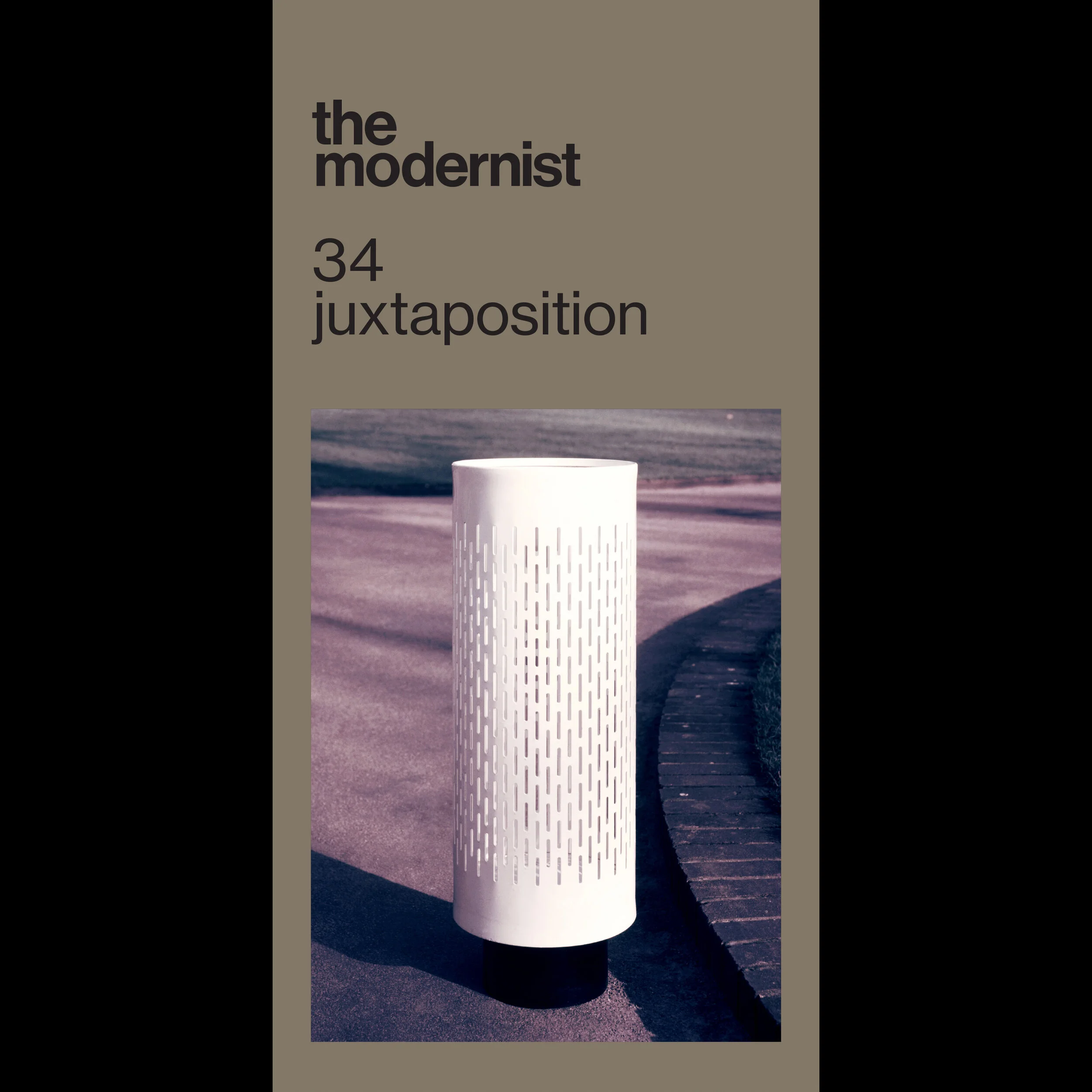
In the enduring search for the peaceful rural ideal it can be easy to forget that the ‘rural’ acts as a conduit for the modern. Through their role in transport, militarisation or energy production, these pastoral, bucolic or rugged areas have evolved their own architectures and infrastructures. A dam halfway up a mountain, for example, is a surprise – a startling juxtaposition – but as with so many edifices it is there for one reason: to help us live.
The rural modern also deals with the consequences of this life, be it a litter bin for our detritus or a concrete bus shelter designed to protect us from the Hebridean elements. Larger structures become part of identity, embodying a community role which transcends their function. As symbols of working and social life, their memory persists long after the structures themselves have gone. The recent demolition of Ironbridge B’s cooling towers – designed to blend with the landscape – will stand as testament to this. Whilst its industrial revolution neighbours are preserved in the nearby gorge, these modern structures are cleared to make way for a new modern: it is up to us to preserve these as best we can – through our words, memories, images and interpretations, something which will become more pressing as an increasing number of post-war examples reach the end of their working lives.
Join our contributors as we explore the diversity of rural modern juxtapositions, covering everything from domestic architecture to concrete ‘listening ears’ in the process.
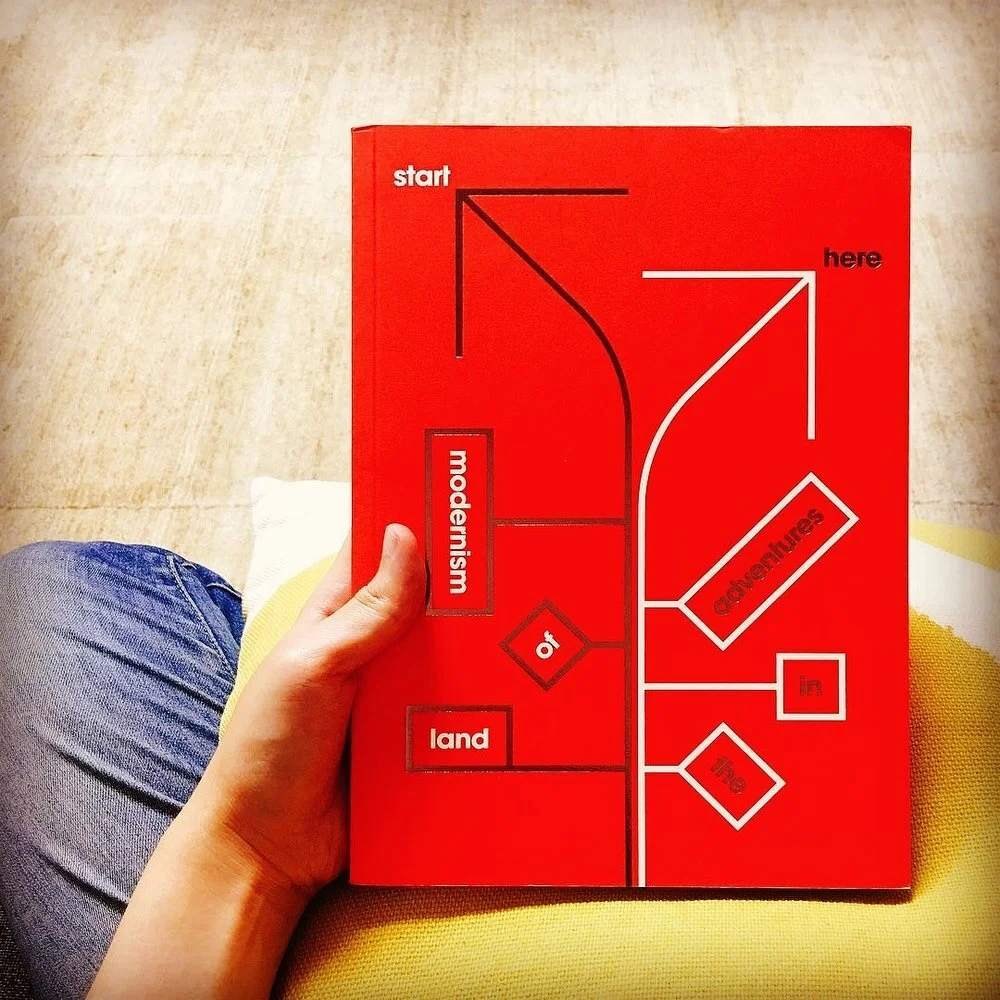
Adventures in the Land of Modernism
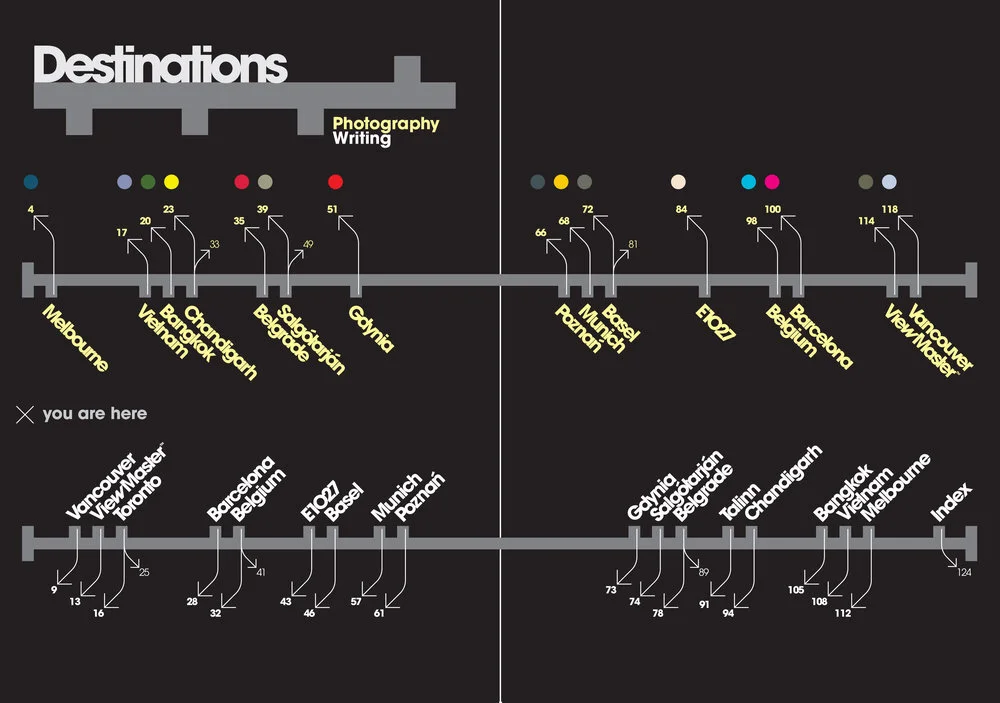
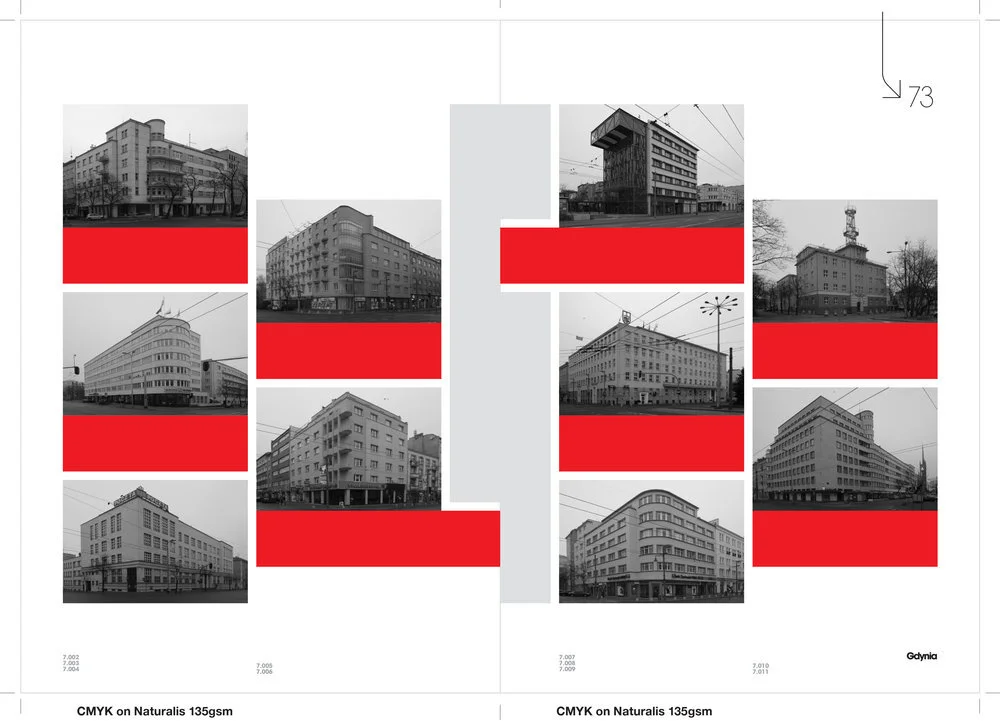
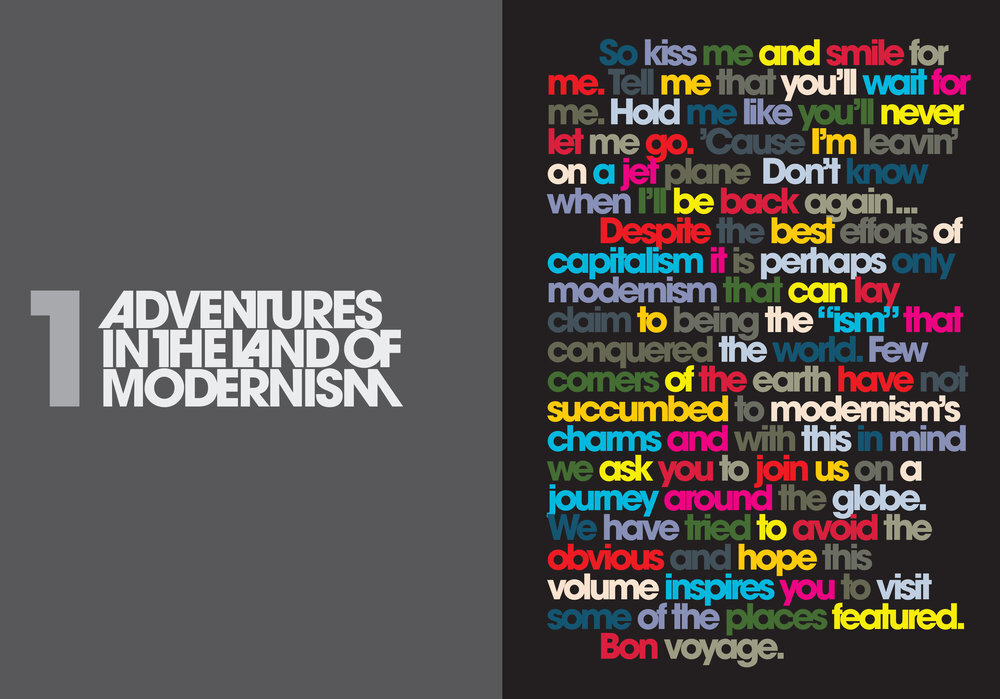
Morning all. Today we are looking back at one of our favourite publishing projects, Adventures in the Land of Modernism from 2018. In the book you can take a trip around the world, from east to west and back again. Stop off at various locations where you can find interesting pockets of Modernism. We still have copies of the publication left, at a special reduced price of £10, so why not buy a copy and travel in the Land of Modernism from the comfort of your own home? Get yourself a copy here
Sixteen correspondents share personal experiences of their travels:
1. Gdynia - Jameson Kergozou
2. Belgium - Connely/Steele
3. Salgótarján - Dr Luca Csepely-Knorr
4. Viewmasters - Jon Riley
5. Belgrade - Richard Brook
6. E1027 - Sarah Hyde
7. Munich - Eddy Rhead
8. Viet Nam - Mel Schenk
9. Basel - Sarah Feeney
10. Melbourne - Aly Stevenson
11. Vancouver - Nicole Sylvia
12. Barcelona - Monk Kollektiv
13. Chandigarh - David Quinn
14. Tallinn - Aidan Turner Bishop
15. Toronto - Gerard Barry
16. Poznan - Peter Halliday
Beautifully designed by Jonathan Hitchen in Manchester
Paper kindly supplied by G F Smith in Hull
Printed by Evolution in Sheffield
Colour
123 pages
240 x 175mm
Litho Print
ISSN: 2516-3469
issue 32 / invisible / autumn 2019
autumn 2019
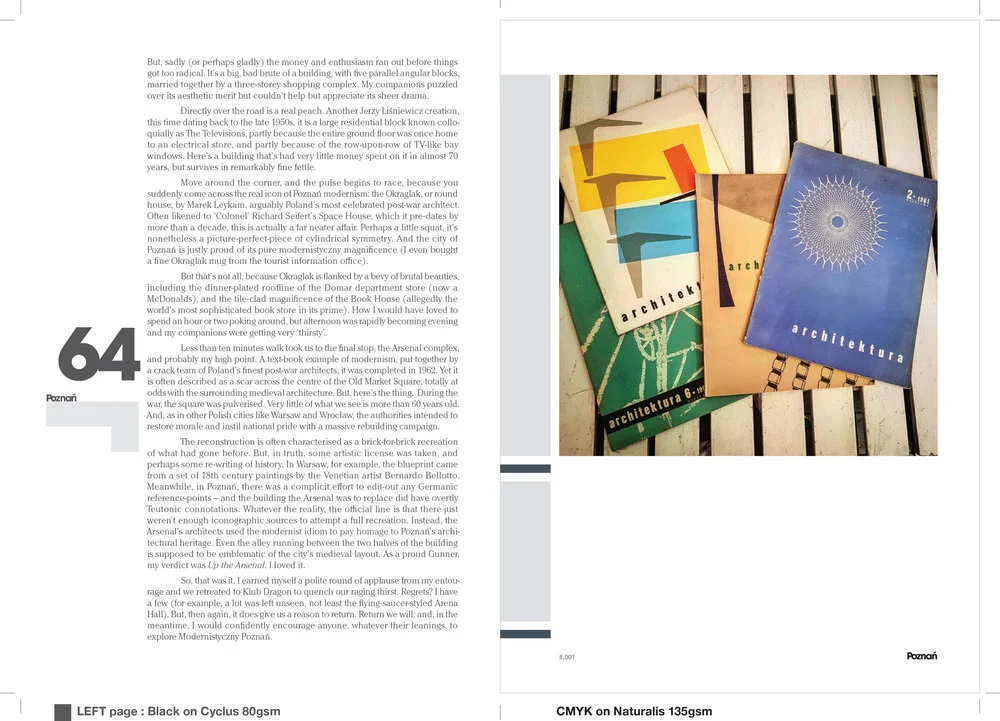
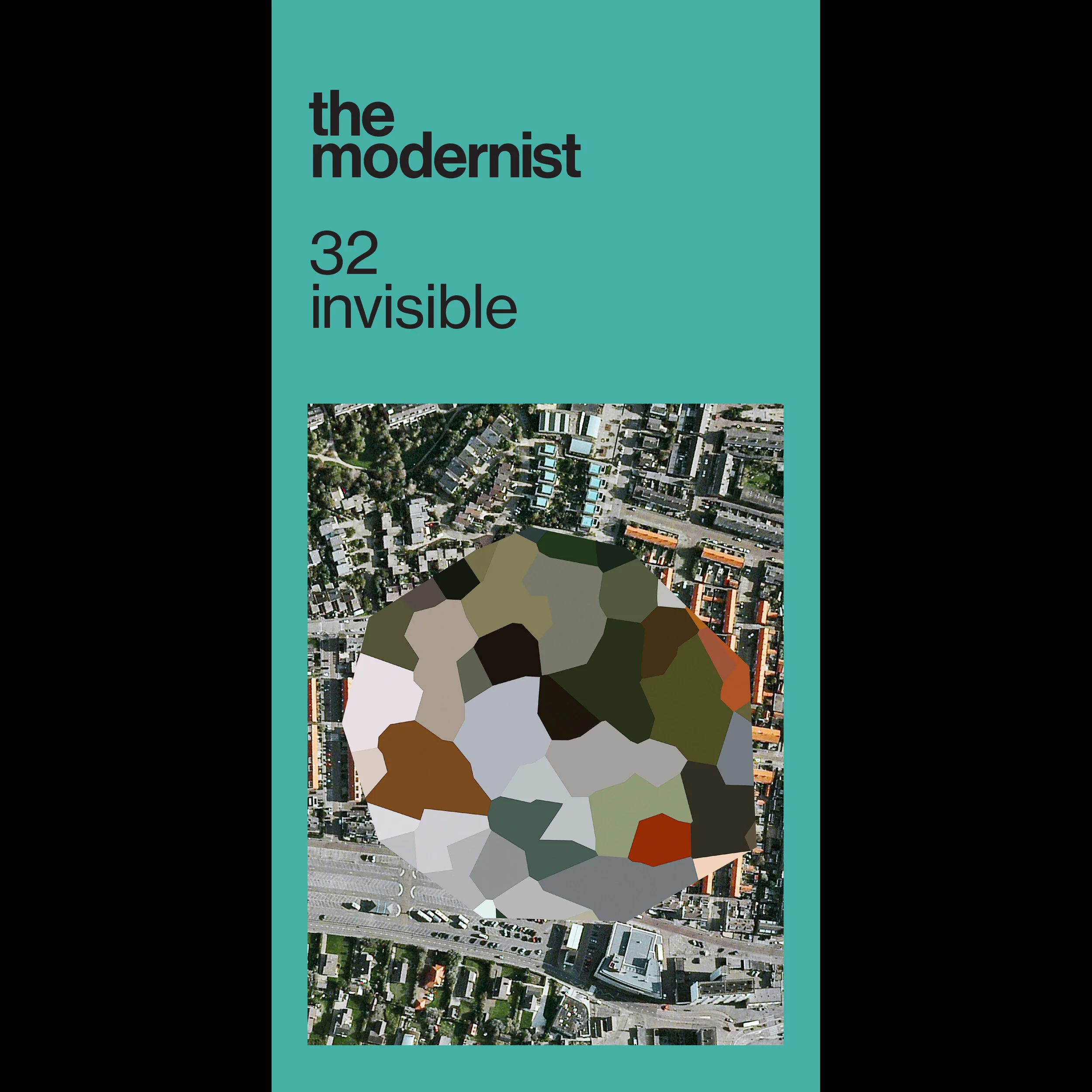
Although much of the seductiveness of modernism relates to its aesthetic qualities, this issue looks beyond the immediately evident (to the frustration of our picture editors) in celebration of aspects which are undocumented, obscured, lost, overlooked and ephemeral. Although this might sound an obscure perspective to take, their role in architectural history is no less important or intriguing. So often these jostle up side-by-side with modernism’s more familiar facets, but as a result of our deference to debates about style, star characters, iconic buildings, and in architecture’s anonymous collaboration, these other aspects disappear. If we can expand our field of vision to look for a moment at what these might be, we might consider what we have already lost, and what we also stand to lose.
This issue is dedicated to the memory of Martin Pearce, a tutor and lecturer in history and theory at the University of Portsmouth School of Architecture since 1989, whose pursuit of ideas beyond the immediately obvious managed to make even the most obscure facets of the profession truly enthralling. Martin died suddenly during the compilation of this issue, and is deeply missed by all who were lucky enough to have been taught by – and with – him.
The legacy of his editorial insight is ever-present.
CONTENTS
DUTCH LANDSCAPES Mishka Henner
TOWNSHIP SCULPTURE: THE INVISIBLE THEATRE Alistair Fair
THE GHOSTS OF DOVER STREET Anne Massey
19 CHURCH ROAD Peter Wyeth
REVOLUTIONARY CUBAN ARCHITECTURE Laura Evans
THE PRINCIPLE OF ANONYMITY Jessica Kelly
THE NATIONAL THEATRE Simon Phipps
PLENUMS, PARTITIONS, PIPES Matthew James Wells
A MOVING IMAGE Akil Scafe-Smith + Vishnu Jayarajan
THE SIGNIFICANCE OF ERRORS Elizabeth Darling
VOICES OF EXPERIENCE Suzanne Ewing + Jude Barber + Nicola McLachlan
THE HOUSE THAT HOPED TO HIDE ITSELF Chris Rainier
REYNER BANHAM LOVES 80 ENVIRONMENTAL MANAGEMENT Daniel Stilwell
(Published October 2019)
135mm(w) x 280mm(h)
issue 31 / in-between / summer 2019
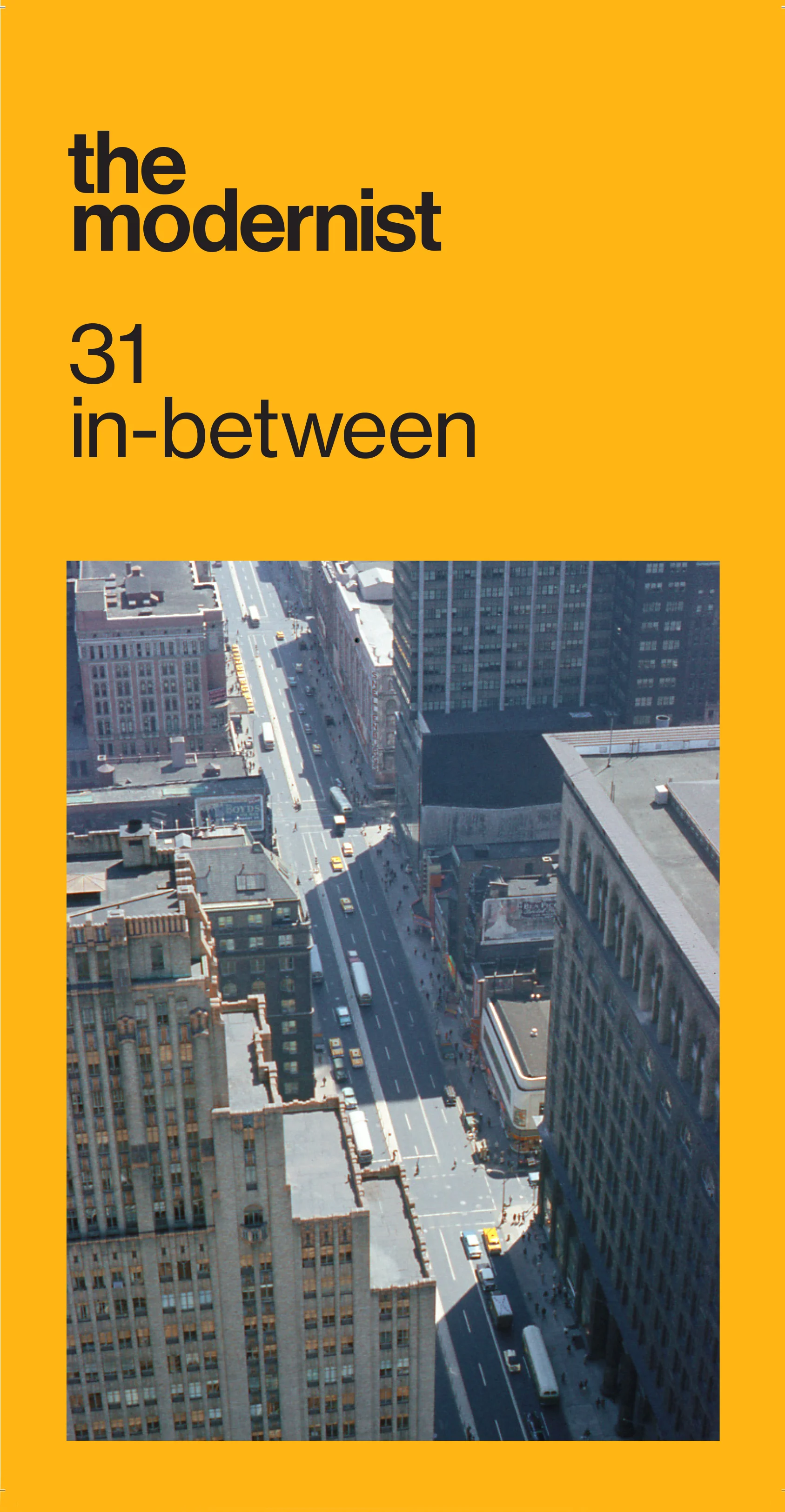
in-between | inbe twēn | informal adjective: situated somewhere between two extremes or recognised categories.
From a utilitarian metal box, a building or a garden to whole new suburbs, housing estates, new towns and regions, issue 31 of The Modernist aims to bring together a diverse range of topics.
In-Between presents traditionally less discussed examples that are not necessarily regarded as mainstream modern. Deriving from my own professional background in-between art history, landscape architecture and architecture, the intent of this issue is to broaden the boundaries and discuss topics such as tradition and modernity, city and nature, garden and region, garden city and suburban living, Eastern bloc housing estates, shipping containers and British New Towns as well as contemporary poetry and art.
CONTENTS
JAKOBSEN – BETWEEN LANDSCAPE, 06 MODERN ART AND HISTORY : Karen Fitzsimon
RETAIL CONTAINERS : Gary Warnaby
TRADITION & TRANSITION: GILLESPIE KIDD & COIA : James Robertson
SUN, SHIT, COMPOST AND AIR : Silvan Linden
WEST BERLIN BIOTOPE MAP : Sandra Bartoli
BROWN'S AMERICA : Luca Csepely-Knorr
MINIATURE GARDEN CITY : Vicky Jolley
EVERYTHING HERE IS BLISS [FRAGMENTS] : Helen Angell
TOWER AND SLAB : Eszter Bakay
FIRST NEW NEW TOWN : Jonjo Maudsley
REGULAR SHAPE OF FOREVER : André Stitt
SYSTEM OF GREEN TENTACLES : Koenraad Danneels + Bruno Notteboom
(Published July 2019)
135mm(w) x 280mm(h)
issue 30 / infrastructure / spring 2019
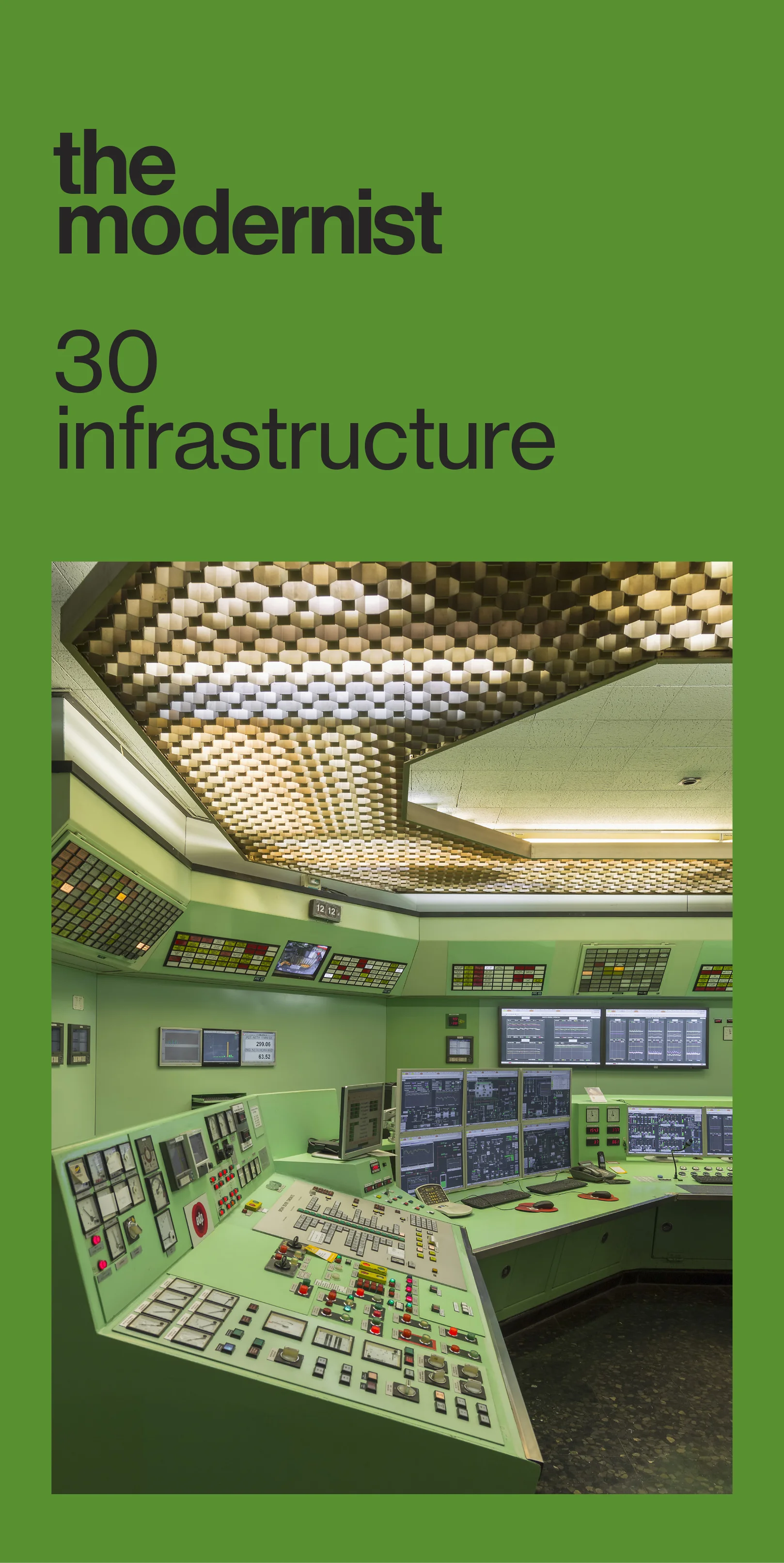
Infrastructure is where the fields of landscape, architecture and engineering meet one another, often in support of ambitious projects realised through collective means. In the post-war period large-scale government schemes were narrated as feats of engineering and focussed on ideas of taming nature or overcoming great obstacles in the drive for progress.
CONTENTS
RE-TRIANGULATION (1935-62) : Philip Etchells
A LANDSCAPE FOR LIVING : Linda Ross
A NETWORK OF TRANSMITTER TOWERS : Elain Harwood
M62 : Kevin Crooks
POWER BOX : Mike Dring
THE CASE OF THE CEGB : Laura Coucill
THE POWER OF PROAZA : William Parnell
WILD LANDSCAPE : Luca Csepely-Knorr
THE SPACE BENEATH : Ray Newman
BRIDGE OF SPIES : Sarah Feeney
INDIAN DAMS : Awni Patni
(Published early April 2019)
135mm(w) x 280mm(h)
Subscribe and receive each quarterly issue at a reduced price.
adventures...
Its a travel magazine of sorts.. Out now.
the shop
In our online shop you can buy back issues as well as our other publications and some other of Modernist goodies.. have a look.
fresh tweets
new events


Commodo cursus magna, vel scelerisque nisl consectetur et. Donec id elit non mi porta gravida at eget metus.