
1 Year of Modernist HQ
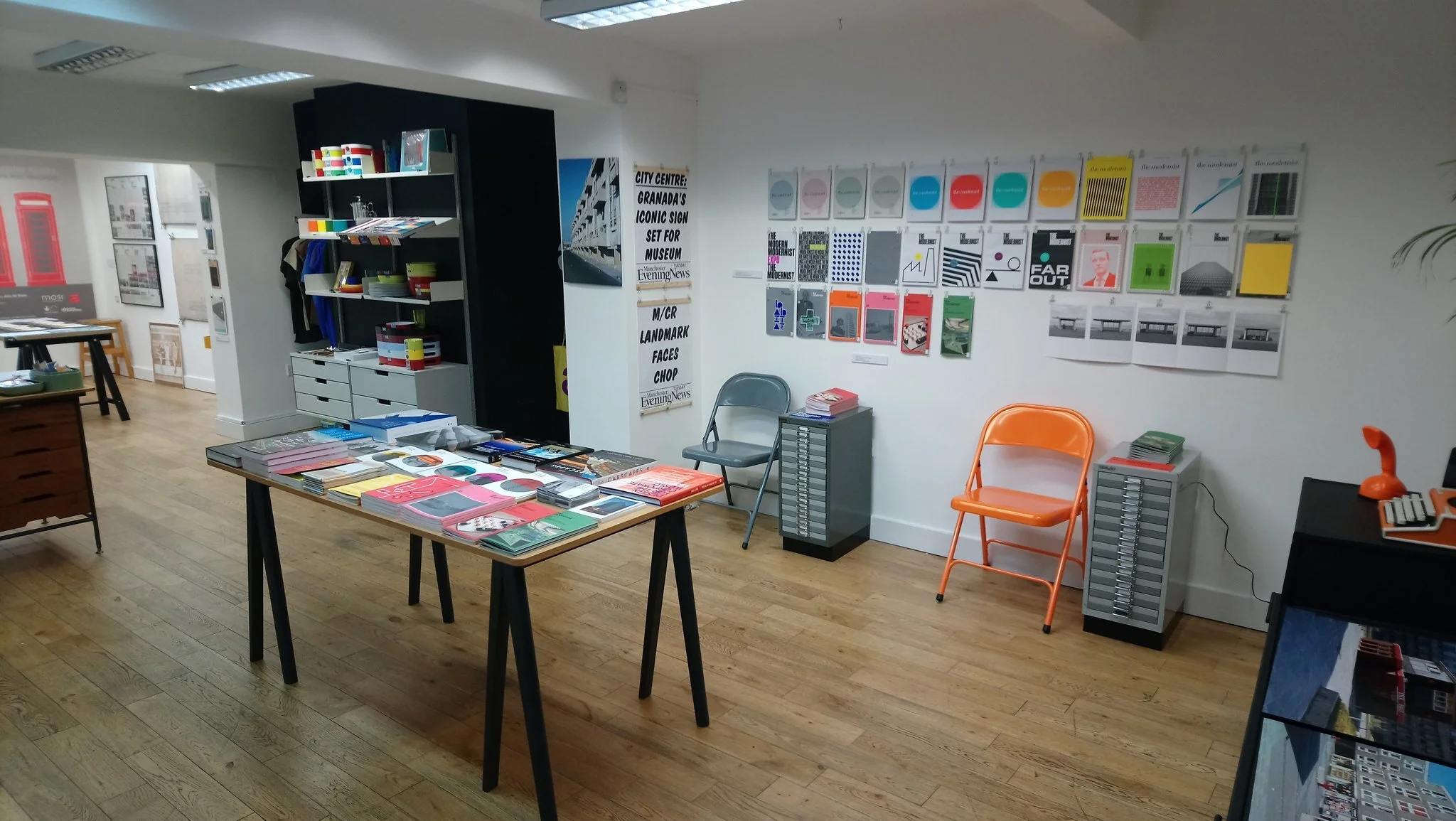
We can’t quite believe it, but it’s been a year since we opened our HQ in Manchester’s Northern Quarter. So much has happened over the last 12 months, exhibitions, events, the establishment of a reading room, copies Campari, a dog chewing our stairs, and that’s just for starters. As our devoted followers you will of course remember that we launched with a retrospective exhibition of the last decade of The Modernist magazine. So today, our blog post looks back at that exhibition, which opened to the public on 2nd May 2019.
FROM OUR ARCHIVES
From Our Archives was the first exhibition in The Modernist Society’s new dedicated exhibition space at 58, Port Street. As 2019 was the 10th anniversary of the formation of the society, this exhibition featured some of the team’s favourite items from the organisation’s project archive.
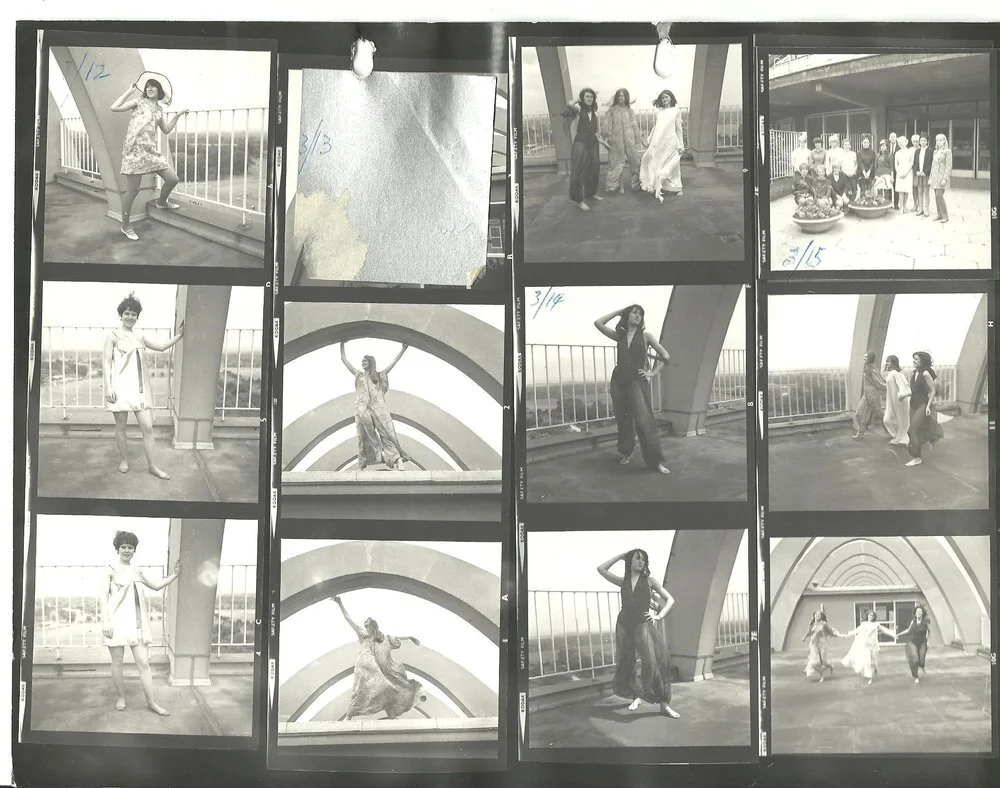
A residency at Manchester’s ‘Toastrack’ unearthed original blueprints as well as photographs of staff and students dating back to its early days as the ‘Domestic and Trades College’ with fashion shoots on the roof and butchering courses in the kitchens.
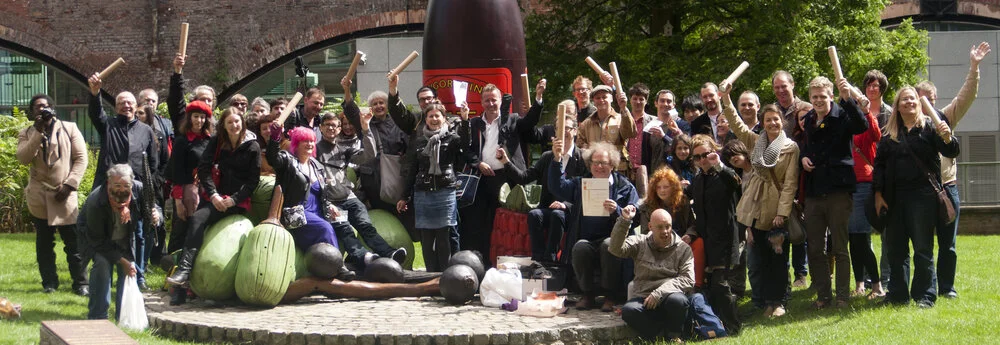
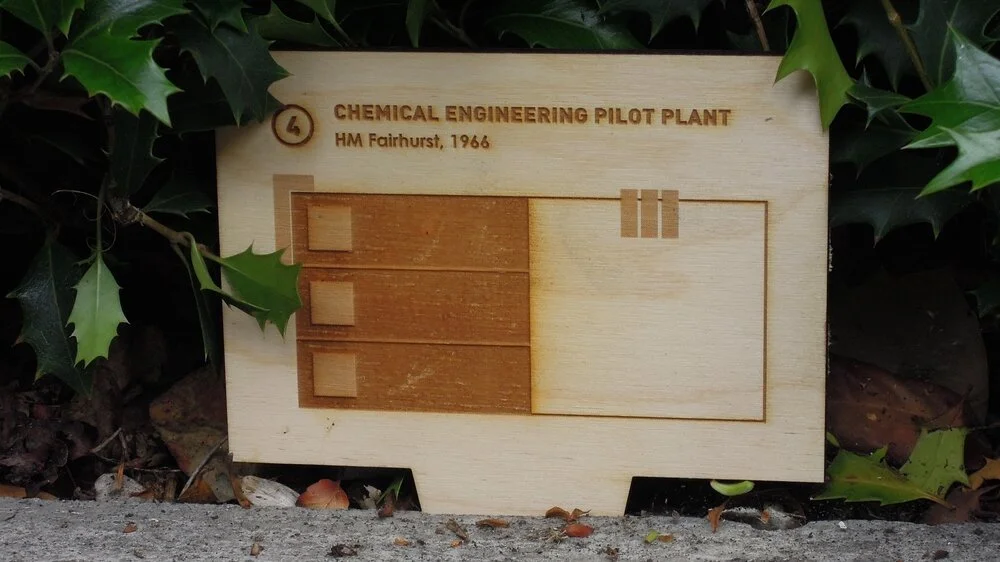
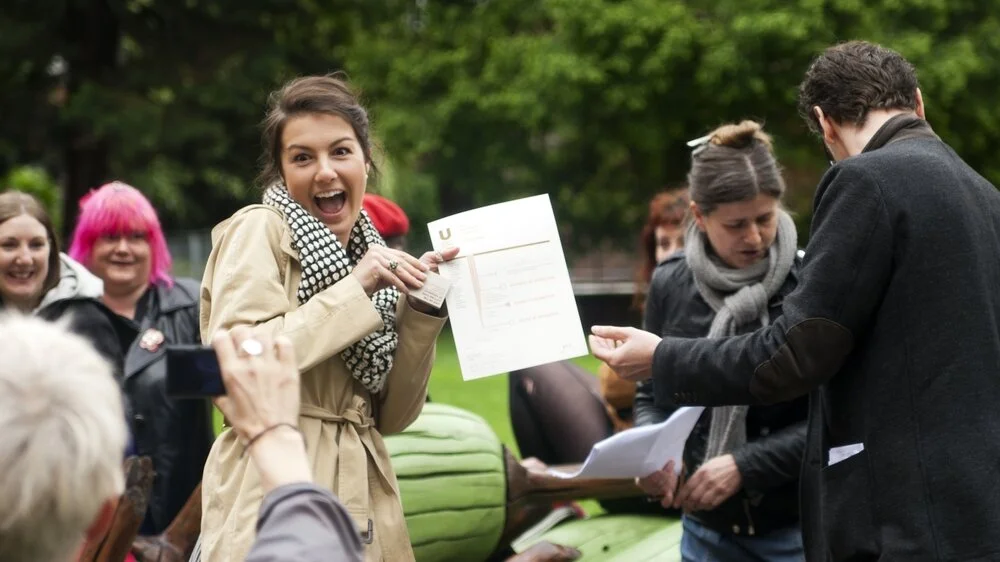
A long standing love affair with the UMIST Campus led the Society to unilaterally declare it as a Conservation Area in 2012. The Society became ‘uninvited artists in residence’ at the Campus and after awarding ‘degrees’ from their own Modernist University they designed and planted plaques and created a map to honour the very best cluster of 1960s architecture in the city.
In 2011 the team came up with a daft idea of publishing a magazine. Thirty issues, five designers and hundreds of contributors later, all the issues of the modernist magazine were on displayed, and you were all asking to buy Issue 1, which wasn’t possible, until… now
CAMPUS (2012)
If we were young and trendy, we would probably call this a ‘throwbackthursday’, but instead we’ll call this ‘another treat from our archive’. Campus, our project from 2012 saw a band of Modernist pranksters confer guerrilla conservation status on an endangered sixties campus.
Founders of the Manchester Modernist Society, Jack Hale & Maureen Ward together position themselves as uninvited artists in residence of the University of Manchester and autonomously declared the UMIST campus as Manchester’s first Modernist Conservation Area, much against the inclinations of the Manchester City Council and the University Estates department. The campus, much of which was under threat of sale by the University, was not only judged by the artists to be of significance due to its architectural and sculptural qualities but also because of its place within scientific and mathematical modern history. It is this legacy that the artists sought to rescue from disregard and neglect.
The modernists rasied funds for this project by 'selling' degrees from the Modernist University. This crowd-sourced funding campaign later won a national award.
The degrees were awarded at the UMIST campus, followed by the planting of specially designed plaques commemorating each of the campus buidings.
The plaques and campus maps were designed by Lisa Barlow and Nick Yates. Thanks also to Sue Platt and Jonathan Hitchen of the Manchester School of Art.
CAMPUS was a Cornerhouse Micro Commission, supported by Paul Hamlyn Foundation

Adventures in the Land of Modernism
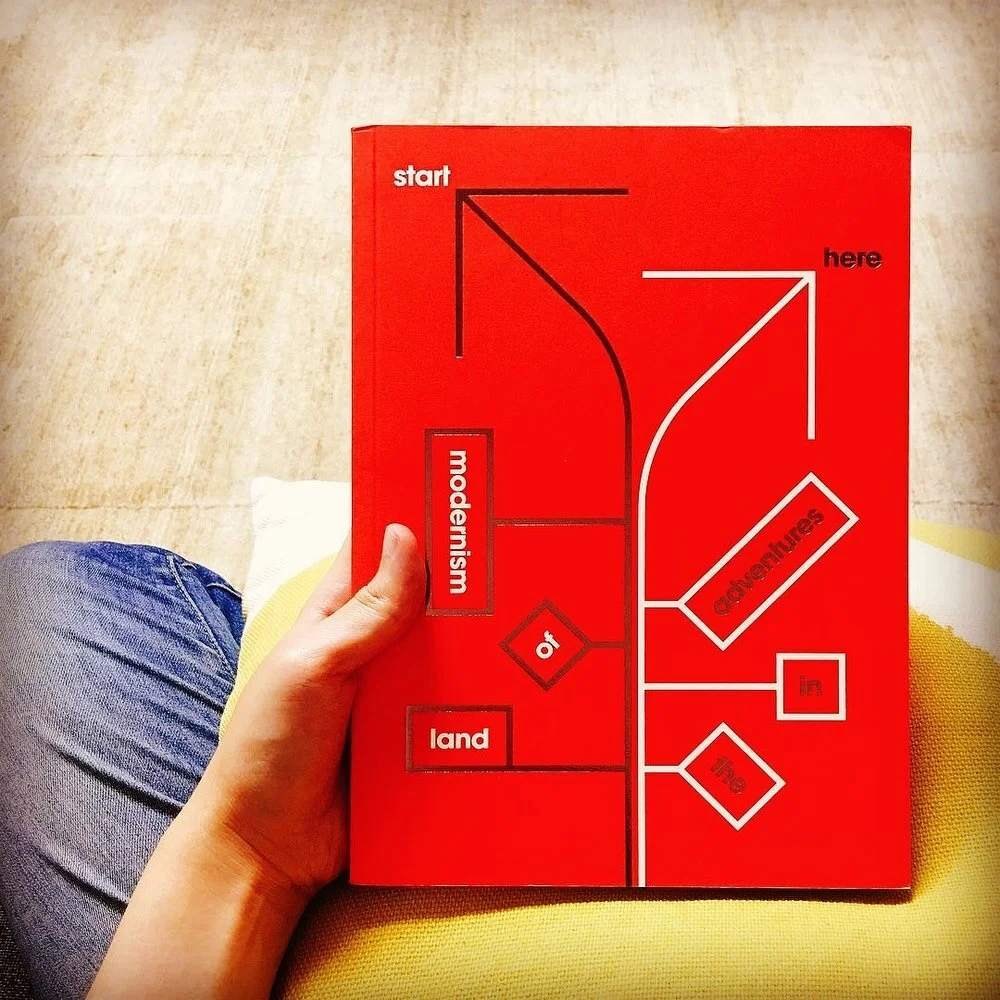
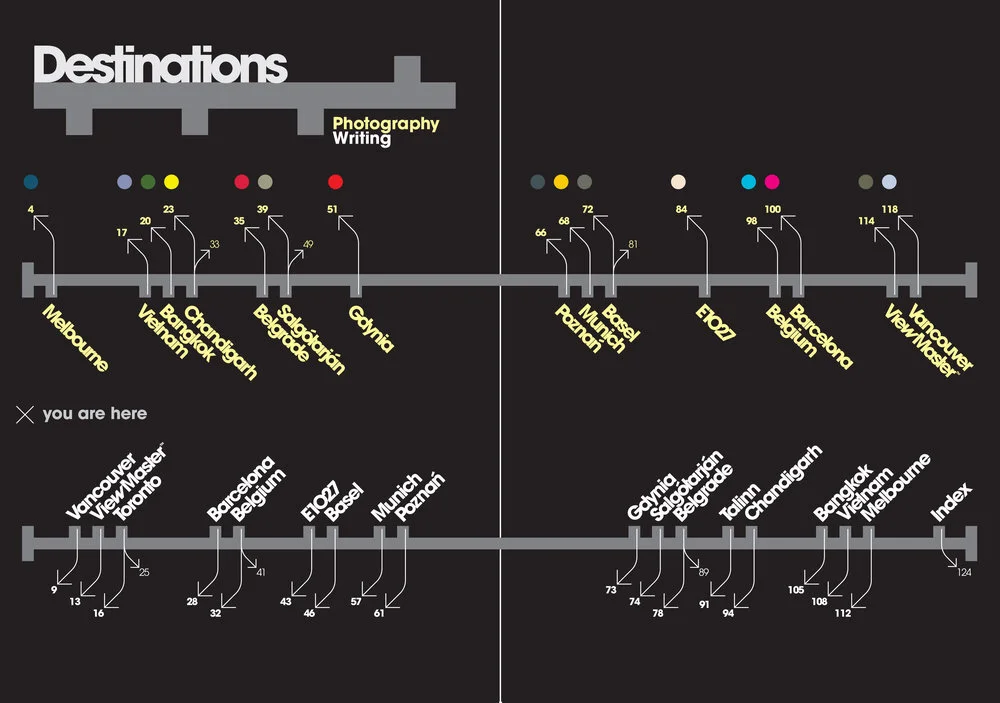
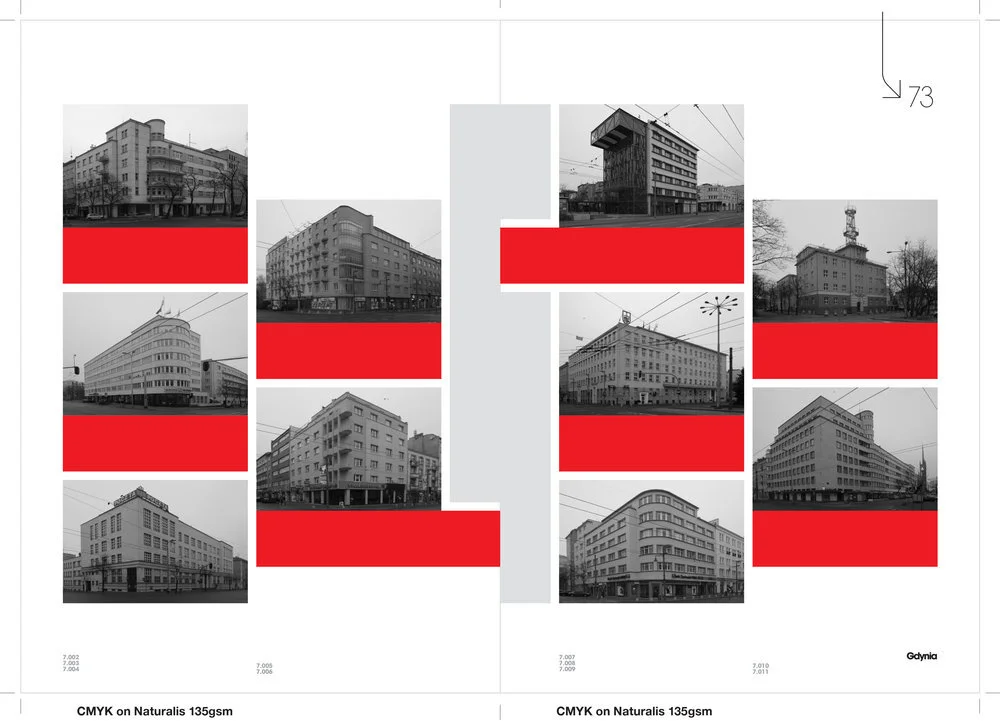
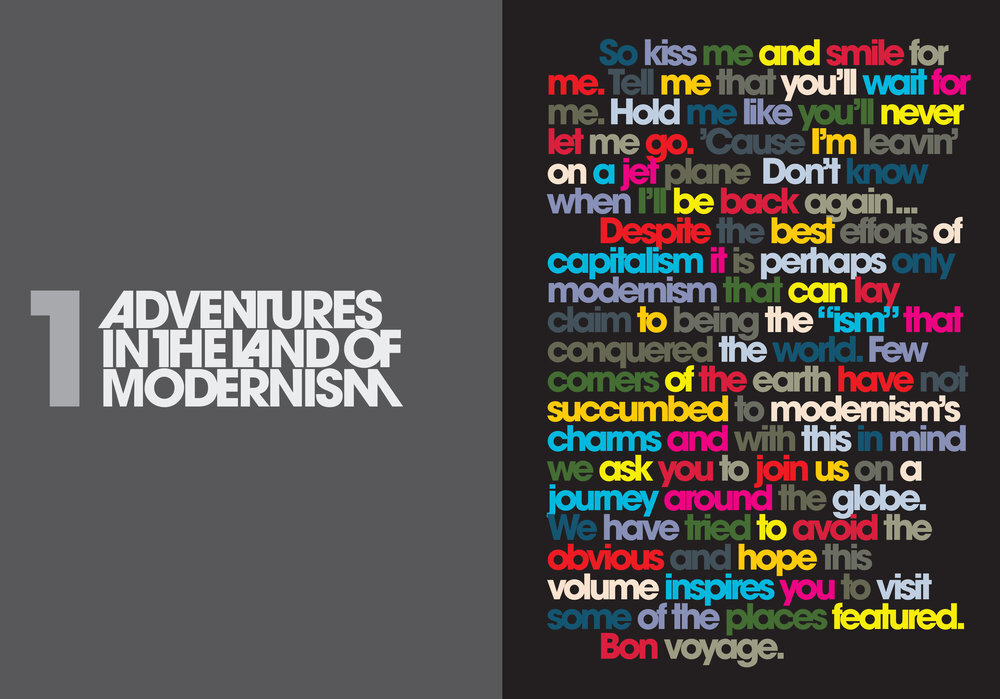
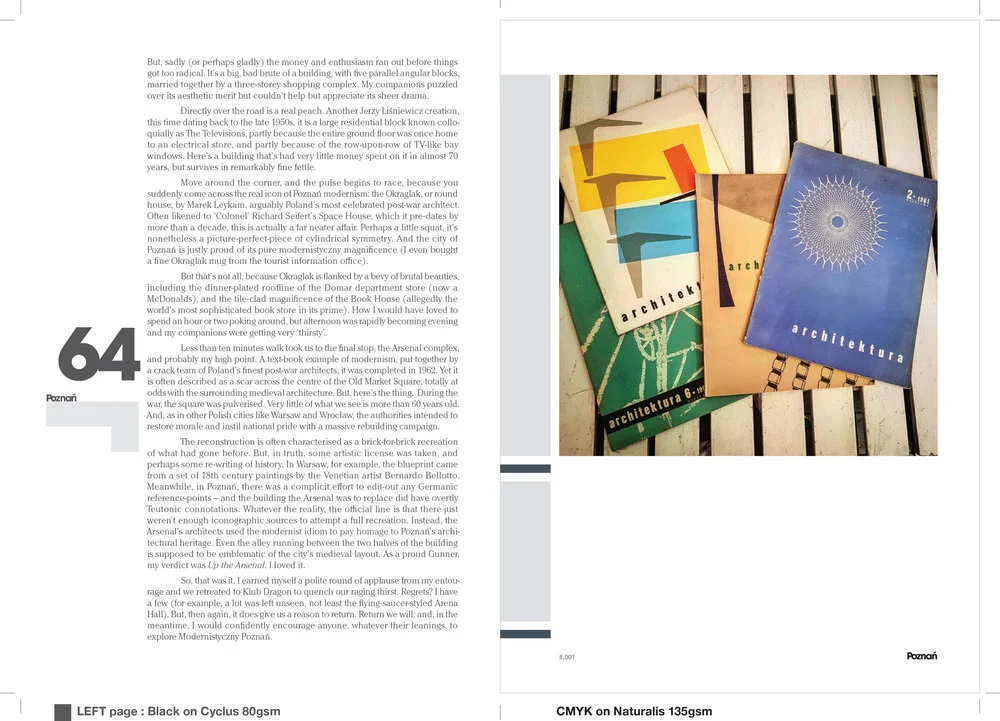
Morning all. Today we are looking back at one of our favourite publishing projects, Adventures in the Land of Modernism from 2018. In the book you can take a trip around the world, from east to west and back again. Stop off at various locations where you can find interesting pockets of Modernism. We still have copies of the publication left, at a special reduced price of £10, so why not buy a copy and travel in the Land of Modernism from the comfort of your own home? Get yourself a copy here
Sixteen correspondents share personal experiences of their travels:
1. Gdynia - Jameson Kergozou
2. Belgium - Connely/Steele
3. Salgótarján - Dr Luca Csepely-Knorr
4. Viewmasters - Jon Riley
5. Belgrade - Richard Brook
6. E1027 - Sarah Hyde
7. Munich - Eddy Rhead
8. Viet Nam - Mel Schenk
9. Basel - Sarah Feeney
10. Melbourne - Aly Stevenson
11. Vancouver - Nicole Sylvia
12. Barcelona - Monk Kollektiv
13. Chandigarh - David Quinn
14. Tallinn - Aidan Turner Bishop
15. Toronto - Gerard Barry
16. Poznan - Peter Halliday
Beautifully designed by Jonathan Hitchen in Manchester
Paper kindly supplied by G F Smith in Hull
Printed by Evolution in Sheffield
Colour
123 pages
240 x 175mm
Litho Print
ISSN: 2516-3469
The Modernist Shop (2011)
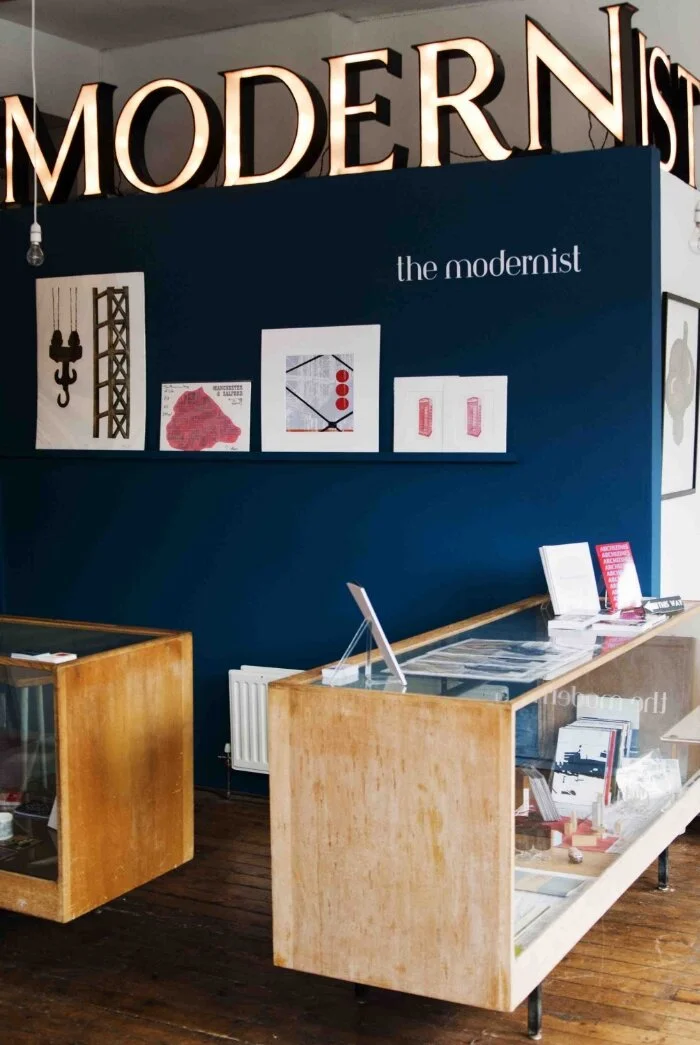
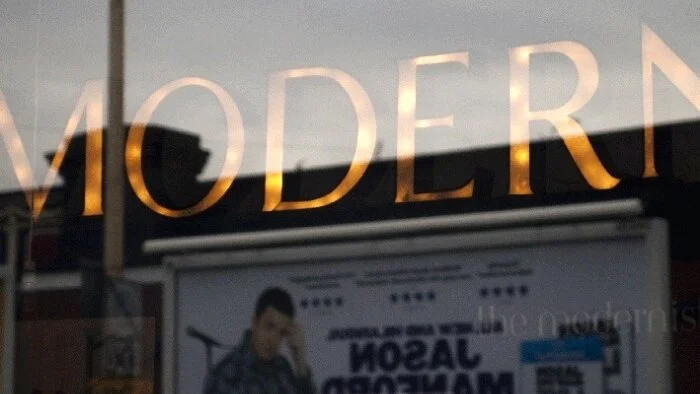
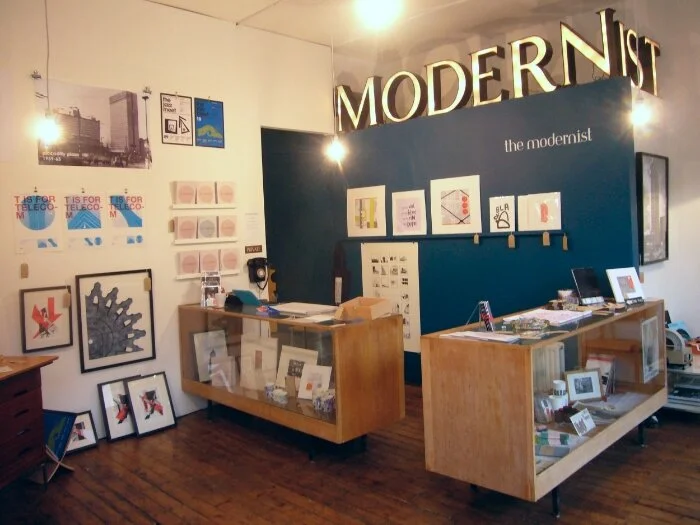
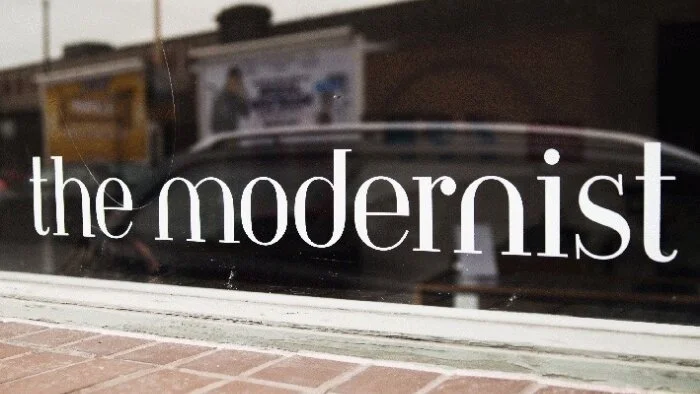
We are missing our Northern Quarter gallery and shop a lot, but did you know The Modernist Society opened a pop-up shop / creative project in Salford back in 2011?
In November that year, at 142 Chapel Street, we opened a temporary shop. We invited artists and designers to submit work with an architectural theme and we kept the shop open until Christmas of that year. Prints, posters, etchings and tea towels were all for sale. The glass cabinets were the result of an eBay purchase and a mammoth trip to Leigh on Sea.
A tea towel featuring Salford's Shopping City was an unexpected hit. The illuminated sign was loaned to us by artist Andrea Booker. The success of the shop led us to continue selling publications and artwork.
Metro Modern Map (2013)
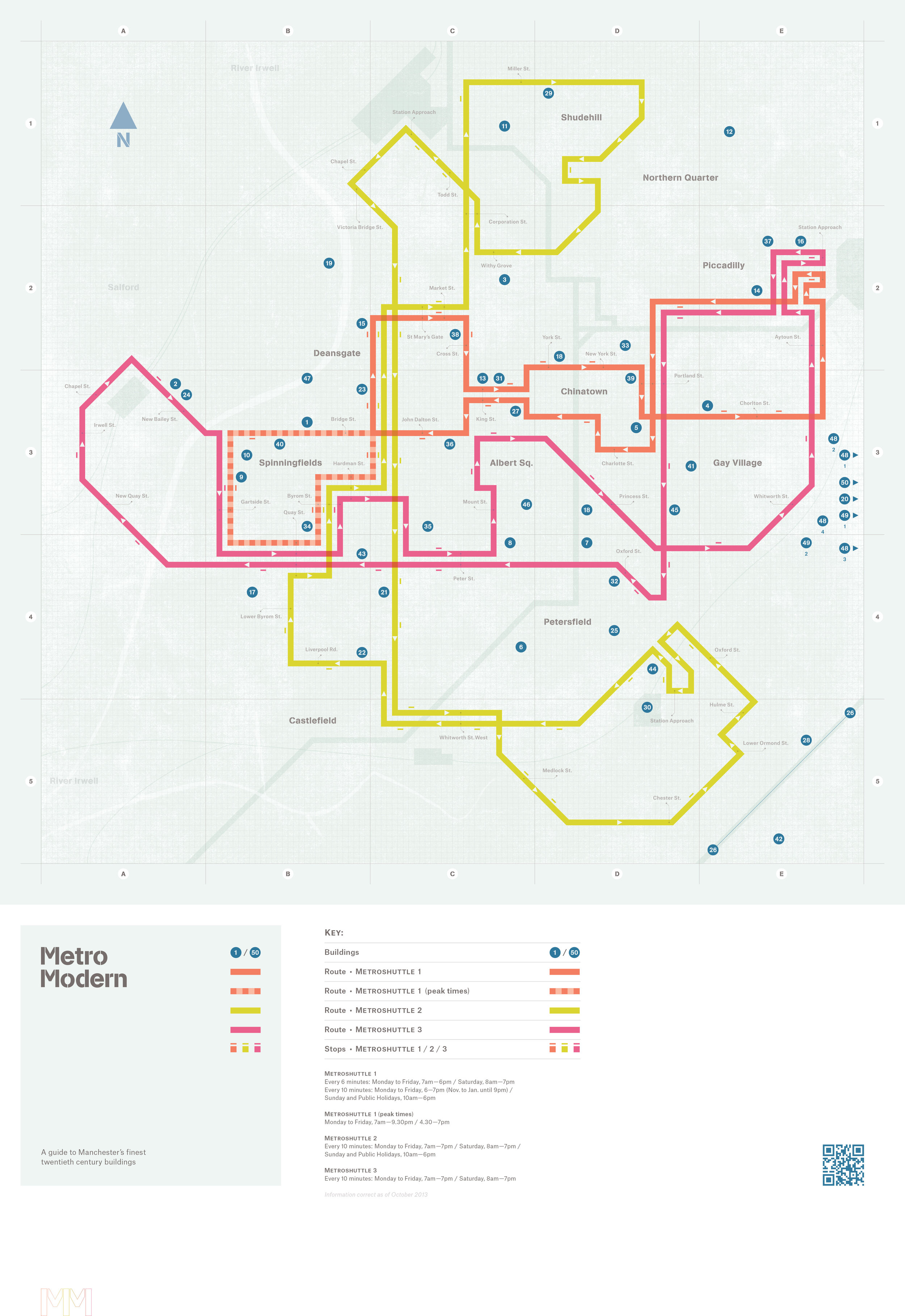
Our blog post today looks back to 2013 and our Metro Modern Map.
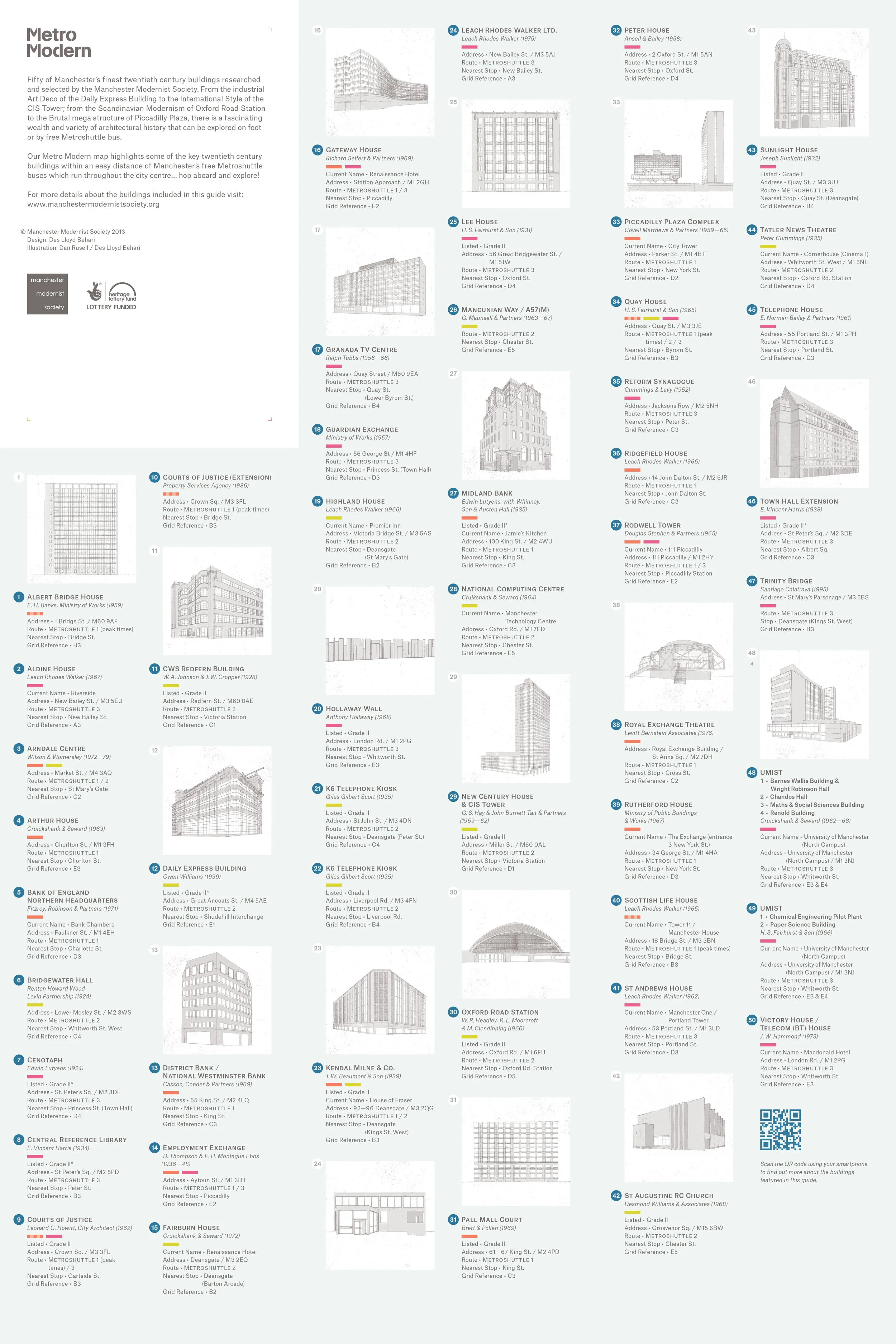
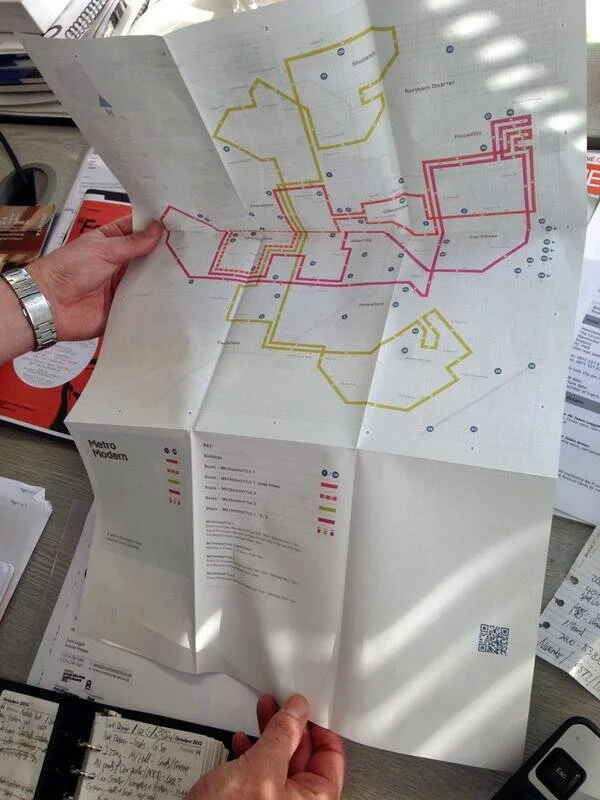
Metro Modern, was the Manchester Modernist Society’s free map & guide to Manchester’s Twentieth Century Architecture. The map enabled you to tour the best of Manchester’s modernist architecture using the three Metro Shuttle Bus routes. 2013 was a long time ago, and the routes have probably changed since, but why not use the map as a guide for your next state sanctioned stroll?
The map includes important Modernist buildings such as the 1939 Daily Express Building and the 1962 CIS Tower as well as some less well recognized buildings such as St.Augustine’s Church, All Saints and the ‘brutalist’ Hollaway Wall on London Road. It was designed by Des Lloyd Behari & Dan Russell.
You can download the map for free here
this project was kindly supported by The Heritage Lottery Fund and Museum of Transport Greater Manchester
Co-Op: New Century House
Photographer Daniel Hopkinson joined The Modernist Society and The Twentieth Century Society for a special tour of Manchester’s New Century House before the lock down, and he’s shared these photos of the day with us. New Century House was designed by G.S. Hay and Gordon Tait in 1962, and was constructed by John Laing & Sons for the Co-Operative Insurance Society. Special thanks to Daniel fo allowing us to post these, and please do take the opportunity to take a look at Daniel’s website, here
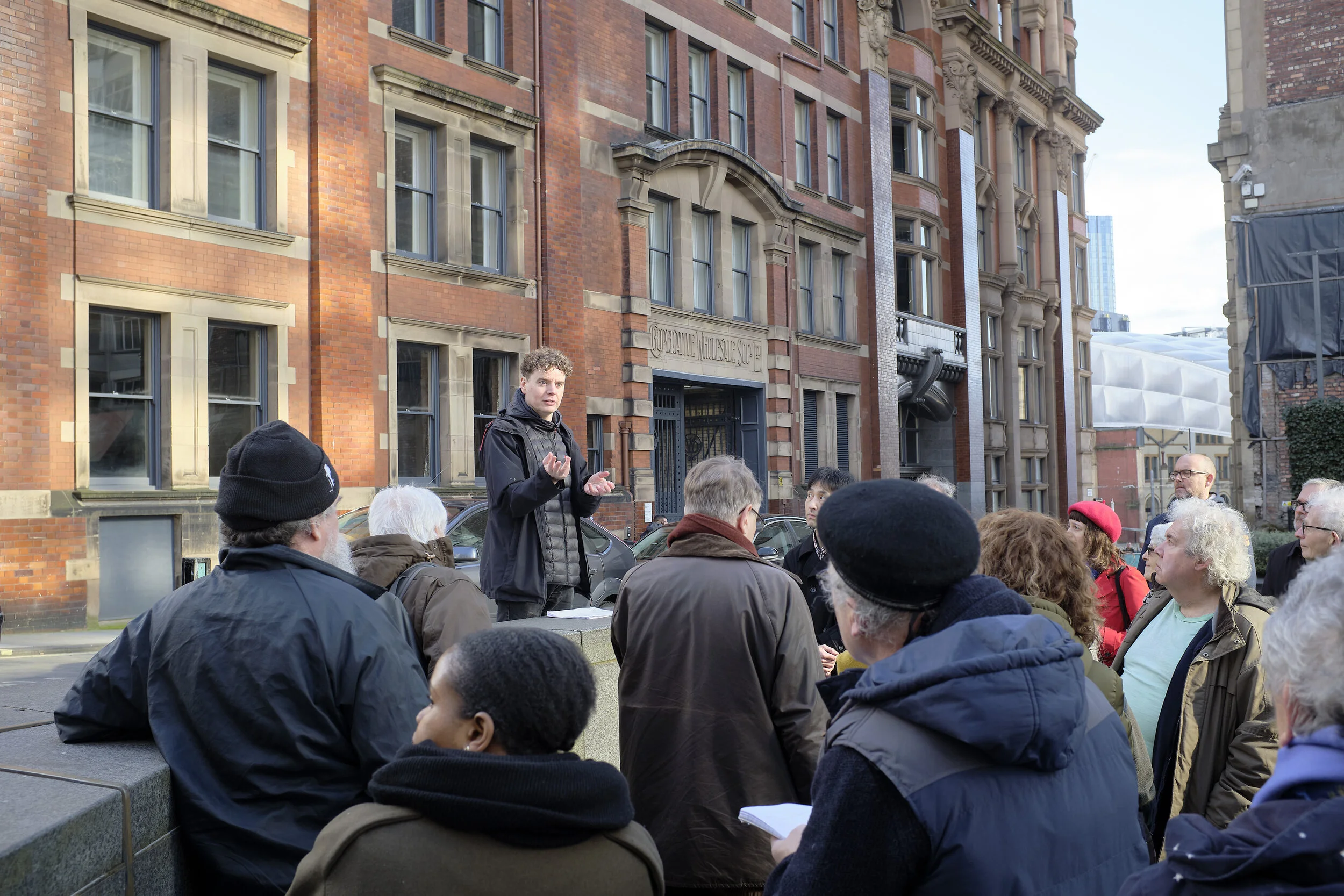
Photo by Daniel Hopkinson
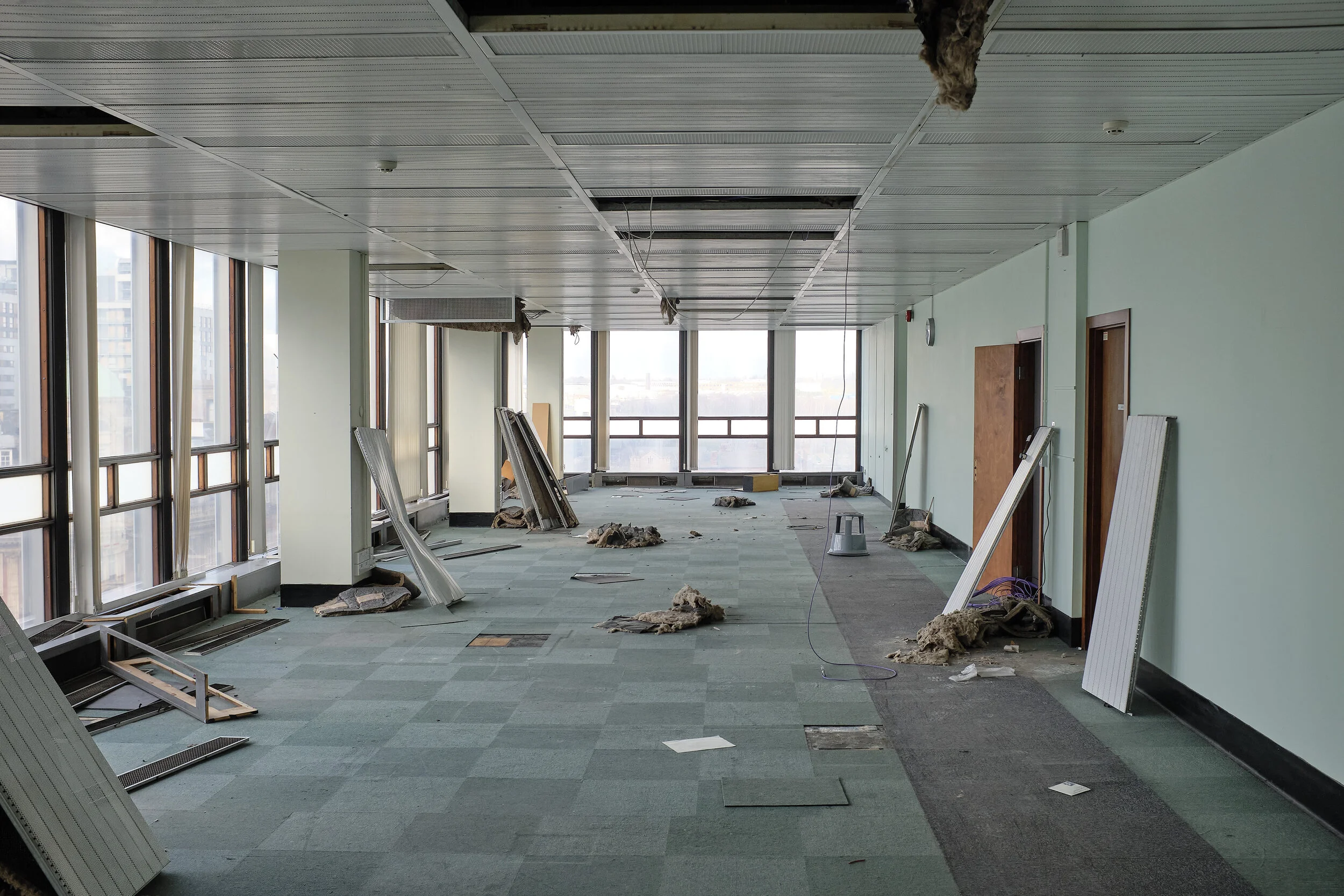
Photo by Daniel Hopkinson
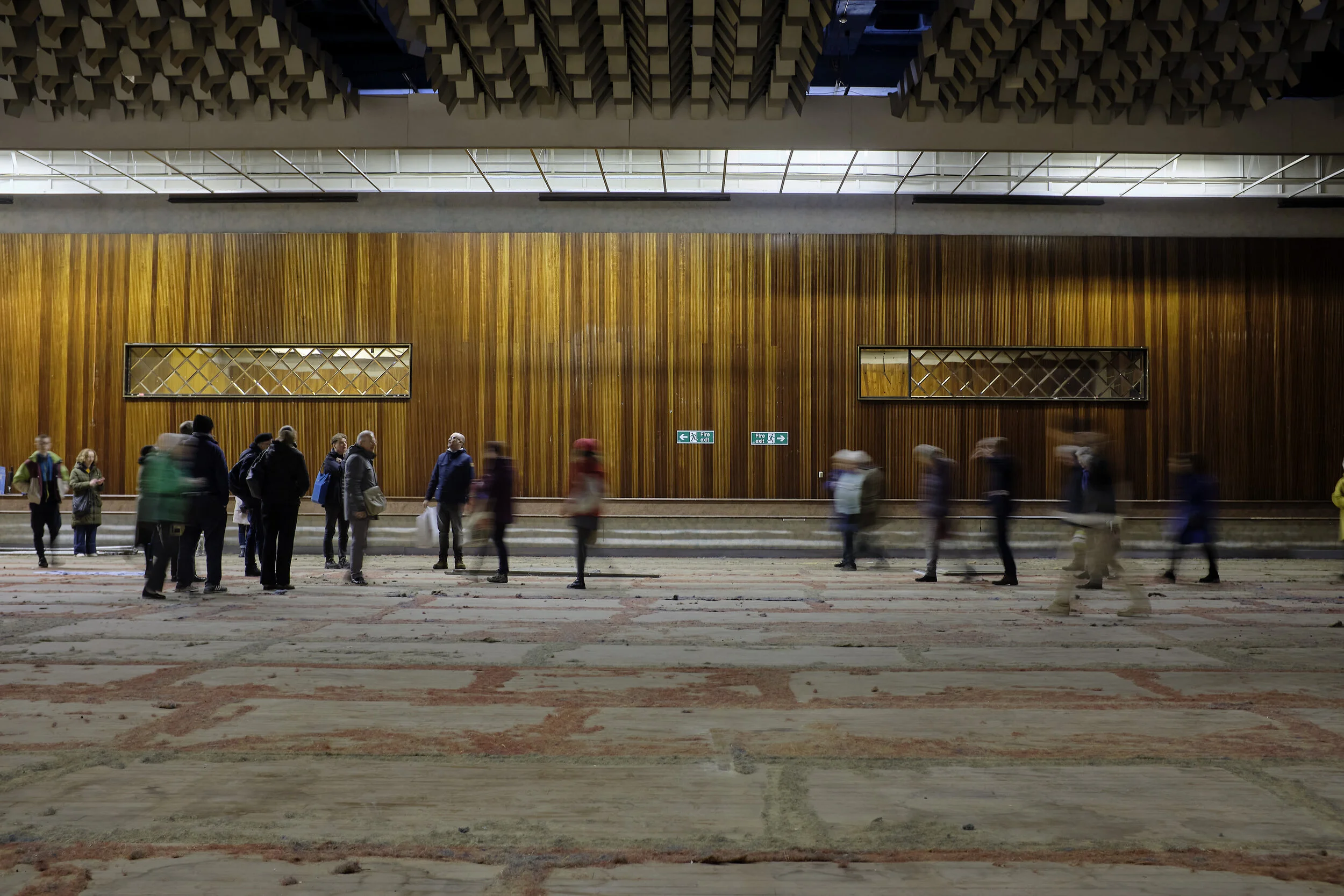
Photo by Daniel Hopkinson
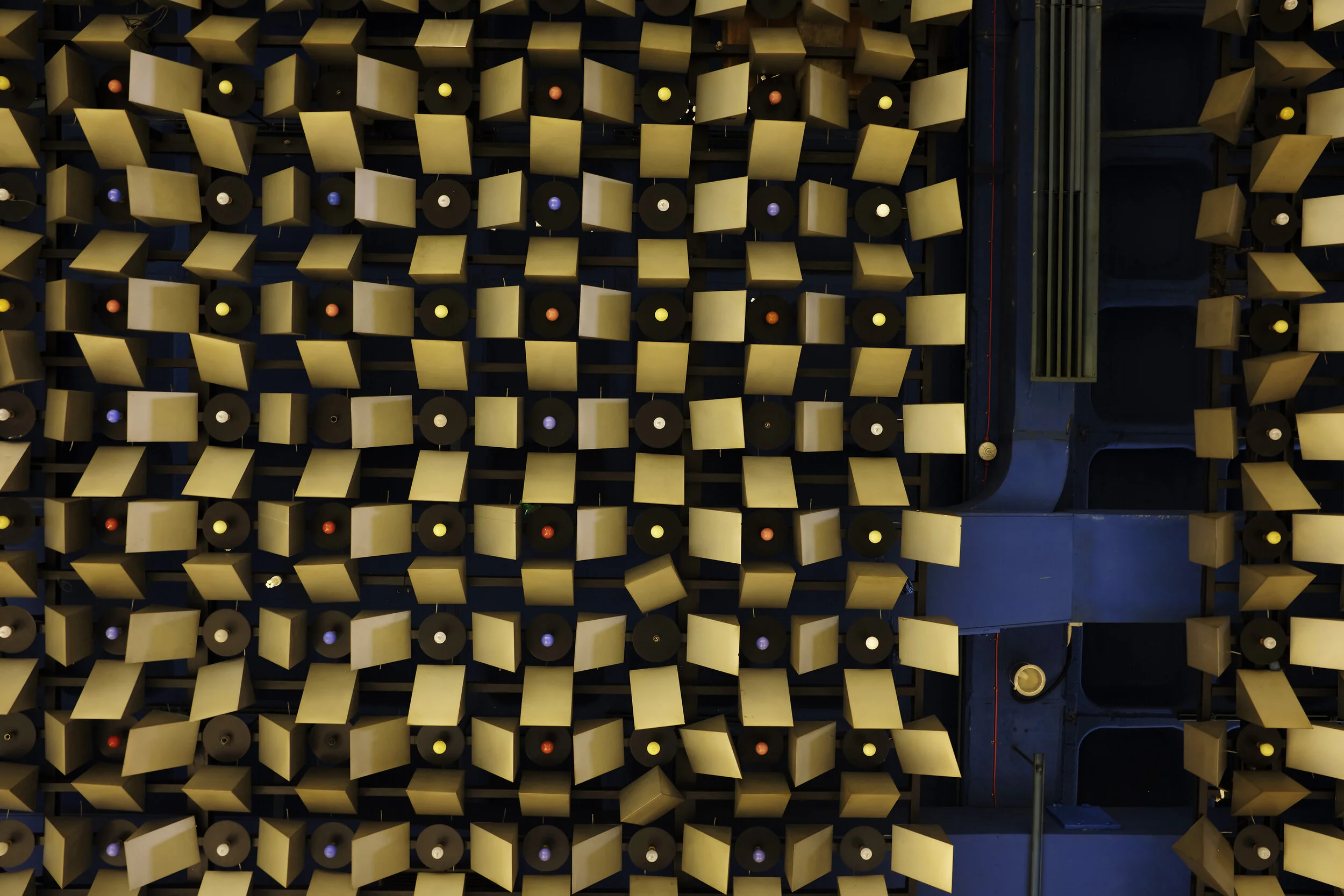
Photo by Daniel Hopkinson
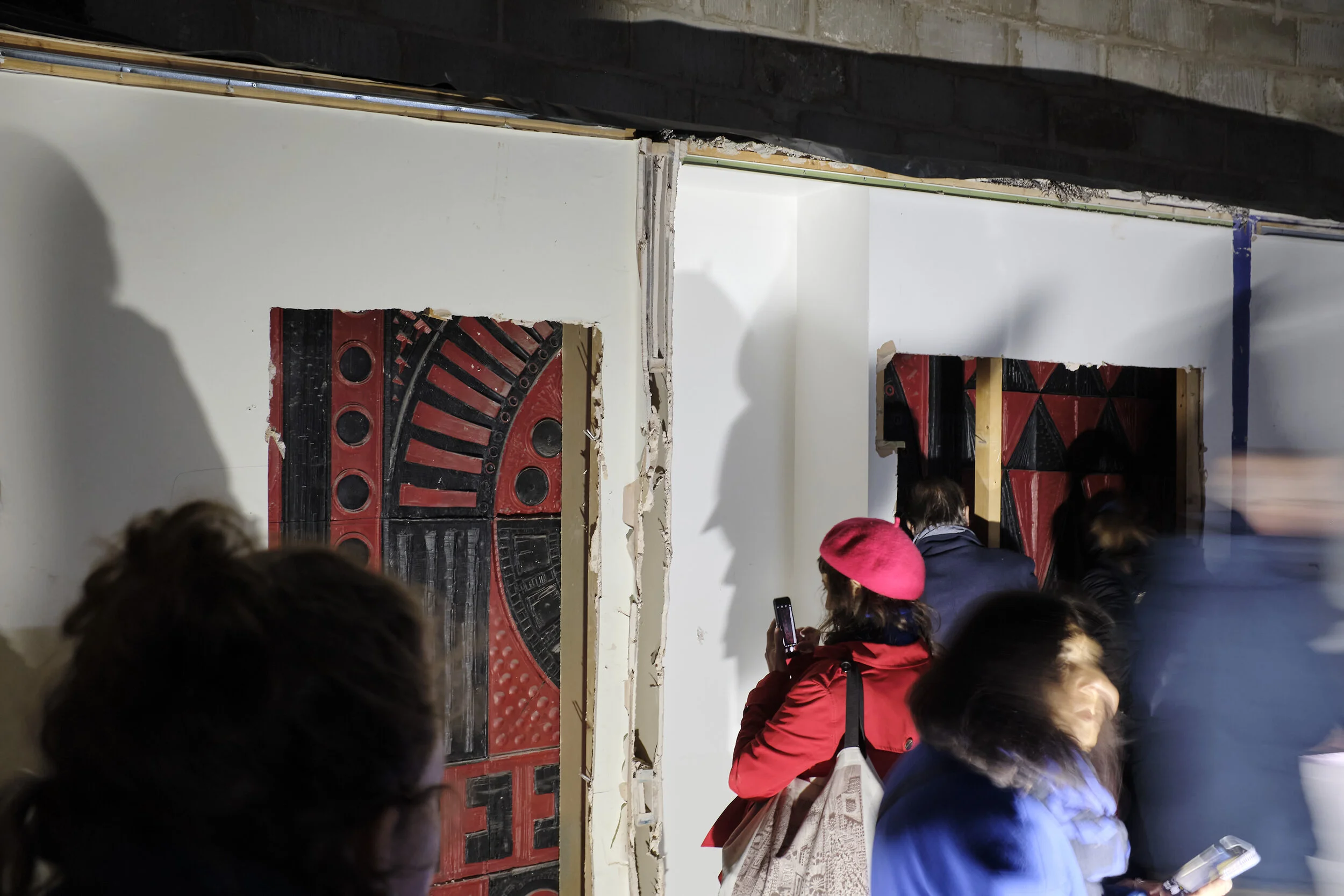
Photo by Daniel Hopkinson
House, open house, to the white dew
Helen Angell from our Sheffield chapter has used the lock down to read the work of Canadian-American poet and writer Elizabeth Bishop, who was the long-term romantic partner of Lota de Macedo Soares. In this article (and accompanying poems) Helen explores the award-winning house in Brazil that Soares designed, and more…
Although first invited to Brazil by Lota de Macedo Soares in 1942, it would be a decade before poet and writer Elizabeth Bishop turned a temporary visit into one that would last fifteen years. They become lovers after Soares nursed Bishop back to health following a violent allergic reaction. Wealthy and aristocratic, Soares offered to build her a studio in the mountains above Petropolis on land she already owned. In a letter of 1952, Bishop writes that Soares ‘is in the middle of building herself a large and elegant modern house on the side of a black granite cliff beside a waterfall – the scenery is unbelievably impractical’, a description evocative of the work of Frank Lloyd Wright.
Two years later the house won first prize in an architecture competition judged by Walter Gropius, a gift that turned their private home into something far more public, ‘Since the house got the prize we’ve had quite a few visitors to see it.’ Bishop captures the absurdity and falsity in the media’s creation of a modern lifestyle in her description of a photographer and models arriving for a Reader’s Digest covershoot, ‘a very heavy American boy – and three little girls dressed to kill and badly made up…Apparently the idea was that Lota and I shd. conceal ourselves while the three sad models posed in the house…It reminded me of my stay in Hemingway’s house where I had to chase tourists out of the front yard all the time.’
During her time in Brazil, Bishop also edited and translated Henrique Mindlin’s Modern Architecture in Brazil (1956) and visited Brasilia, the new capital of the country, with Aldous Huxley. Her reminiscences of the capital, then in the early days of construction, are documented in A New Capital, Huxley and Indians (1958). Having built a house for President Kubitschek in Bela Horizonte, Oscar Niemeyer was commissioned to build the public buildings in Brasilia. On Bishop’s initial encounter with The Palace of the Dawn, she writes in admiration of its’ lightness and grace’. Of the pillars she says, ‘it is no mean feat to invent a new ‘order’…a chain of huge white kites, poised upside down, then grasped by giant hands and squeezed in on the four sides until they are elegantly attenuated.’
Bishop’s third full collection, Questions of Travel (1965), was dedicated to Soares. Of note are the poems Electrical Stormand Song for the Rainy Season, both capturing Samambaia’s dramatic juxtaposition of nature and modern architecture.
In the same year the architect completed Flamengo Park in Rio de Janeiro. Modernist in design, this public reclamation project was a major undertaking, one that many felt contributed to Soares’ breakdown and eventual suicide in 1967. Their lives were portrayed in the 2013 film Reaching for the Moon.
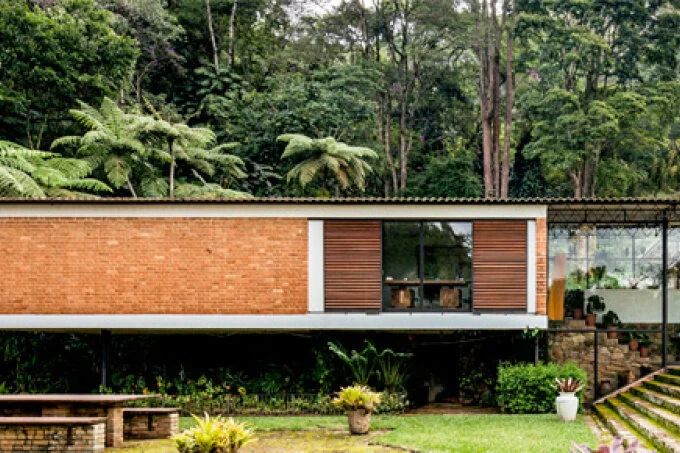
The house designed by Lota de Macedo Soares - Image: Casa Abril
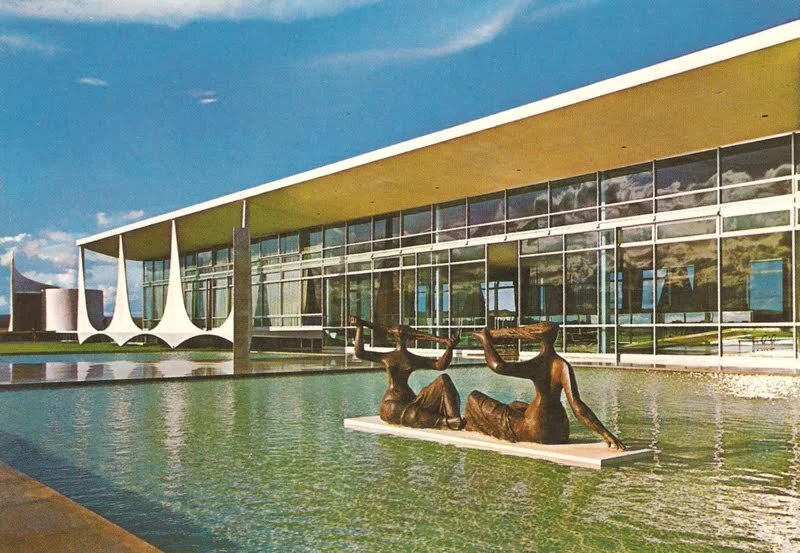
The Palace of the Dawn - Image: Didactic Discourse
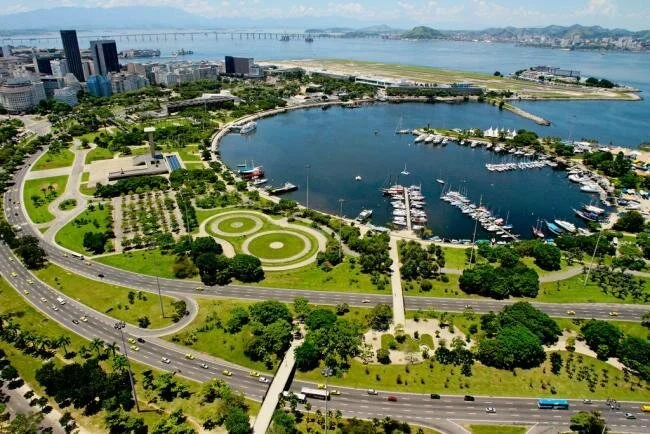
Flamengo Park, Rio - Image: Tripadvisor
Electrical Storm
Dawn an unsympathetic yellow.
Cra-aack! — dry and light.
The house was really struck.
Crack! A tinny sound, like a dropped tumbler.
Tobias jumped in the window, got in bed —
silent, his eyes bleached white, his fur on end.
Personal and spiteful as a neighbor’s child,
thunder began to bang and bump the roof.
One pink flash;
then hail, the biggest size of artificial pearls.
Dead-white, wax-white, cold —
diplomats’ wives favors
from an old moon party —
they lay in melting windrows
on the red ground until well after sunrise.
We got up to find the wiring fused,
no lights, a smell of saltpetre,
and the telephone dead.
The cat stayed in the warm sheets,
The Lent trees had shed all their petals:
wet, stuck, purple, among the dead-eye pearls.
(Bishop: Poems, Prose and Letters - Library of America, 2008)
Song for the Rainy Season
Hidden, oh hidden
in the high fog
the house we live in,
beneath the magnetic rock,
rain-, rainbow-ridden,
where blood-black
bromelias, lichens,
owls, and the lint
of the waterfalls cling,
familiar, unbidden.
In a dim age
of water
the brook sings loud
from a rib cage
of giant fern; vapor
climbs up the thick growth
effortlessly, turns back,
holding them both,
house and rock,
in a private cloud.
At night, on the roof,
blind drops crawl
and the ordinary brown
owl gives us proof
he can count:
five times--always five--
he stamps and takes off
after the fat frogs that,
shrilling for love,
clamber and mount.
House, open house
to the white dew
and the milk-white sunrise
kind to the eyes,
to membership
of silver fish, mouse,
bookworms,
big moths; with a wall
for the mildew's
ignorant map;
darkened and tarnished
by the warm touch
of the warm breath,
maculate, cherished;
rejoice! For a later
era will differ.
(O difference that kills
or intimidates, much
of all our small shadowy
life!) Without water
the great rock will stare
unmagnetized, bare,
no longer wearing
rainbows or rain,
the forgiving air
and the high fog gone;
the owls will move on
and the several
waterfalls shrivel
in the steady sun.
(Reaching for the Moon -2013)
Manchester Modern
Today we revisit our Manchester Modern project from 2017. The book is long sold out, and is as rare as hen’s teeth now, but you never know, it may return. Never say never. Here’s a bit more information on the project, the book, and those who made it all happen:
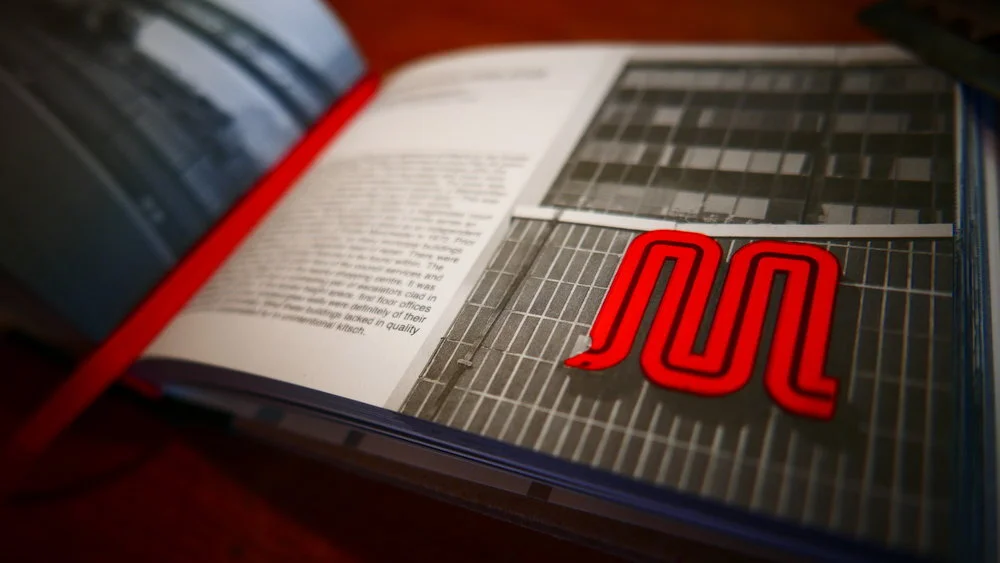
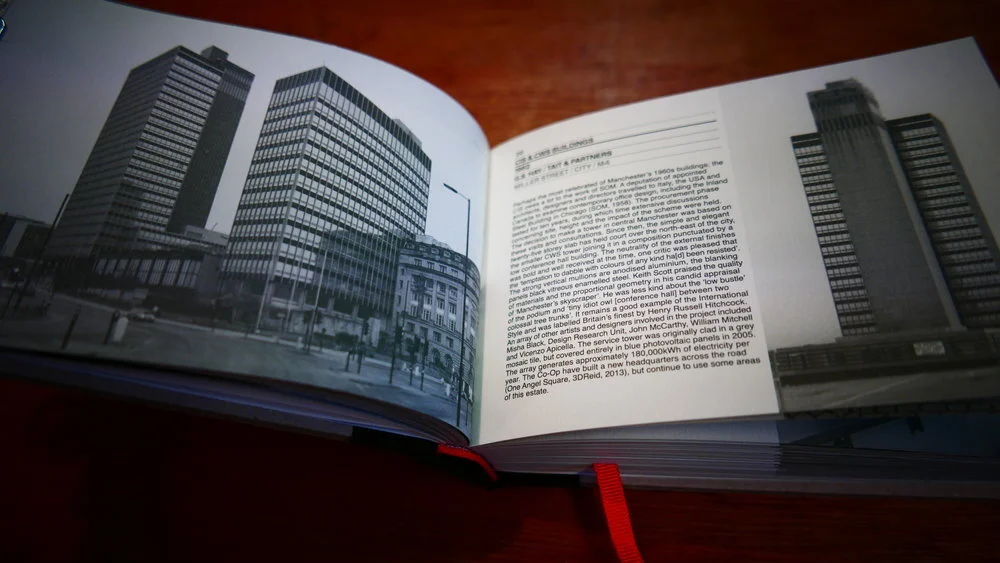
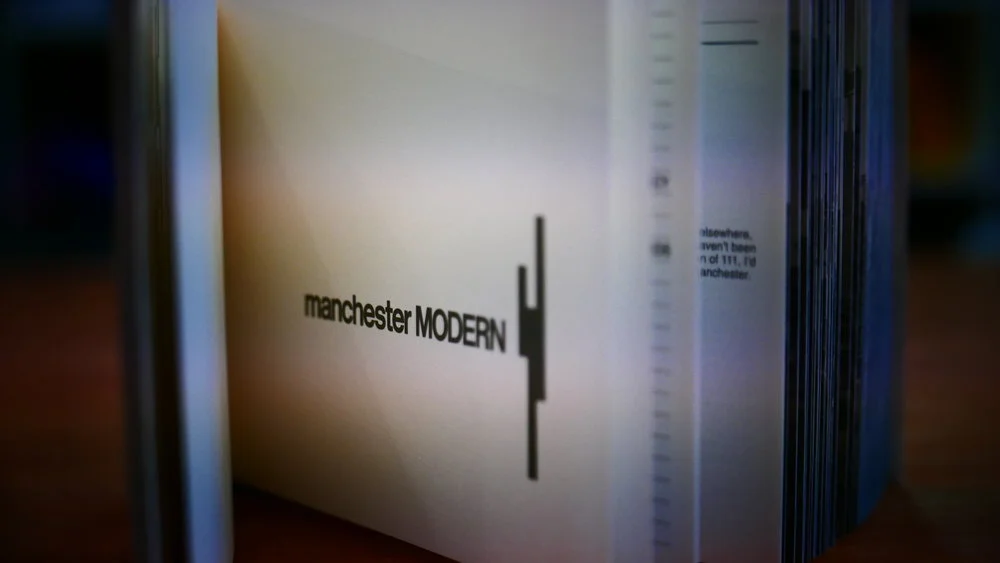
In Manchester Modern we presented 111 buildings of the twentieth and early twenty first century lovingly photographed and researched by Richard Brook. It was conceived as a field guide, small enough to fit in your pocket, but weighty enough to know its merit. The book's designer Vaseem Bhatti is an artist of pedigree defining the distinctive visual identity of Warp Records’ Lex Records, and Manchester’s Skam Records.
Manchester Modern was a labour of love. Richard Brook began the project in 1996 with a Samsung compact camera, bought from the Argos catalogue – it had the most features and the most extensive zoom range for the cheapest price. He is honest when he states ‘I had no idea what I was doing’; fortunately, he continued. He knew that his fascination with things others found ugly would be worthwhile one day.
Times caught up with Richard and what he once considered obscure and rare groove is now (as you know) populist and media friendly. Steadily, Richard has built a reputation in academic circles and amongst aficionados as a passionate and informed expert in the architecture of the region and of the provinces. That isn’t to say he doesn’t like London, but there’s an established and ready focus upon the architectural narratives of the capital and a distinct sense that the provinces have long been understudied and underexposed. In Manchester Modern we presented 111 buildings of the twentieth and early twenty first century, lovingly photographed and researched over, as stated, the last twenty years.
Vaseem founded EHQuestionmark and has worked with Richard in one form or another for the best part of fifteen years. This coming together of academic and artist was made possible by the Modernist Society.
The buildings contained in this catalogue have each been visited at least three times by Richard to attain the correct light conditions for his photography. The retrieval of contemporary journal articles in relation to each has meant numerous trips to the RIBA Library in London to access material no longer held in Manchester. The working hours attached to the delivery of the content, let alone the post-editing and design, run into the thousands and in honesty Richard is unable to quantify just what proportion of his life this has consumed.
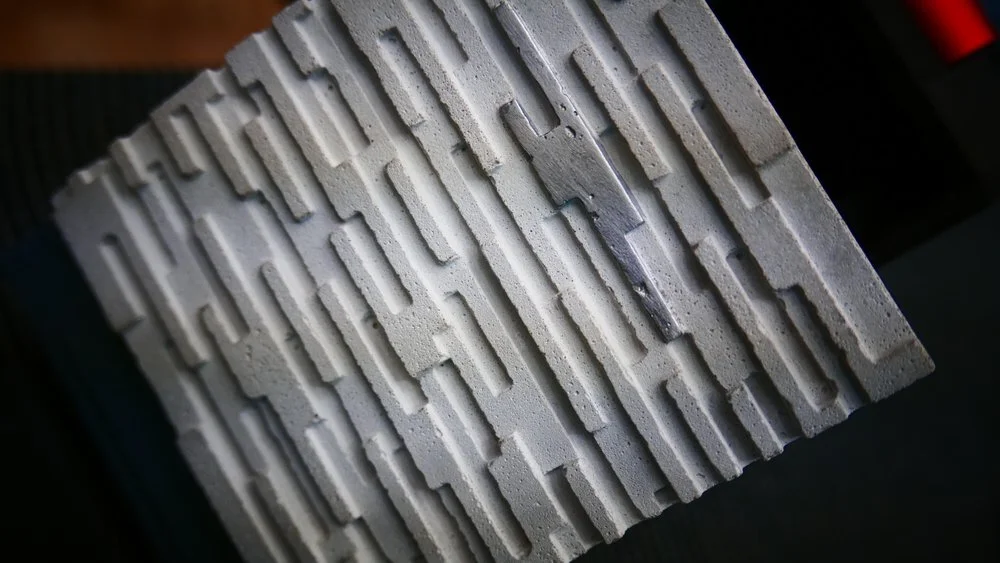
Three editions were published with a carboard, PVC and concrete covers. It was published by The Modernist Society with the support of 261 crowd fund backers, Fielden Clegg Bradley Studios, Johnny Marr and the Heritage Lottery Fund.
T U P (2012)
A discrete intervention in concrete. Premiering the new track ‘Good Morning, Midnight’
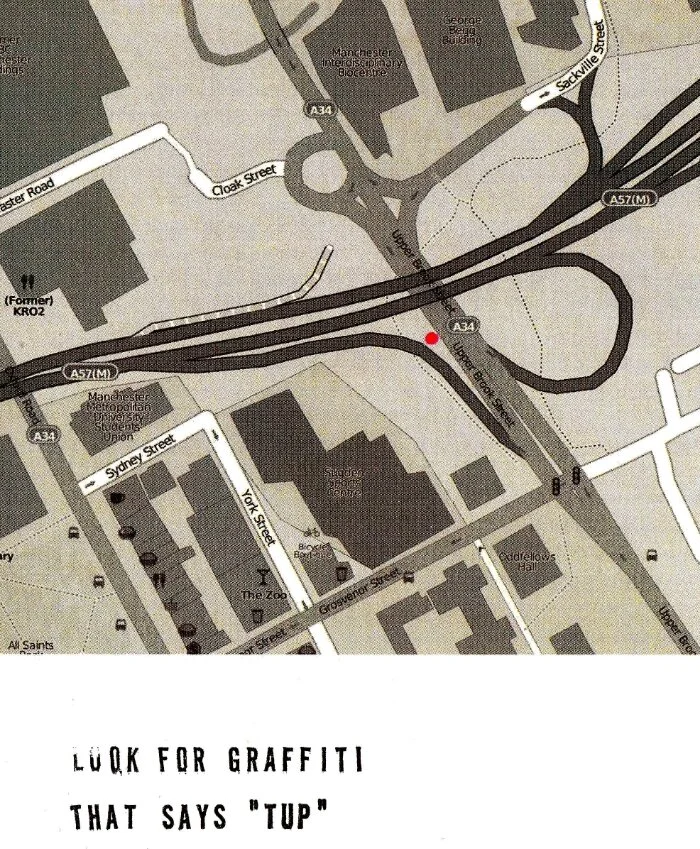
In 2012, the Manchester Modernist Society was delighted to have collaborated with Manchester based musician Lonelady, on the creation of a new piece of music which was then hermetically sealed into the Mancunian Way, one of our favourite modernist structures and the subject of several explorations since the society’s formation.
The music was embedded into its structure and was then experienced via headphones throughout the Love Architecture Festival – or, in reality, the life of the battery…
A limited edition publication ‘TUP’, was designed by Julie Campbell and Martin Greenwood as a way to navigate you to this very intimate ‘concert’, it included a contribution from Paul Morley.
‘TUP’ was entombed in the structure, the music fell silent when the battery died, and became an artefact / a relic / a piece of rubbish. Julie Campbell was born, lives and works in Manchester and is a Warp Records recording artist under the name ‘LoneLady’.
This commission was supported by the Women Make Music funding scheme delivered by PRS for Music Foundation. - Sadly TUP fell silent on 23.06.2012. RIP.
SCI-ENG 50 (2014)
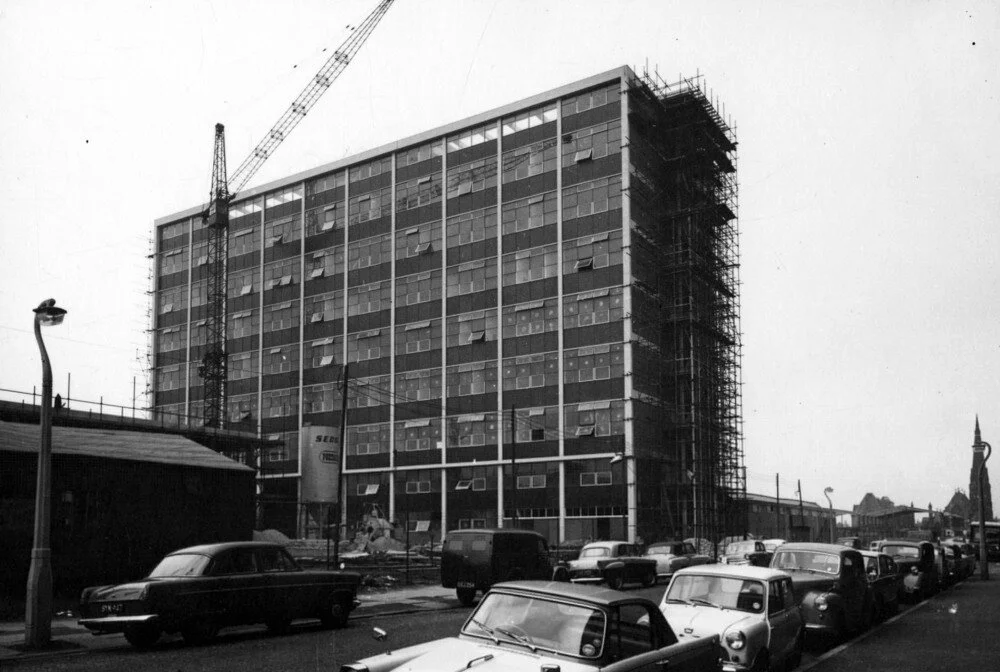
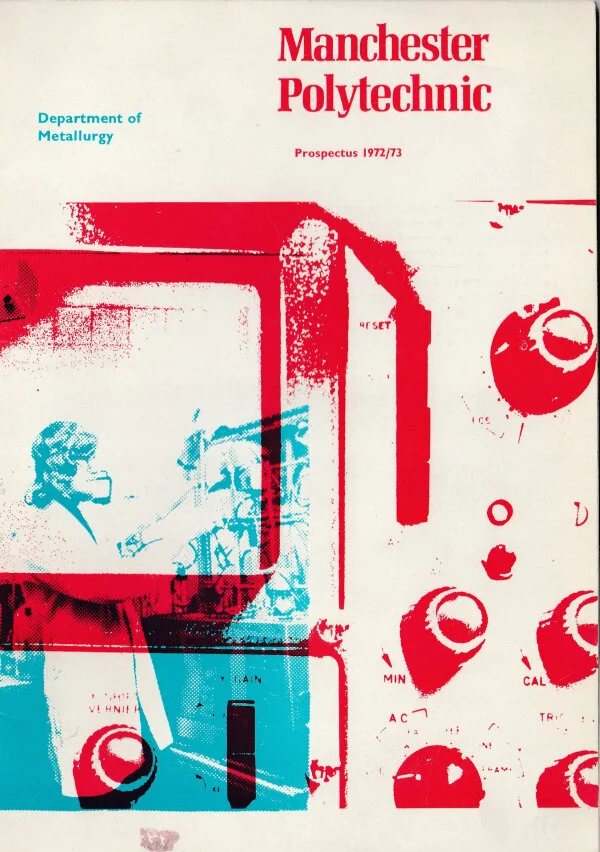
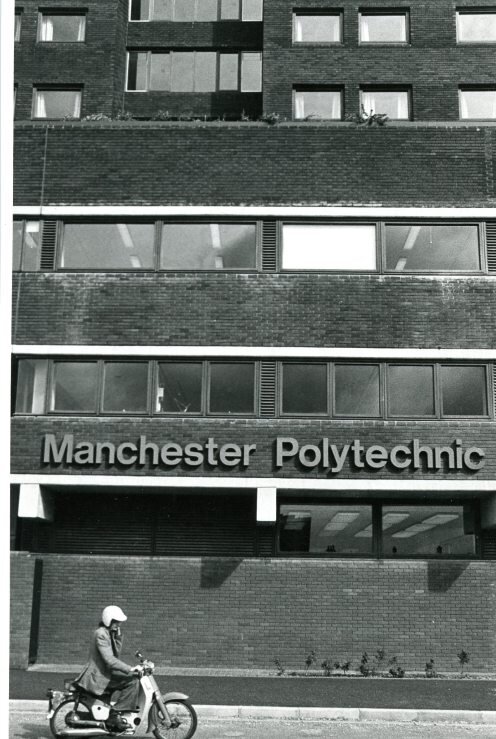
Today we are thinking back to the Sci-Eng50 exhibition in 2014, celebrating 50 years of sciences at John Dalton.
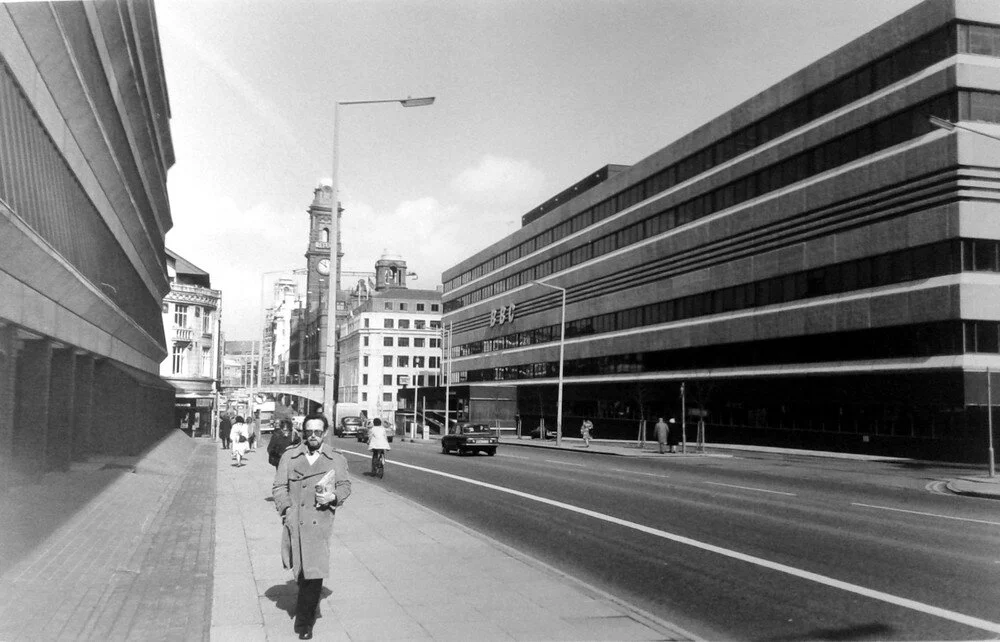
Opened by Harold Wilson in December 1964, the John Dalton Building heralded the dawning of a new age of UK technology. To celebrate the 50th anniversary of this landmark event, Manchester Metropolitan University, together with the Manchester Modernist Society and the North West Film Archive, collaborated on Sci-Eng50 – a public exhibition and programme of walking tours and film shows documenting the history of the people who helped to transform John Dalton College into a new university for the city of Manchester.
The exhibition featured architectural models and plans of what was to become the Manchester Metropolitan University campus alongside some curious ephemera discovered in the MMU’s archives, nooks and crannies.
SciEng50 was concieved and delivered by Dr.Steve Millington, Richard Brook, Jonathan Hitchen, Jack Hale and was a collaboration between the Manchester Modernist Society and Manchester Metropolitan University.
No Rubbish Tipped Here (2012)
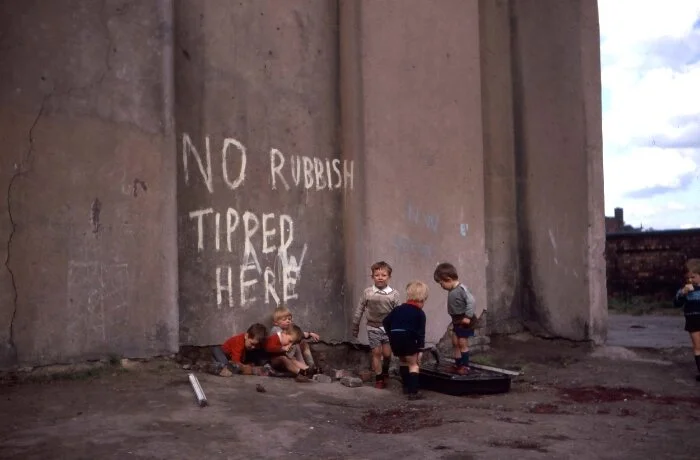
No Rubbish Tipped Here: If there’s an empty space people will play in it!
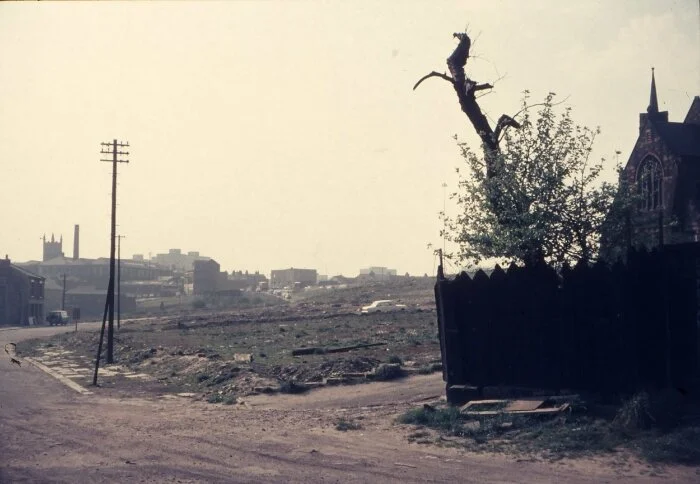
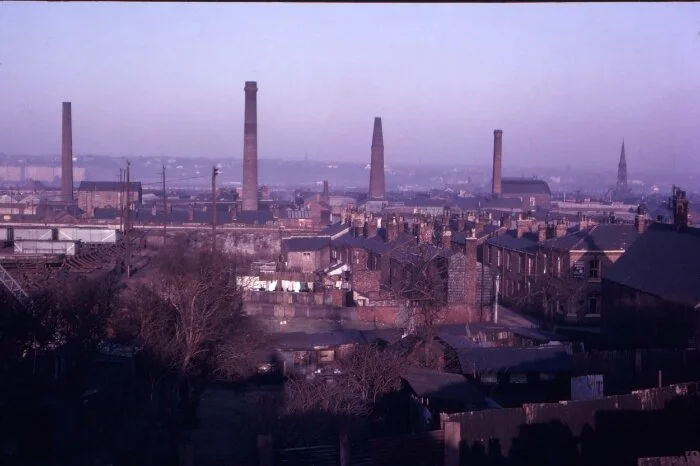
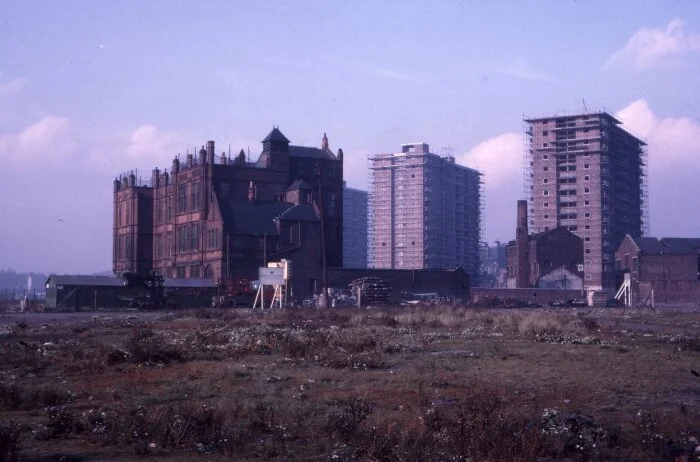
The Secret Gardens Festival in 2012 celebrated the rich creative talent in Salford and Trafford with a range of unique events that took place across the both areas, showcasing a diverse range of local undiscovered talent and creativity. The Festival took place between Thursday 7 and Saturday 23 June 2012 in various locations across the region. For the festival, the Modernist Society launched a series of four postcards that illustrated pre-generated urban spaces which acted as alternative gardens and unlikely playgrounds for a generation of Salfordians.
The images were selected from an archive collated by the University of Salford from their intergenerational project ‘Salford in Pictures’. The images, taken by non professional photographers and local people, reveal beauty in unexpected places. We even made it into The Guardian: 'a cities wondrous, eerie, unofficial gardens'
Making Post-War Manchester (2016)
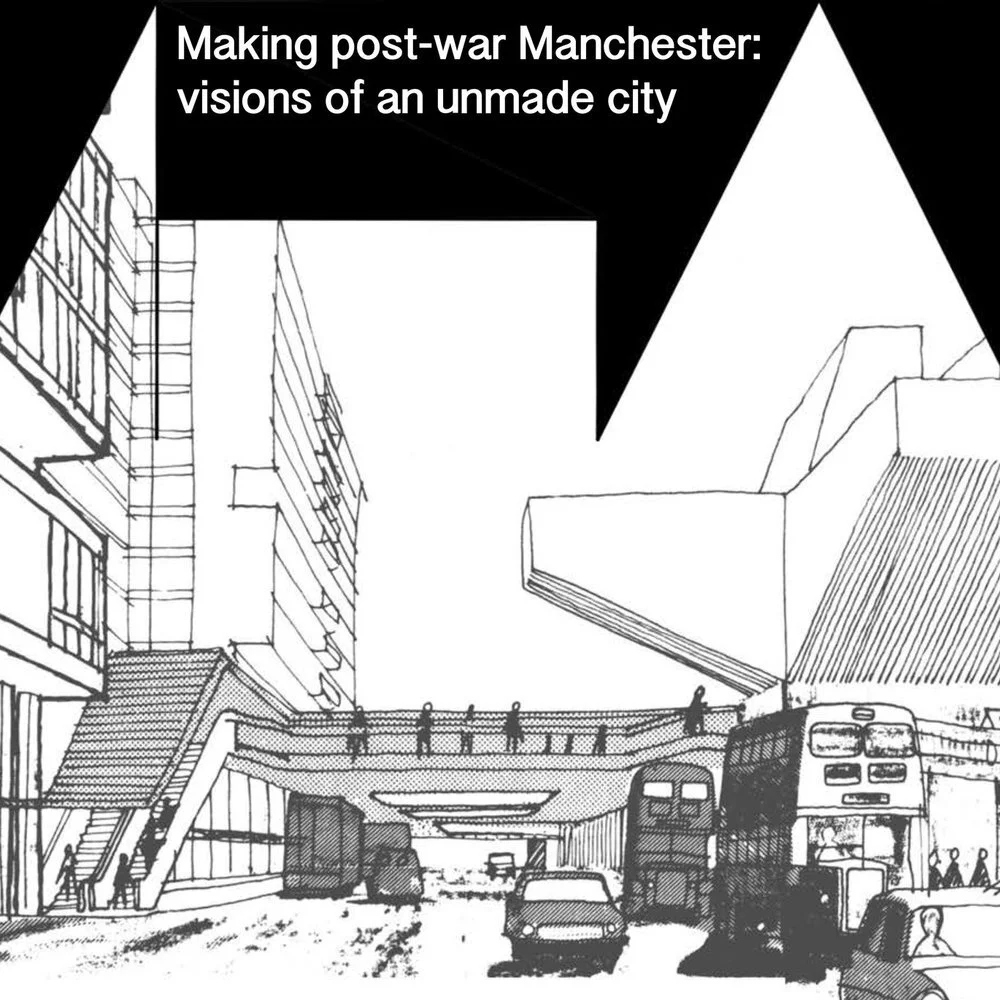
Making Post-War Manchester: Visions of an Unmade City
Five distinct development areas of 1960s central Manchester, researched and recreated in a 3D environment and brought to life using a digital gaming engine to explore how the city would have looked if these proposals would have been built.
This is a research project produced by the Masters students of Manchester School of Architecture in collaboration with the Manchester Modernist Society. The project explores an epoch in Manchester's recent history and focuses on five distinct areas in Manchester. Research on the historical developments in each district has been undertaken, and design visions from the 1960’s have been recreated.
The information is presented in a flowing time-line, allowing the user to explore the history from the beginning to the end in a chronological order, point by point.
The project is a unique insight into the Manchester’s alternative identity and an opportunity to discuss the possible benefits or downfalls from these schemes if they were to exist today.
Download the catalogue here
Sacred Suburbs (2015)
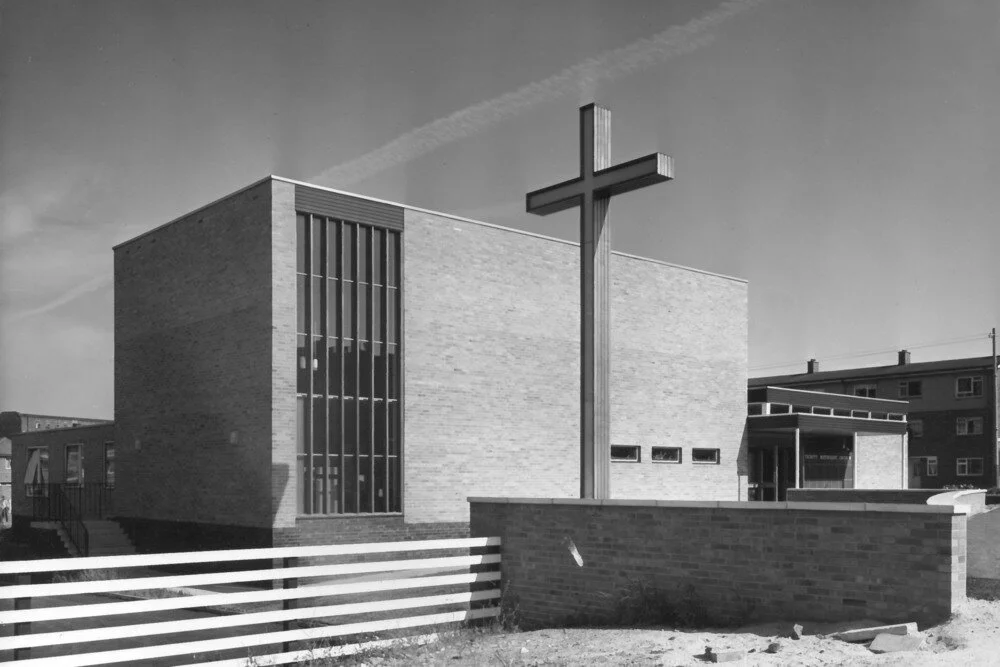
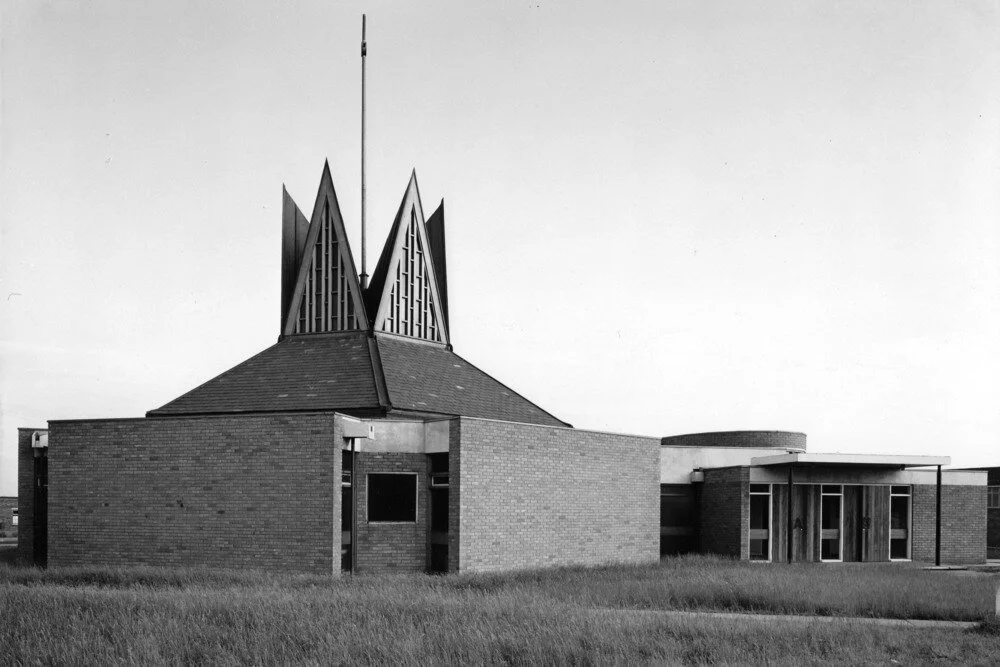
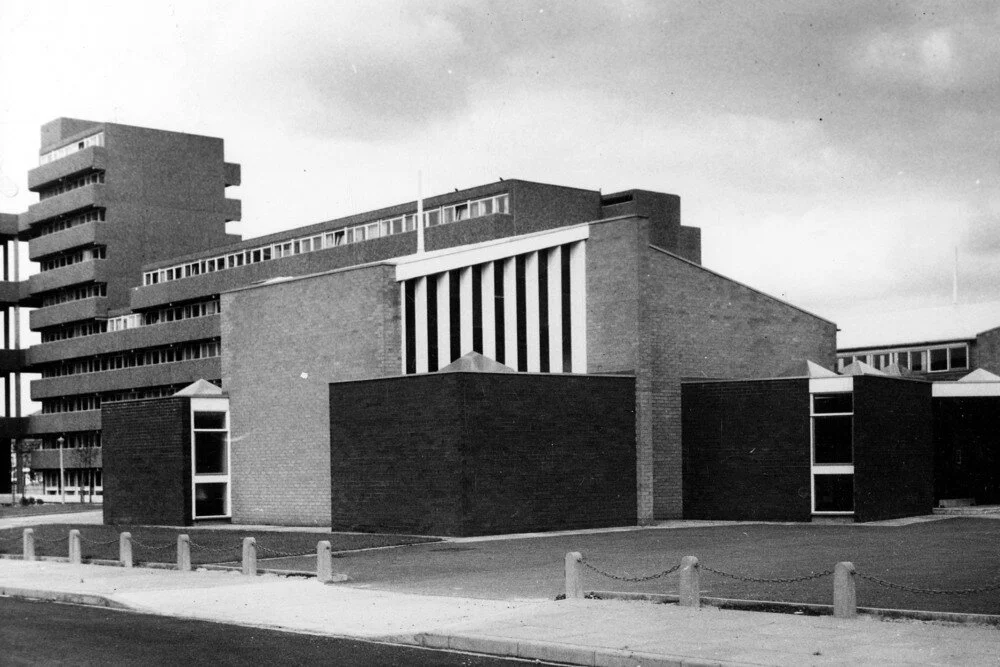
Sacred Suburbs was a project from 2015, a celebration of post-war places of worship in the hinterlands of Manchester. If you were to think of post-war churches in Manchester, you might think of the magnificent William Temple Memorial Church in Wythenshawe or St Raphael the Archangel in Stalybridge. The aim of the project was to unearth examples by lesser known architects and artisans, from Langley to Longsight possibly via Chadderton, and perhaps with a brief detour to Chorlton-cum-Hardy.
Whilst Matthew and Angela from Sacred Suburbs admit that there is a certain amount of “churches we like” governing the selection criteria, they focussed on those which offer architectural interest. Otherwise, it may just tell an interesting story. Demolished churches also included.
“We’ve tried to be inclusive but, given religious trends at the time, the list will be dominated by Roman Catholic and Church of England examples.”
The project is a collaboration between the Manchester Modernist Society and researchers Angela Connelly and Matthew Steele. You can read their blog, and see much more here
Leeds: PROCESS/play
Our friends over at the Leeds Modernist Society got in touch last week as the brilliant PROCESS/play has designed a series of posters for them. The posters aim of raising the profile of the Leeds chapter of The Modernist Society. In the spirit of Modernism, the design direction has a feeling of utility, without superficial ornament or decoration. Rather than hiding the structural elements of the design, PROCESS/play's idea was to make the structure itself the focal point. For each of the graphic-focussed posters in the series, the image is entirely constructed from the letter ‘L’ of Leeds, duplicated and rotated as required. Each poster makes reference to the city of Leeds and it's relationship to Modernism.


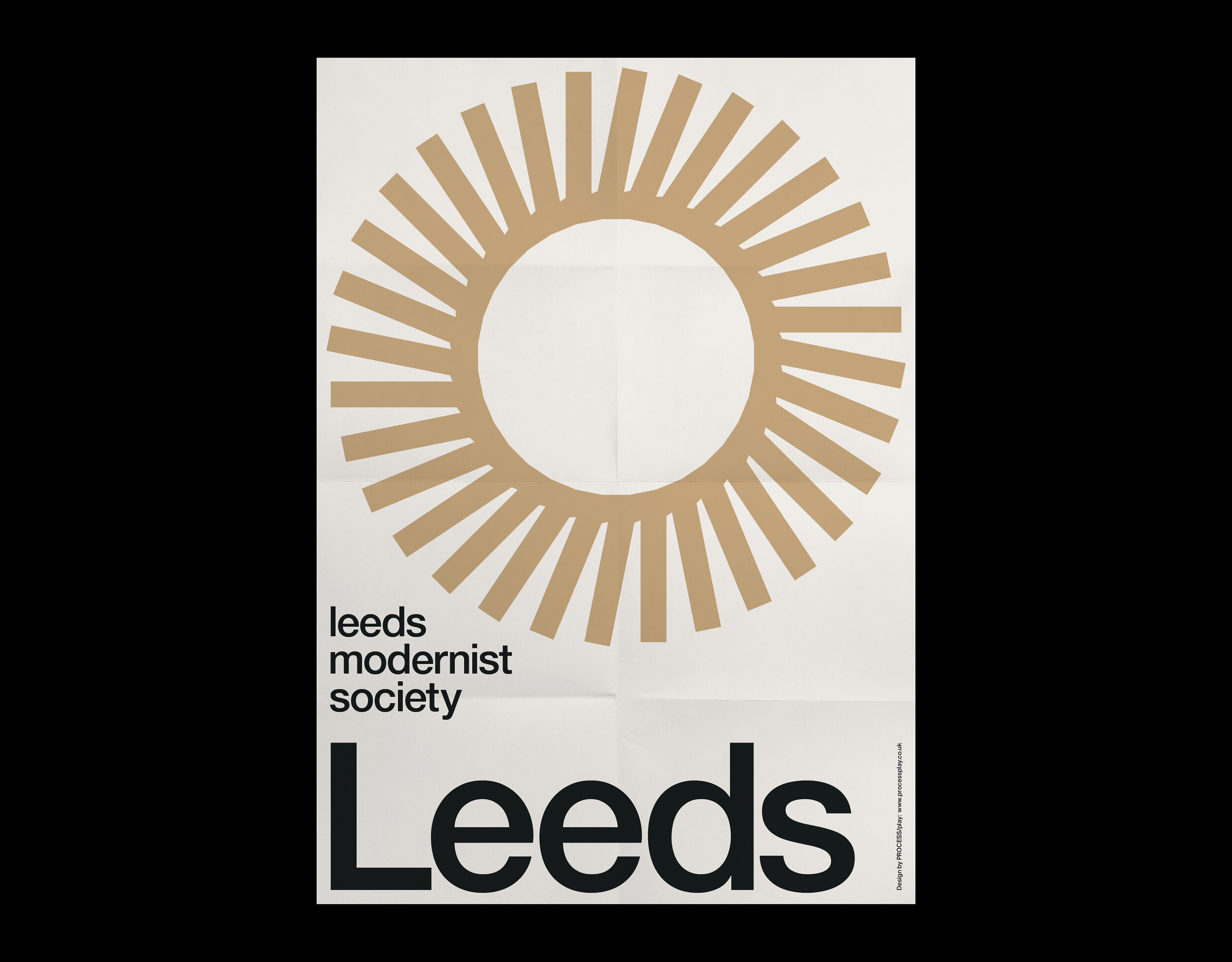
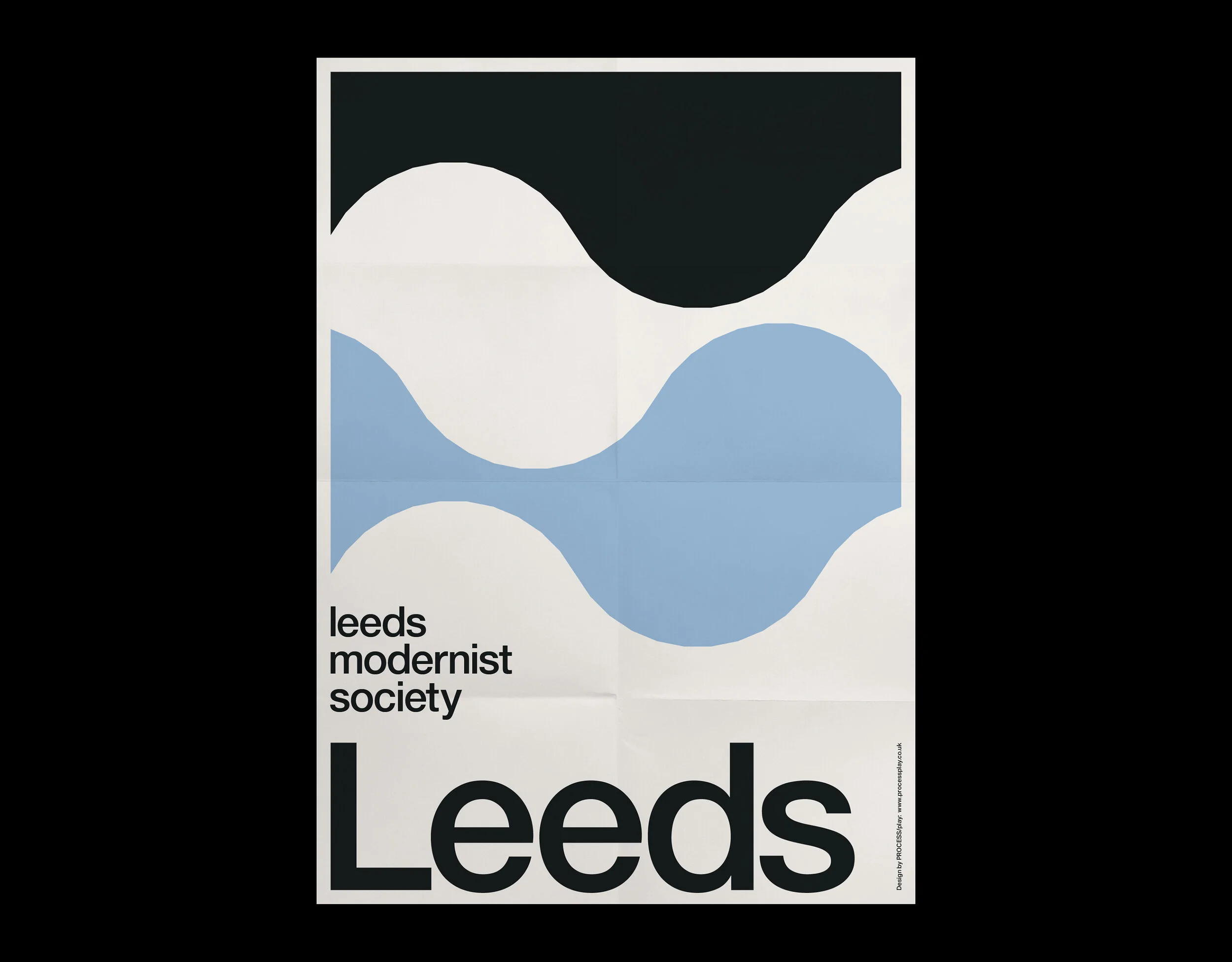
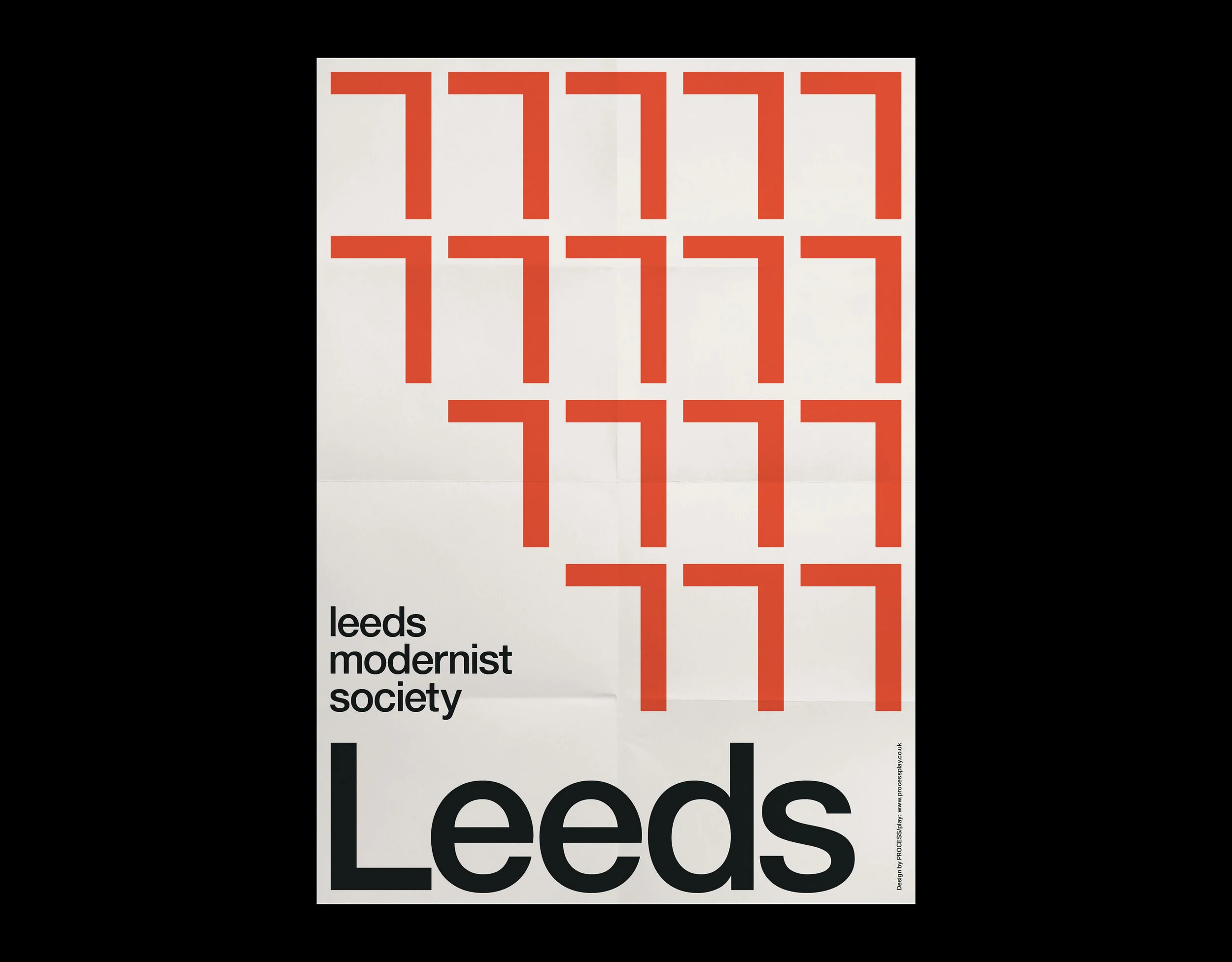
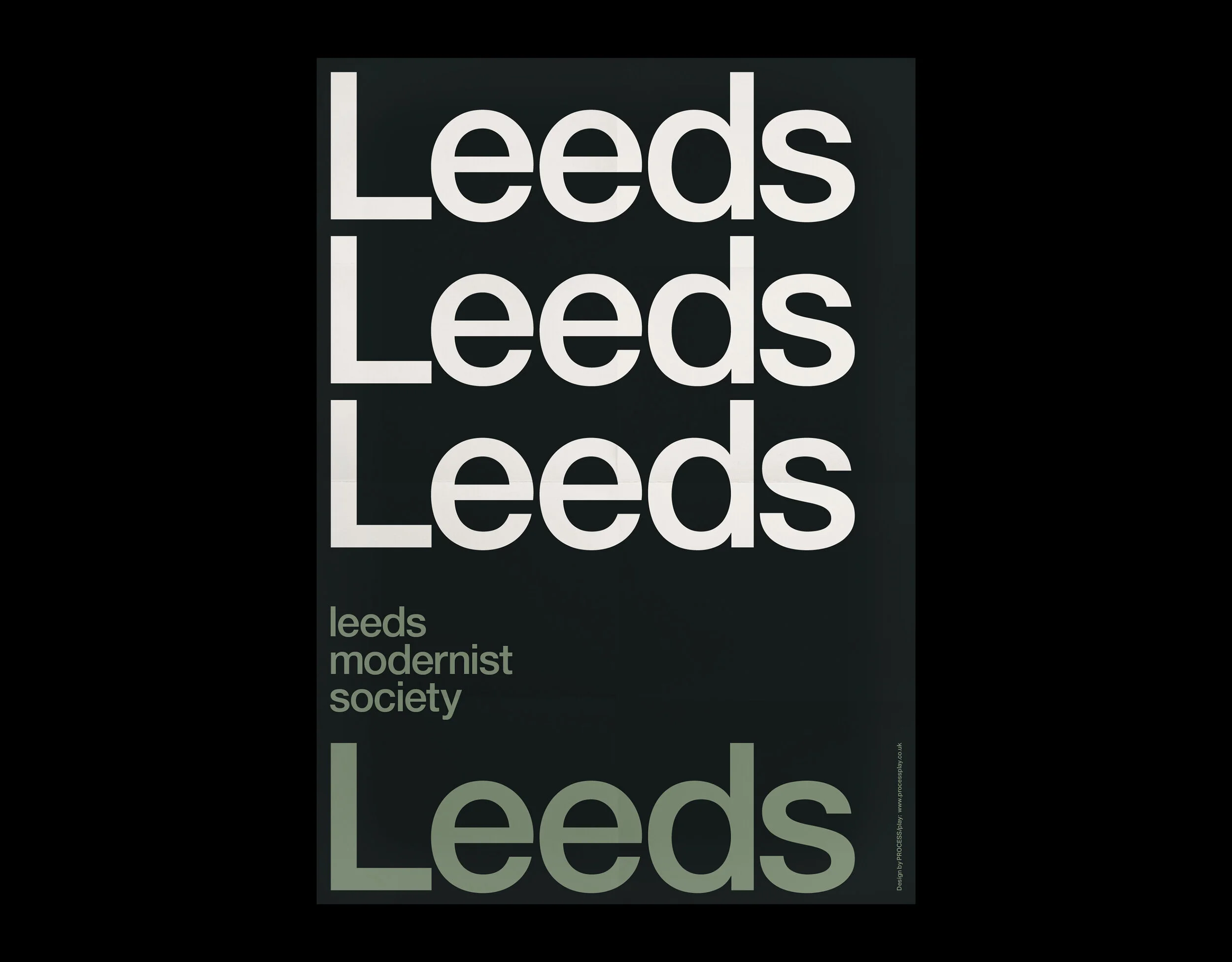
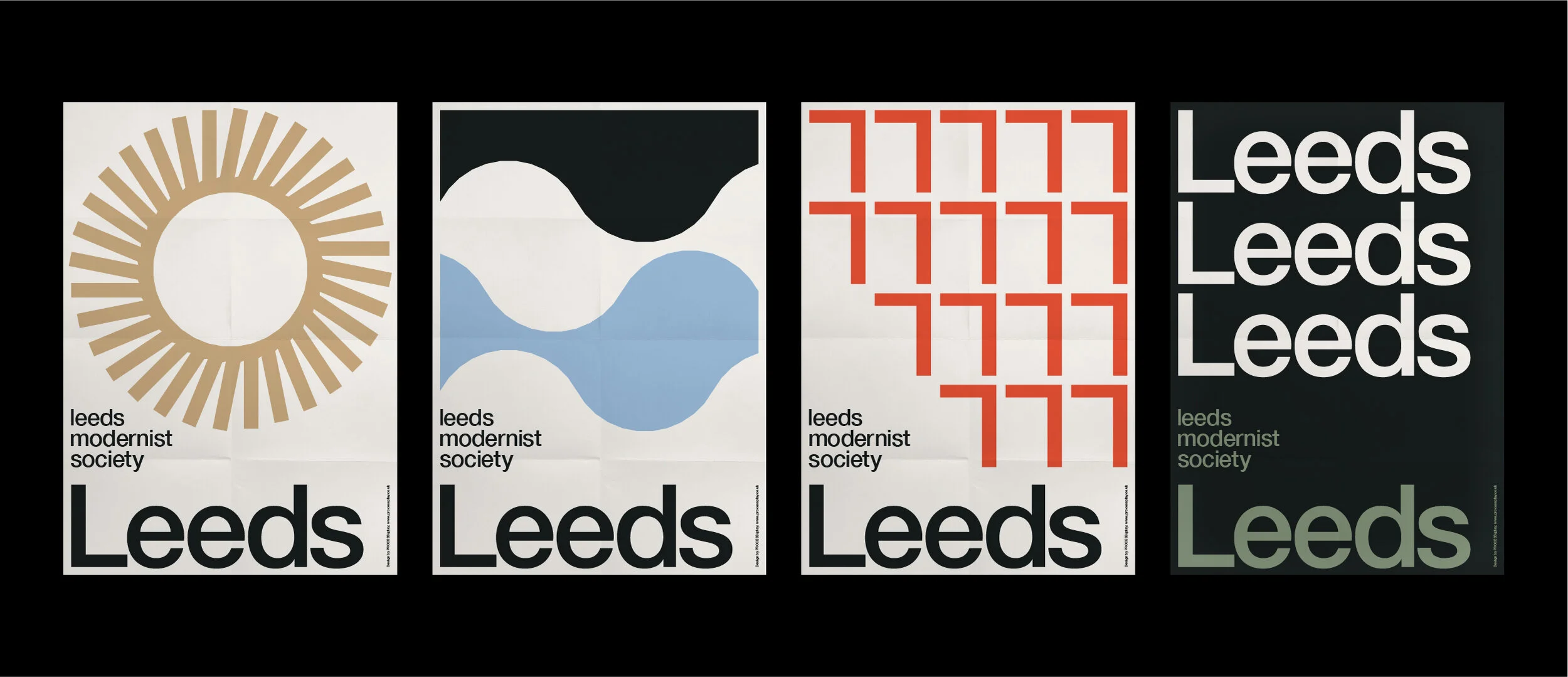
PROCESS/play is the creative studio of Leeds born graphic designer and art director, Kevin Summers. The studio works with the arts, publishers and independent companies who share a passion for expressive, meaningful and memorable design.
More project info: processplay.co.uk
Instagram: @processplay_design / @leedsmodernist
Souplesse (2015)
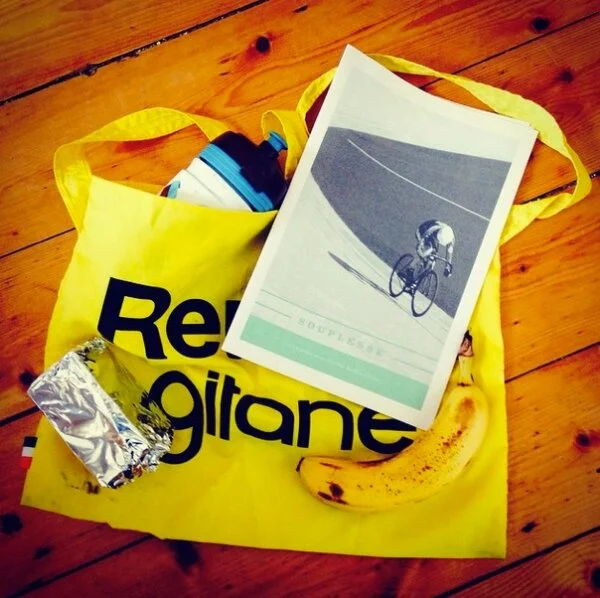
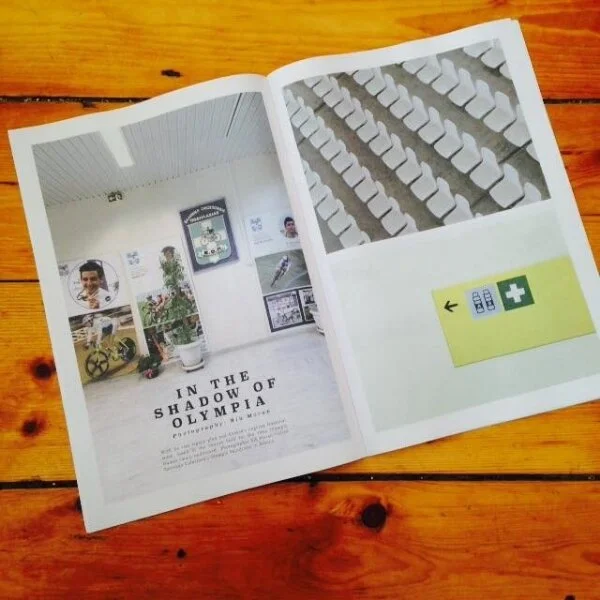
In 2015 we released Souplesse, a one off publication celebrating the history and visual culture of cycling. It was conceived and edited by our very own Eddy Rhead, himself a keen cyclist, and it included a wide range of articles: Now re-issued as a digital download
David Dunnico - The t'fosi - a photographic celebration of the British bike fan - less passionate but no less dedicated than their Italian counterparts
Trevor Ward - Death or Glory - looking at the roadside memorials to fallen cycling heroes
Eddy Rhead - 333.3 - an architectural history of the Olympic velodrome
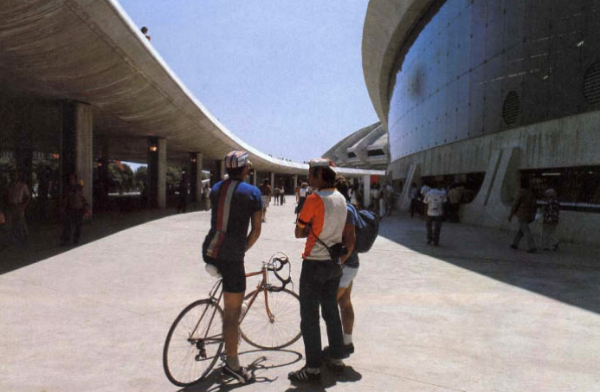
Rik Moran - In The Shadow of Olympia - photographer Rik Moran visits the faded glory of Athens Olympic velodrome
Matthew Steele - Utility, Durability and Beauty - Matthew takes in the Krylatskoye Sports Complex Velodrome and its adjacent purpose built road race course
Jonathan Hardman - Call of the Clarion - a photographic study of the root and branches of cycle racing with Stockport Clarion CC
Rob Hyde - 'Where Are We Even Going?' - a cycle ride out east through London's bleak edgelands
Neil Grunshaw - Smooth as Silk - why on earth do amateur cyclists shave their legs?
Steve Marland - A Trip into Dreamland - a photographic journey along the south east coast from Hastings to Cleethorpes
Bill Mather - The Fastest Legs You Ever Saw Move - a history of Reg Harris ,and the stadium that was named after him, told through assorted memorabilia
Now re-issued as a digital download
Manchester Kiosks (2010)
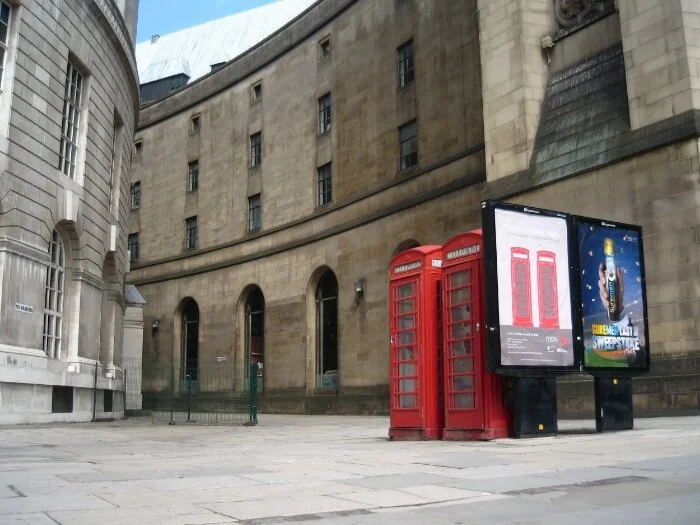
As recognisable as the double-decker bus, as traditional as fish and chips, a familiar presence from Lands End to John o’ Groats, the red telephone box is a national treasure. In 2006 it was ranked amongst the British public’s top ten 20th century design icons, yet there are only five k6 telephone kiosks in City Centre Manchester.
In May 2010 the Manchester Modernist Society premiered a newly commissioned sound installation specifically created for the Manchester Modernist Society and FutureEverything Festival by acclaimed Irish composer and sound artist Ailis Ni Riain, funded by Arts Council England.
Ailis Ni Riain, the Irish classical composer and writer,combines her interests as a composer, sound-artist, producer and writer to produce works which challenge, provoke and engage. She is particularly interested in cross-discipline collaboration, public sound art, opera, music-theatre and presenting contemporary music in diverse spaces. She is a Composition graduate of University College Cork, with postgraduate degrees from the University of York, the University of Manchester and the Royal Northern College of Music, Manchester, where she also became the college’s first Junior Fellow in Education. Her Carnegie Hall debut took place in October 2008.
On the MMS Kiosk commission, she says,
‘I am fascinated by the idea of the old fashioned K6 telephone booths. I find them iconic, poignant, inspiring and intriguing. They are stunning in their own special way and I want to reflect them, their history, heritage and meaning through a new sound installation - a type of paean to a by-gone era. The concept for my work will be Conversations We Wished We Had. It will take the form of a sound installation combining spoken stories, cello, piano to form an electroacoustic sound-scape. The phone booths would have been, for many, a way of communicating those things we wished we had said. The listener will step inside the phone booth in the Courtyard of the Museum of Science and Industry and experience the piece. There are just four other remaining phone booths in central Manchester.’
The Manchester Modernist Society is an artist led project which aims to raise awareness and appreciation of Modern architecture & the urban environment, and related Modern art and design, in Manchester and the surrounding region. Their Manchester Kiosks project is an opportunity to highlight some of these issues through an event which will temporarily return the K6 to its heyday as a hub of communication, a fitting metaphor for our changing relationship with the public realm, our notions of shared space and sense of community
The MMS also commissioned a special poster to promote the commission, from Sheffield based designer welivehere.co.uk. The poster was sited beside the 2 kiosks at Library Walk, throughout the duration of the FutureEverything Festival.
Listen here
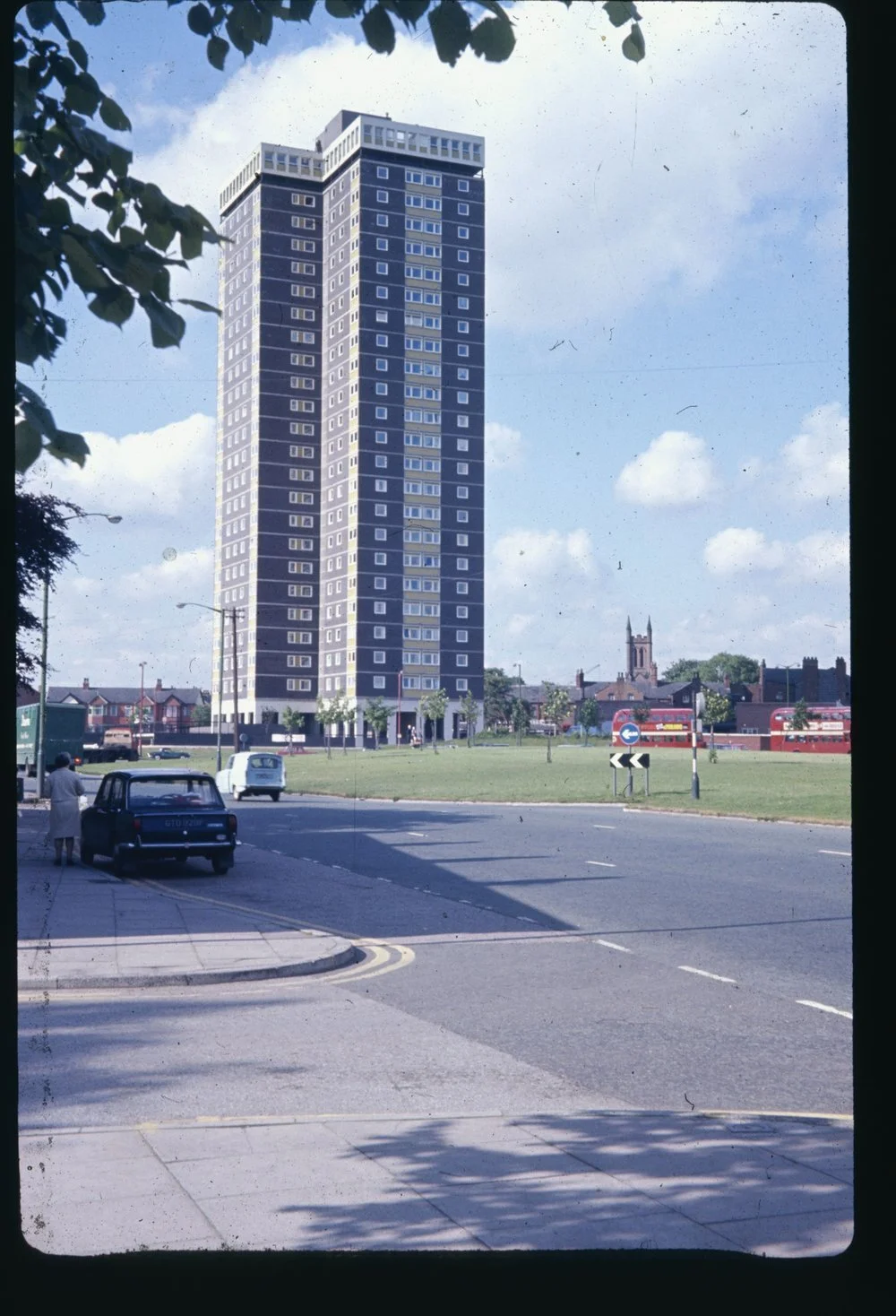
Stretford House 50
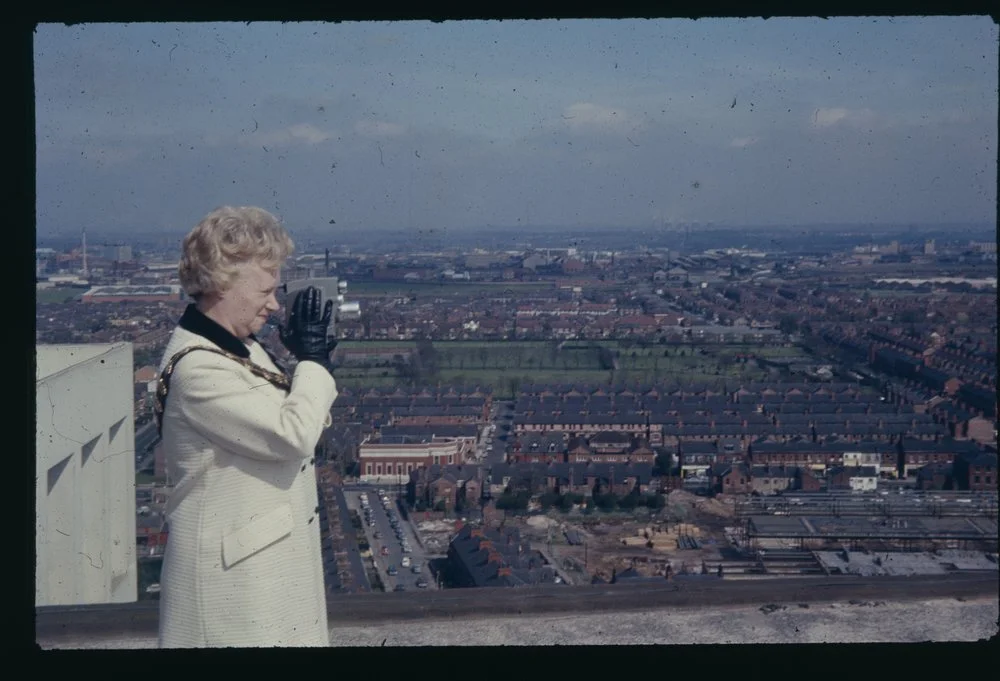
Last year our good friend (and modernist lifetime member) Bill Mather came to us with the idea of celebrating his local tower block. We love anything that’s a bit niche, but Stretford House is more than just a tower block, it has become an icon of the Greater Manchester sky-scape. It’s 240 feet high, it has 23 floors, 88 flats with 2 bedrooms, 44 flats with 1 bedroom, two lifts servicing odd and even floors, and one stairwell. To celebrate its 50th anniversary we held an exhibition ‘Streford House 50’, and displayed archival photographs and footage which had been unearthed by Bill in the Stretford Local History Society’s Archives. Alongside this we released a publication, and we even did a tea-towel.
“Standing as a single solitary obelisk of hard concrete surrounded by softer sediments, the 23 storey high-rise residential block Stretford House has for fifty years acted as Stretford’s very own security guard. Scanning the busy skyline for planes at Ringway Airport, gazing over the ever meandering River Mersey flood plain, manning the historical border post between Lancashire and Cheshire, surveying the scene with its feet firmly planted in Triassic Sandstone as it watches for invaders from space with the help of Bernard Lovell’s radio telescope at Jodrell Bank, which is visible on the horizon.”
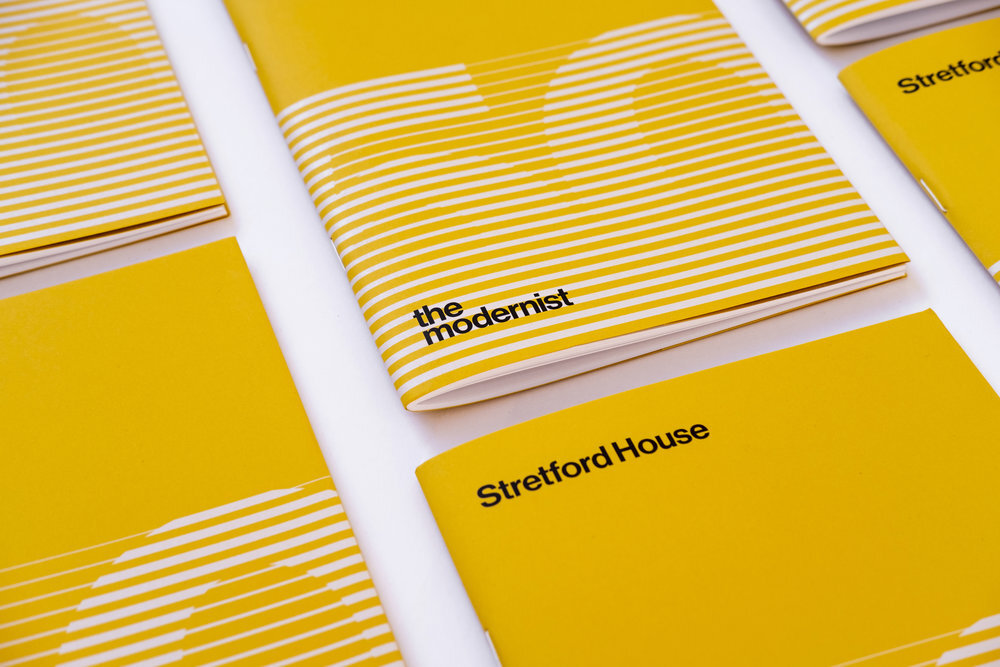
Stretford House 50 publication by Bill Mather, and designed by Wayne Fearnley
Mitzi Cunliffe Centenary
Continuing our posts which highlight past projects, we are thinking back to June 2018 when we celebrated the sculptor Mitzi Cunliffe on the centenary of her birth. In a collaboration with the Twentieth Century Society North West, we installed a plaque on her former home in Didsbury, Manchester. The unveiling ceremony was followed by a talk and conversation to commemorate the centenary of the ‘Sculptor for Architecture’ with Professor Ann Sumner and Antonia Cunliffe Davis.
Although many people are not familiar with Mitzi Cunliffe by name, they will certainly know her designs which include the iconic BAFTA trophy mask, which was created by the sculptor when she lived in Manchester in the 1950s. She was also commissioned for the Festival of Britain in 1951, and her art work appears at Liverpool and Leeds Universities.
“The city of Manchester is fortunate to have a number of important works by her including Threshold at Manchester High School for Girls, the Heaton Park Pumping Station relief (Grade II listed), Man and Technics: Fire and the Wheel for Wythenshawe West Secondary Technical School (now Manchester Health Academy) and the dramatic fibreglass Cosmos I wall sculptures at Owens Park, University of Manchester.”
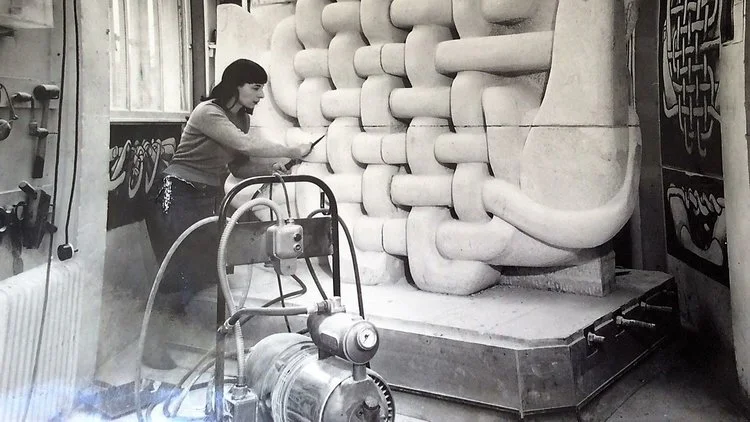
Image © Estate of the Artist
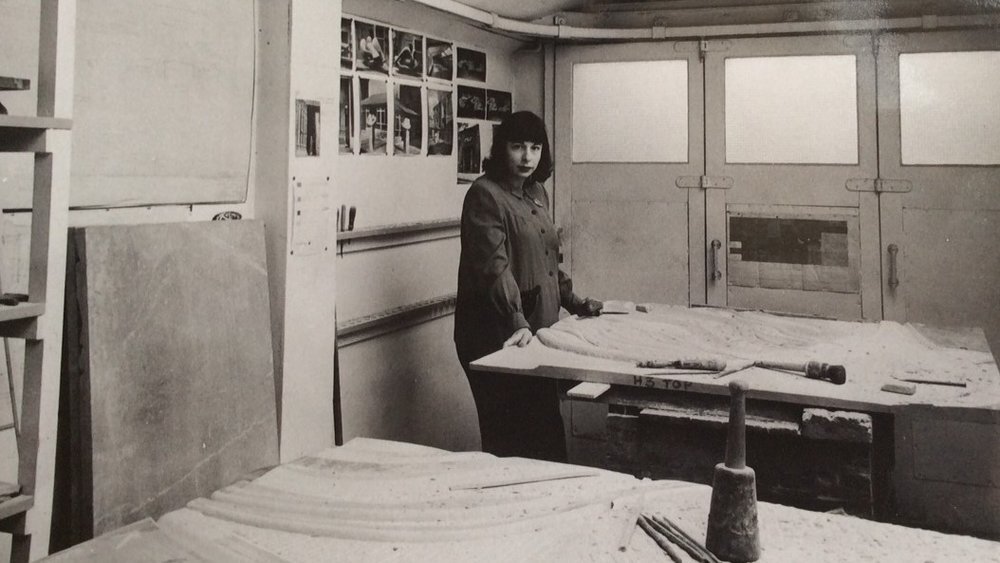
Image © Estate of the Artist
Aperitif?
A couple of weeks ago we posted about Dachshunds, which we decided (without argument) are the most modernist dog. You see, this is an ongoing discussion at Modernist HQ, we debate the most modernist of any given thing. To our regular followers and our devoted members it will come as no surprise to you that we’ve crowned a certain alcoholic beverage the most modernist. In fact, the company even sponsored the opening of our Northern Quarter base back in May last year. We admit the drink itself can divide opinion, but three out of four modernists can’t be wrong (Eddy hates it). That’s right, it’s the wonderful, the sleek and sophisticated Campari. We prefer ours with soda and a scant slither of orange peel, but we never say no to a Negroni. At its best, a Campari soda can’t be beaten, the perfect ratio found in the ready mixed bottles designed by Italian futurist Fortunato Depero in 1932, still in production to this day. Campari also have a fantastic design legacy, and we wanted to show you some examples here.
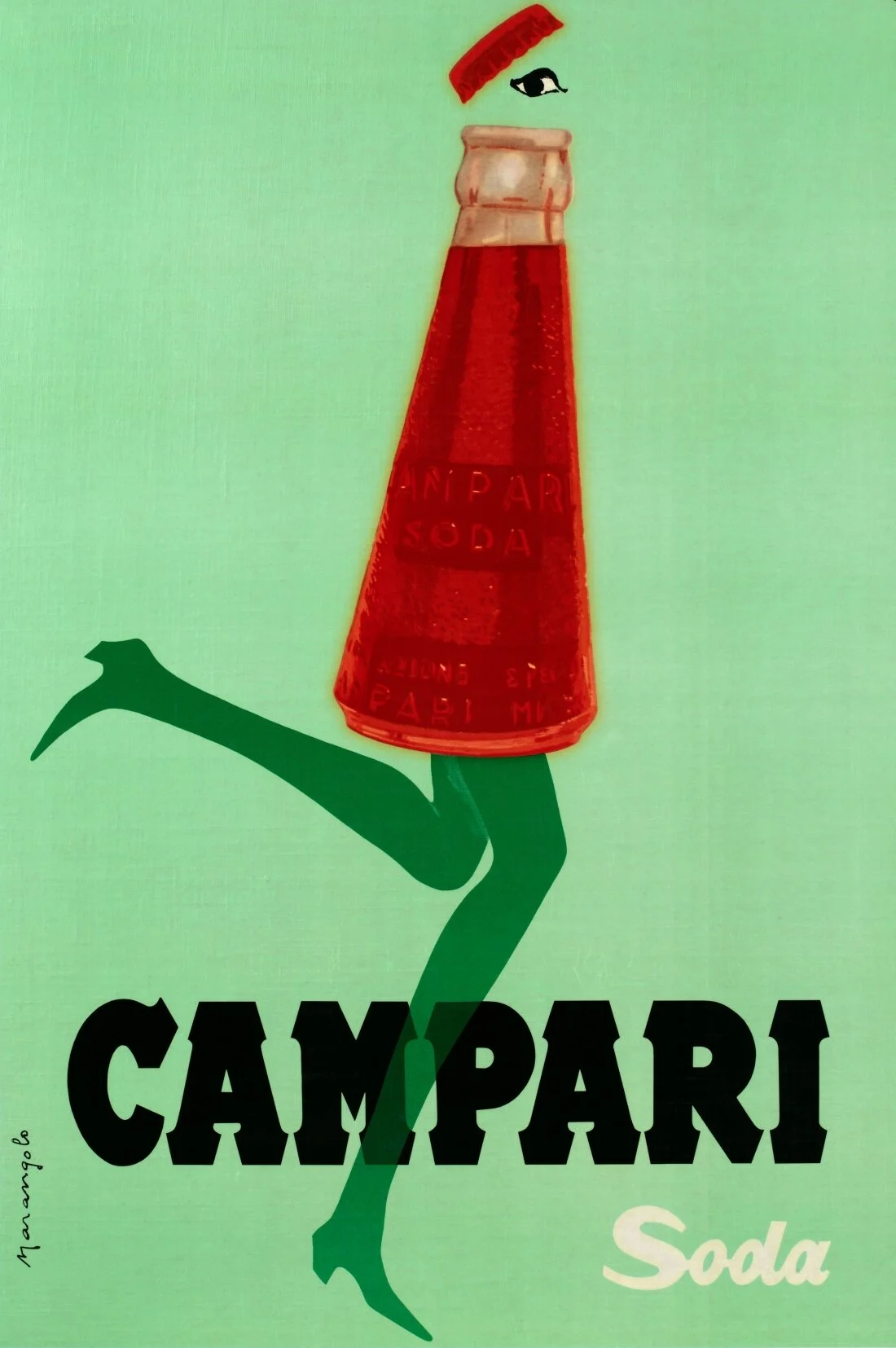
1960s poster designed by Franz Marangolo. Image: creativeboom
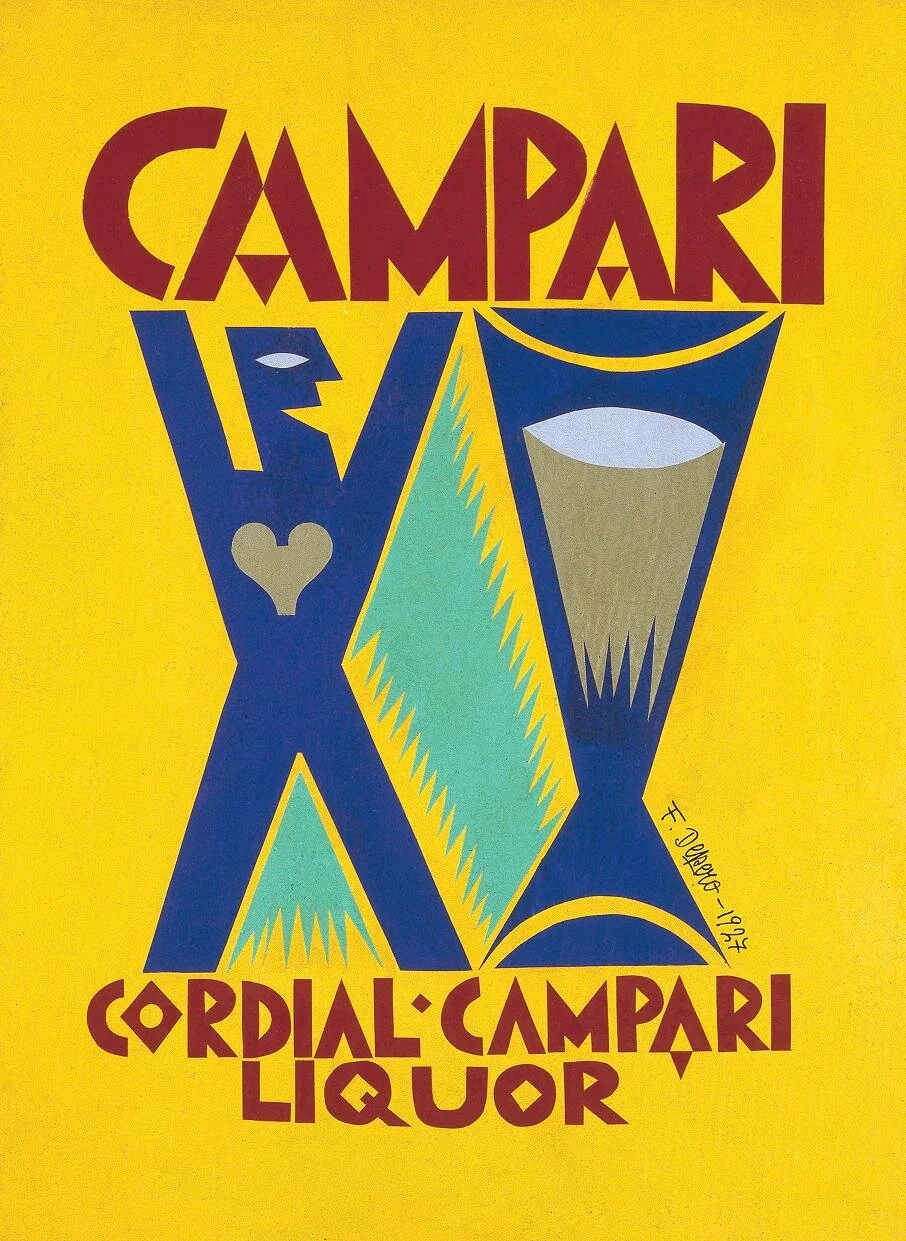
1927 poster designed by Fortunato Depero. Image: thingiverse
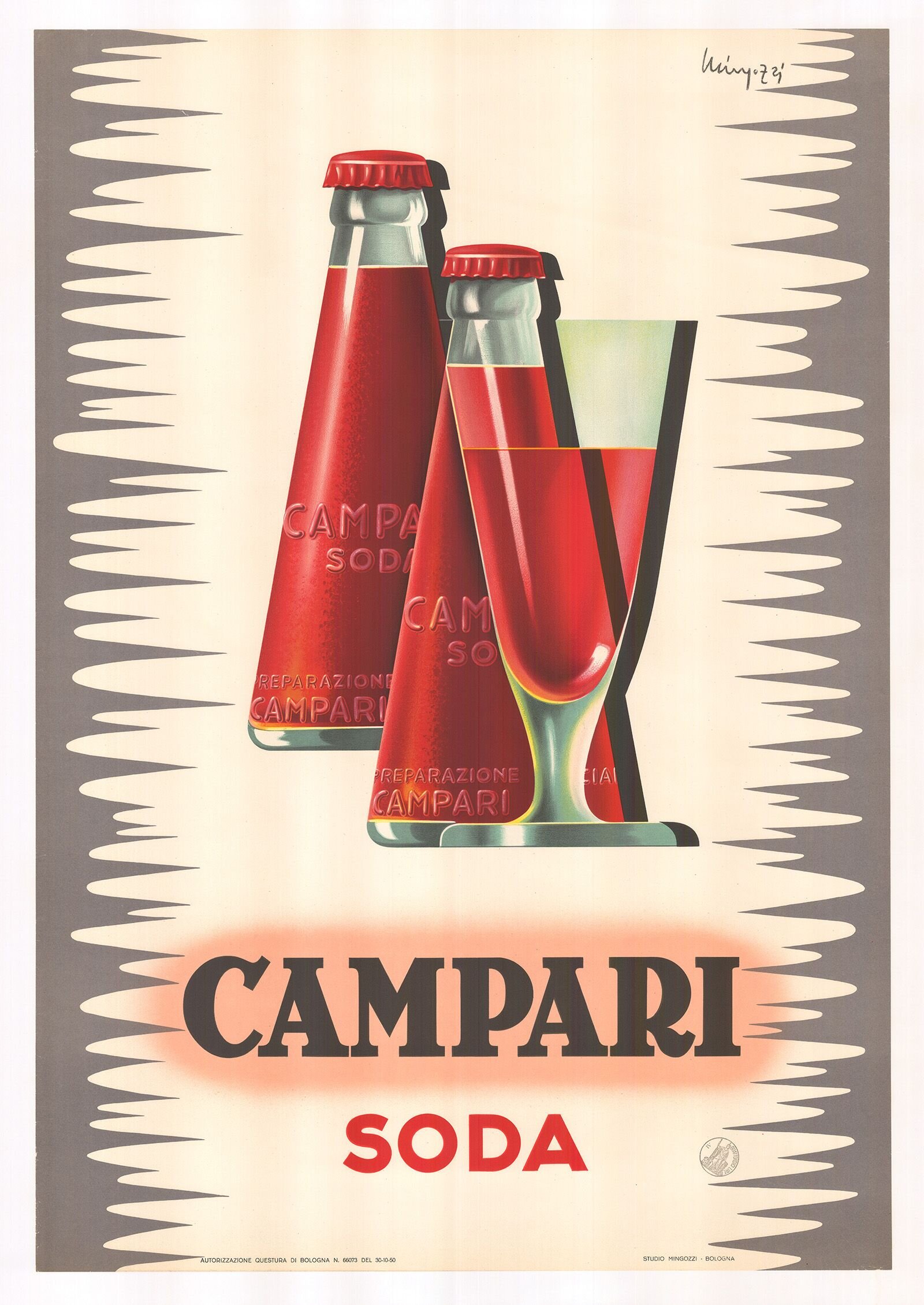
Campari Soda poster from 1950 by Giovanni Mingozzi. Image: Lot Art
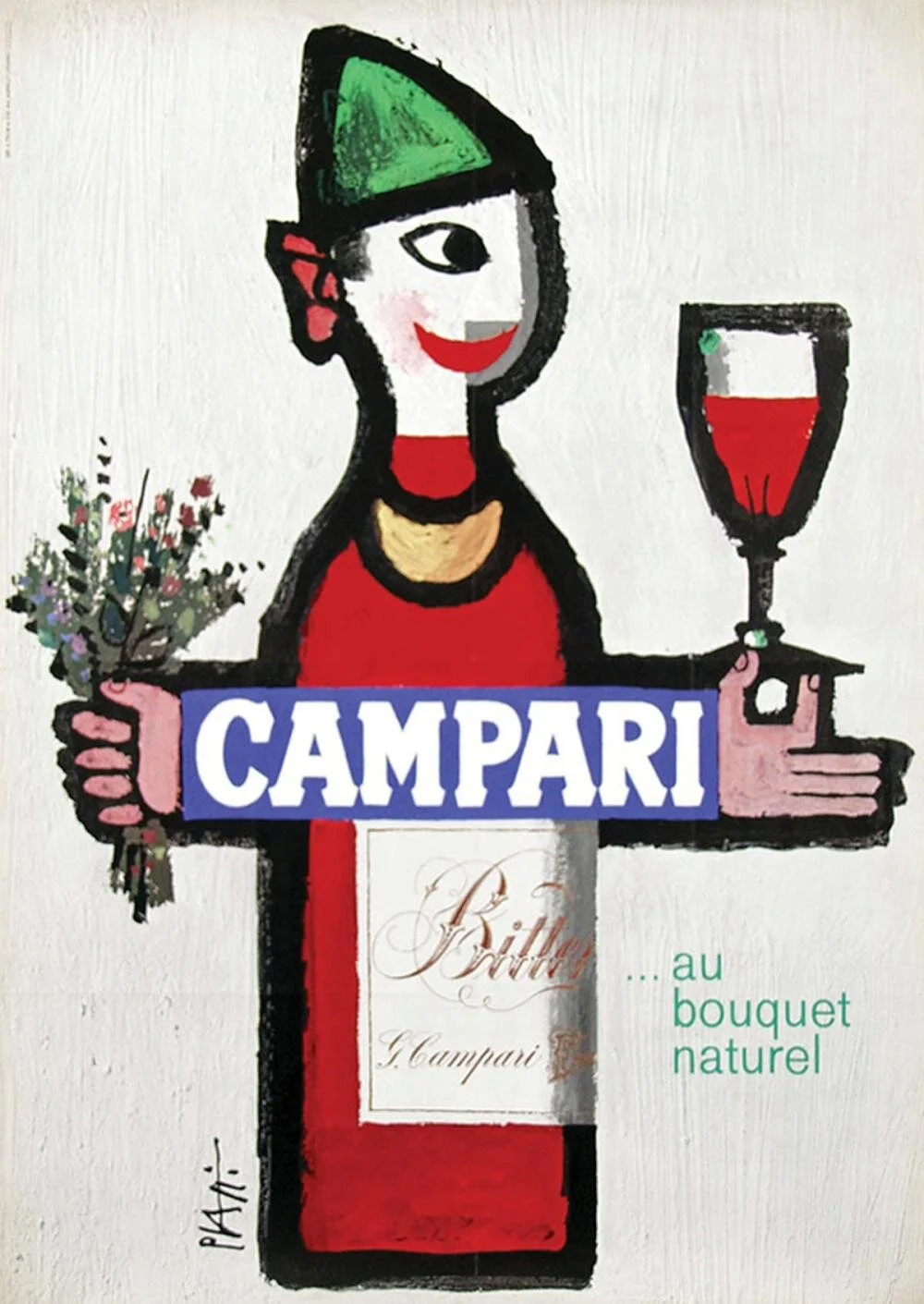
Poster designed by Celestino Piatti in 1960. Image: Invaluable
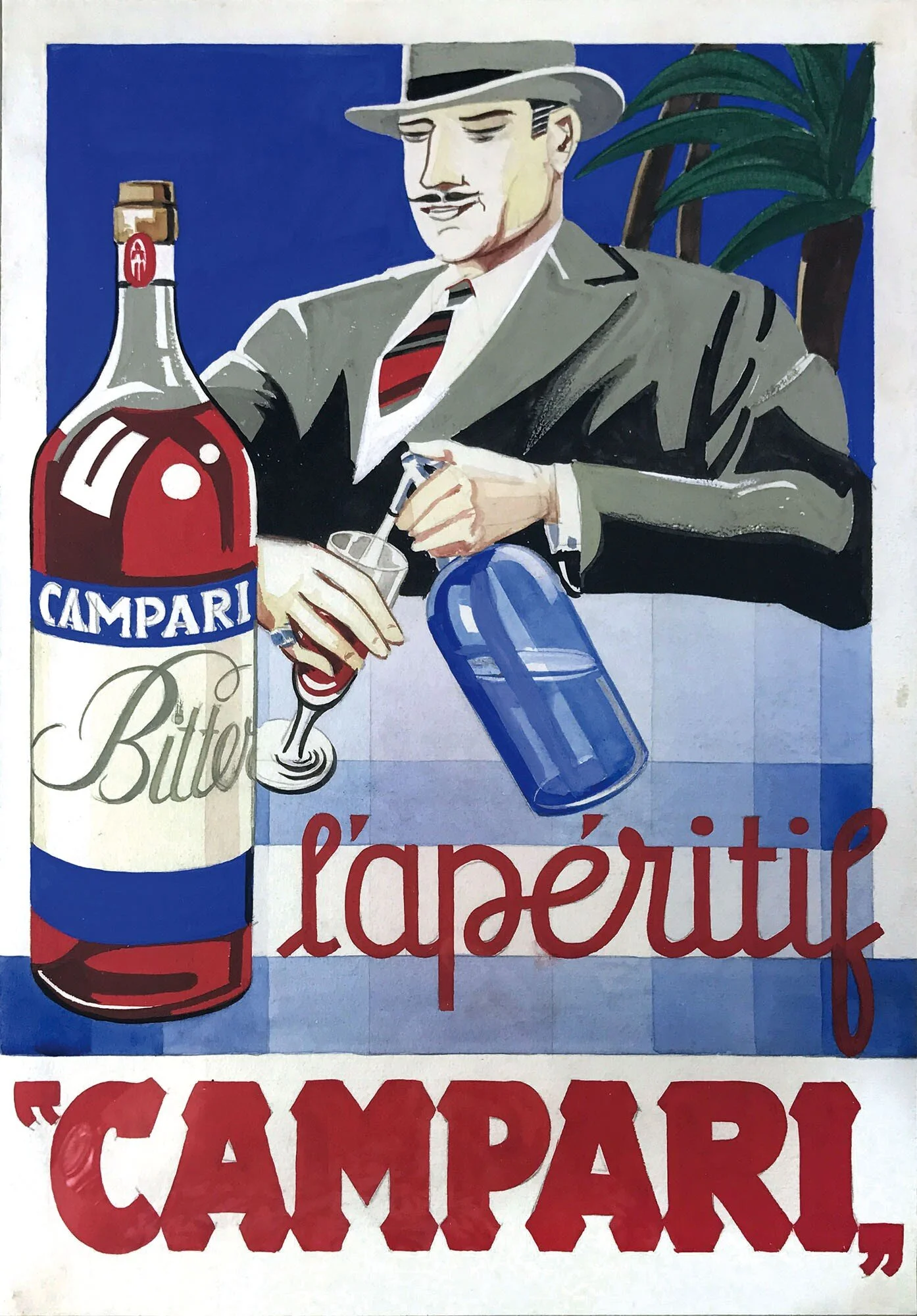
Poster for the French market from 1935, designer unknown. Image: Cambiaste
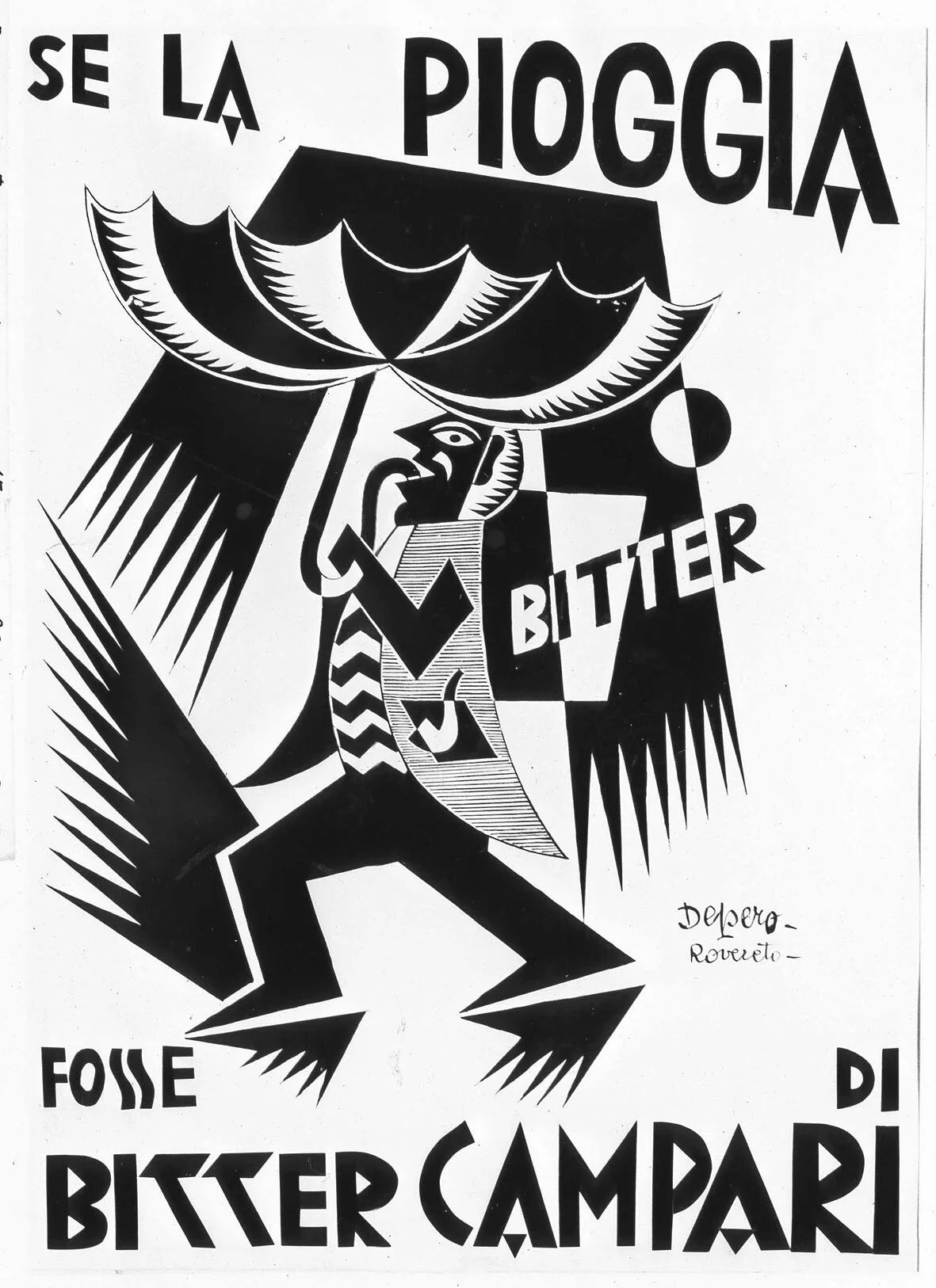
Poster from 1927, designed by Fortunato Depero. Image: italianmodernart
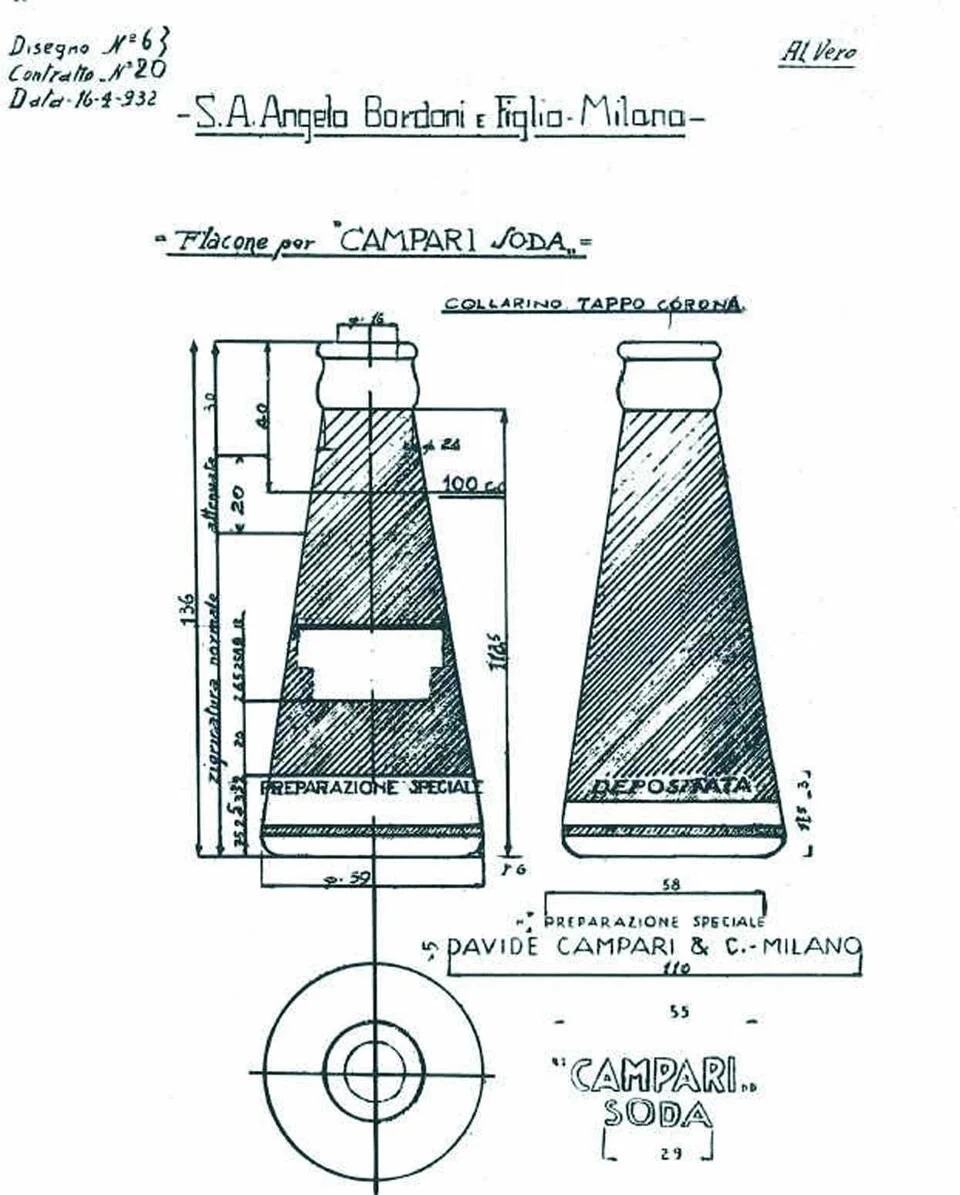
The original design for the Campari Soda bottle by Fortunato Depero in 1932. Image: Domus
Rams
It’s the one we’ve all been waiting for, probably our favourite design documentary in recent years, now available to view, for no charge whatsoever! Keen followers of the blog will know that director Gary Hustwit has been making his films free to view as an act of kindness during the Corona lock down. It’s a gesture we are really grateful for. Rams (2018) is a must watch. We realise we go on about Dieter Rams quite a lot, but it’s for good reason, and he has been responsible for some of our favourite designs.
“Rams is a design documentary, but it’s also a rumination on consumerism, materialism, and sustainability. Dieter's philosophy is about more than just design, it’s about a way to live. It’s about getting rid of distractions and visual clutter, and just living with what you need. The film features original music by pioneering musician and producer Brian Eno. “
Watch it here
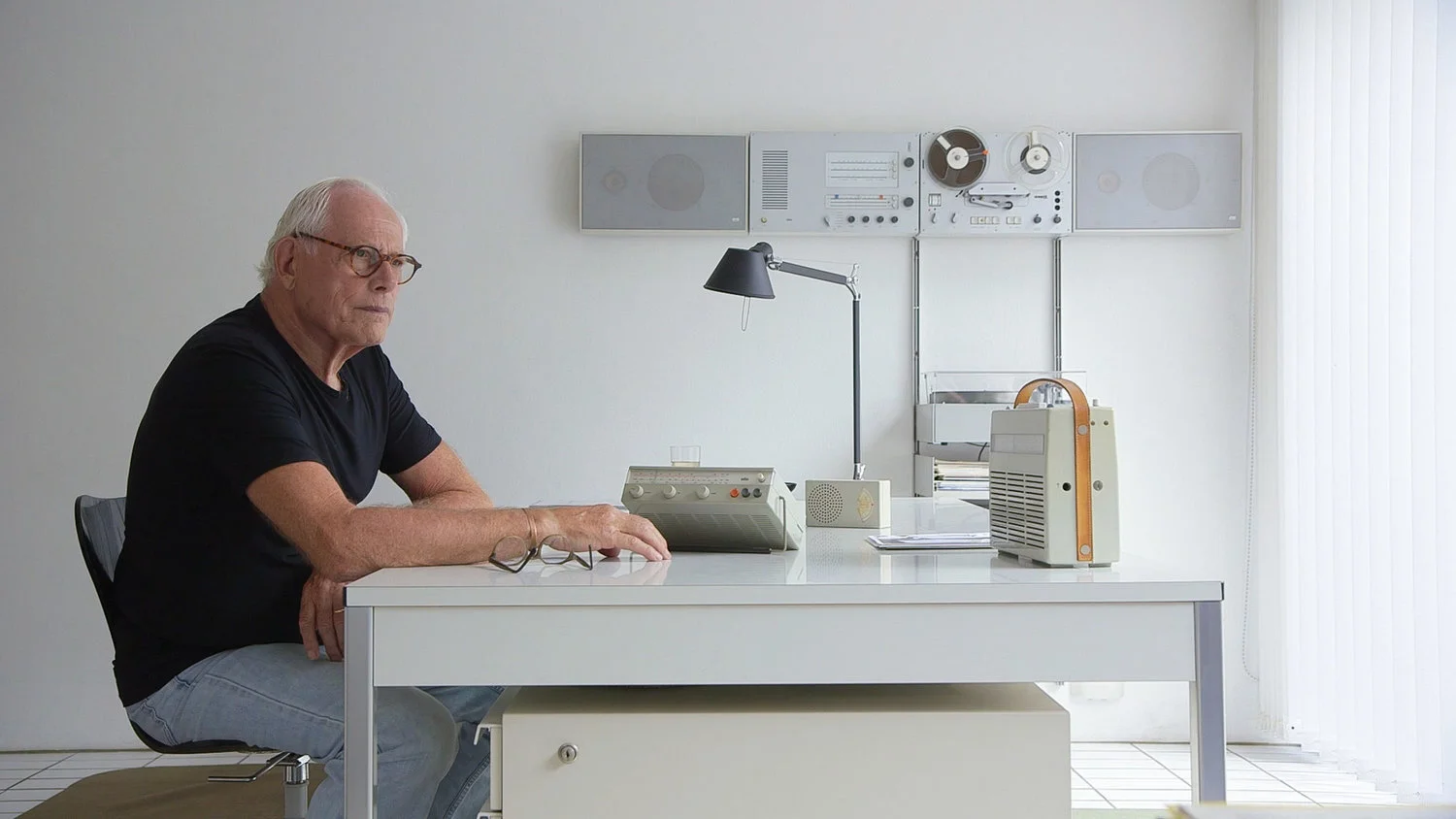
Dieter Rams. Image: Gary Hustwit
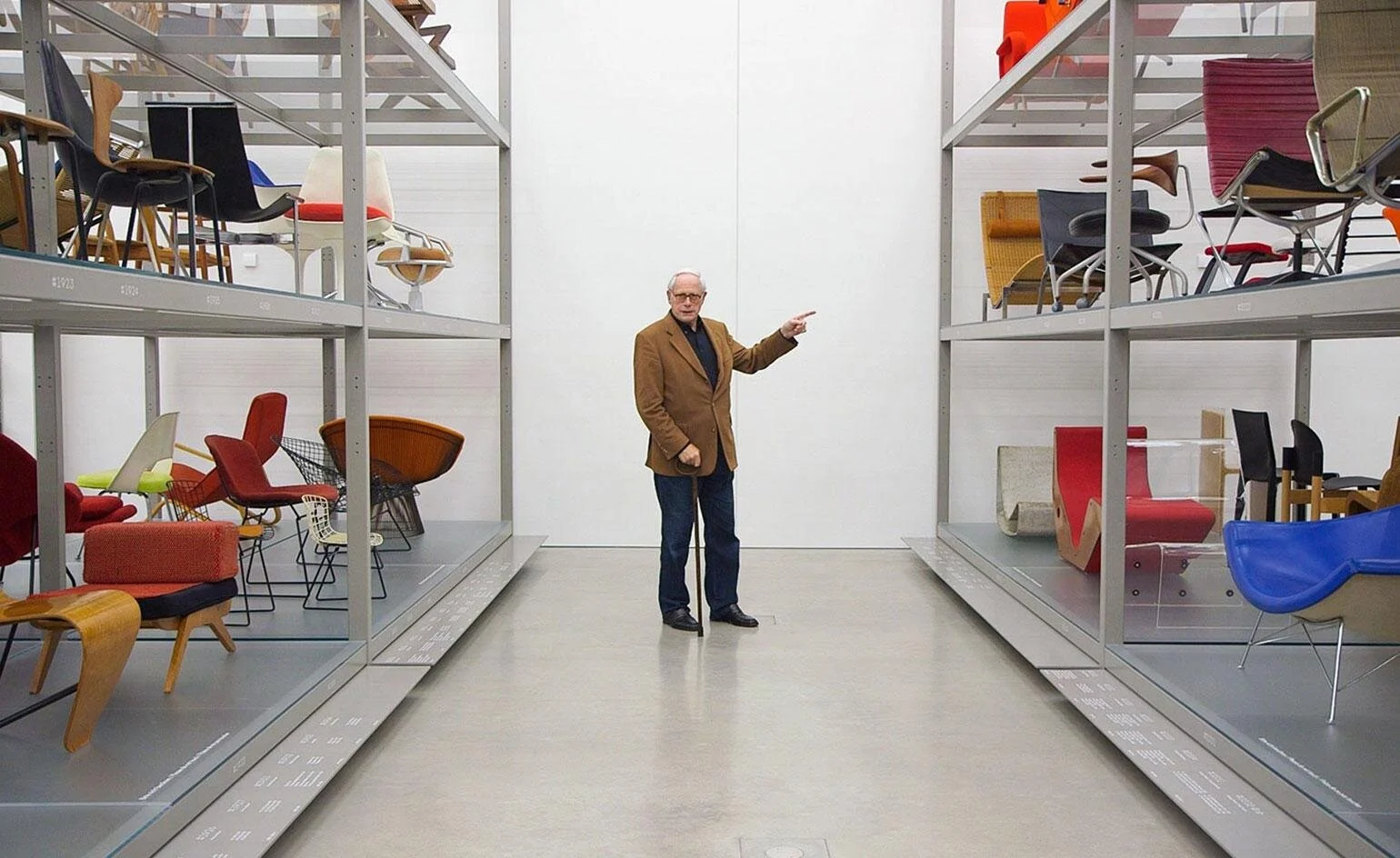
Dieter Rams. Image: Gary Hustwit
Subscribe and receive each quarterly issue at a reduced price.
adventures...
Its a travel magazine of sorts.. Out now.
the shop
In our online shop you can buy back issues as well as our other publications and some other of Modernist goodies.. have a look.
fresh tweets
new events


Commodo cursus magna, vel scelerisque nisl consectetur et. Donec id elit non mi porta gravida at eget metus.